
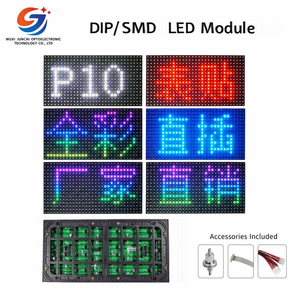
From high-nit outdoor advertising displays to ultra-flexible curved indoor video walls, explore our engineering-grade LED display boards and letter modules certified for harsh environmental operational parameters.
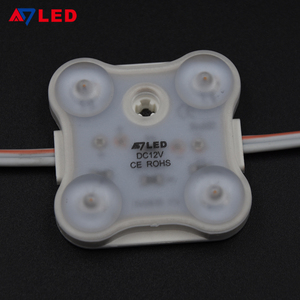
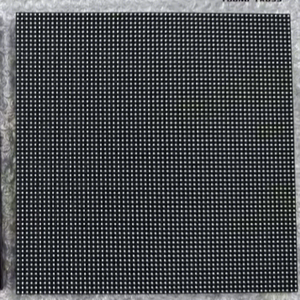
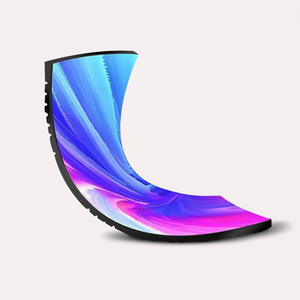
Deploying optoelectronic equipment across Sub-Saharan Africa demands a structural departure from standard off-the-shelf LED architectures. Our engineering framework directly solves sub-continental stressors.
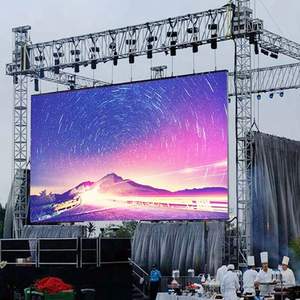
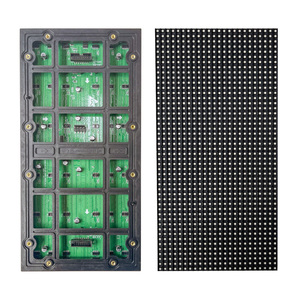
Digital-Out-Of-Home advertising along the N1 Highway connecting Johannesburg and Pretoria requires ultra-high luminescence to combat direct ambient solar glare exceeding 120,000 lux. Our P3.91 to P10 outdoor modules feature black-face SMD encapsulation paired with anti-UV optical lenses. Rated at upwards of 6,500 nits brightness, these systems deliver vivid color saturation without thermal decay under intense Highveld radiation.
Coastal deployments in KwaZulu-Natal and the Western Cape suffer from high atmospheric salinity, airborne salt spray, and extreme relative humidity. Standard PCB traces degrade within months. We engineer custom GOB (Glue-on-Board) and conformal epoxy-encapsulated modules (SMD2835 sign modules & fine-pitch screens) achieving IP68 fluid and salt-fog isolation, preventing micro-corrosion across copper paths.
To mitigate the operational impact of load shedding and grid instability across municipal electrical networks in South Africa, commercial installations are shifting toward solar storage integration. Our high-efficiency DC12V sign modules and low-power LED display panels run on optimized common-cathode IC drivers, reducing power draw by 35% and minimizing battery bank capacity overhead.
Technical Insight for SA System Integrators: Deploying LED displays in high-altitude inland regions like Johannesburg (1,750m above sea level) requires superior heat dissipation topologies. The thinner atmosphere reduces convection cooling efficacy by roughly 17%. Our aluminium-substrate LED modules dissipate thermal energy twice as fast as standard FR4 boards, ensuring zero diode color shift during summer heatwaves.
Analysis of procurement metrics, regulatory updates, and visual communication shifts within the Southern African Development Community (SADC) commercial market.
High-traffic public venues such as OR Tambo International Airport, retail centers in Sandton, and casino complexes are abandoning naked SMD designs. Glue-On-Board (GOB) technology provides impact resistance (Anti-collision), dustproofing, and moisture barrier protection—slashing maintenance interventions by over 60%.
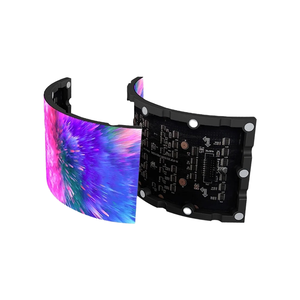
Commercial landlords are upgrading building facades with flexible, curved soft LED modules (P3.076 flexible line). These allow seamlessly wrapped 90-degree corner displays designed for naked-eye 3D digital advertising, transforming traditional brick-and-mortar landmarks into high-yield ad assets.
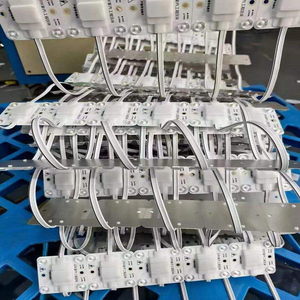
Modern channel-letter sign makers across South Africa are moving from narrow-angle lens modules to 170° ultra-wide optical lens designs (SMD2835). This optical spread reduces the required module density per square meter by up to 30%, decreasing overall cabinet depth, power consumption, and thermal buildup.
Due to sudden power drops, local integrators demand receiving cards and power supplies equipped with soft-start circuits and wide voltage input tolerances (160V–264V AC). Rapid-boot flash controllers ensure video walls synchronize within seconds of generator cut-ins.
Combining US-level engineering precision, strict UL/ETL/CE certification compliance, and over two decades of heavy-duty industrial fabrication.
| Performance Parameter | Channel Letter Modules (SMD2835) | Outdoor Video Modules (P3.91/P4/P10) | Indoor Fine Pitch / GOB (P1.25–P2.5) |
|---|---|---|---|
| Operating Voltage | DC 12V Constant Voltage | DC 4.2V – 5.0V Low Power Input | DC 3.8V – 4.5V Common Cathode |
| Enclosure Protection | IP68 Injection Molded / Epoxy Sealed | IP65 Front & Rear Waterproof Mask | IP54 / GOB Impact Protection |
| Luminous Flux / Brightness | 160–180 LM/W (High Efficiency) | 4,500 – 6,500 nits Adjustable | 600 – 1,200 nits Calibrated |
| Thermal Substrate | Aluminum PCB (1.6mm thickness) | Die-Cast / Reinforced Polymer Chassis | Multi-Layer High TG FR4 PCB |
| Color Rendering Index (CRI) | Ra > 80 / White Bin Matching | 16-Bit RGB Full Color Processing | Ra > 90 / True Black Surface Mask |
| Expected Lifespan | > 50,000 Hours to L70 | > 100,000 Hours Operational | > 100,000 Hours Operational |
Every module batch undergoes 72 hours of uninterrupted burn-in testing under dynamic voltage stresses, coupled with camera-based pixel-level chromaticity calibration to ensure absolute color uniformity across expansive screens.
We provide local architectural and engineering teams with comprehensive shop drawings, structural rigging specifications, heat load calculations, and IES/photometric files prior to order confirmation.
To mitigate downtime, every shipment to Johannesburg, Cape Town, or Durban includes 3%–5% free spare modules, receiving cards, and power units, with batch PCB mapping archived for long-term maintenance matching.
Addressing import protocols, grid compliance, warranty terms, and environmental specifications.
Our modules utilize high-grade power supply units rated for wide input fluctuations (160V–264V AC) paired with integrated transient voltage suppression (TVS) diodes. When power is restored following load shedding, our receiving cards execute a soft-start power sequence to eliminate high inrush current spikes that cause LED degradation.
For roadside billboards along highways (e.g., N3 or N1), P6 to P10 modules are standard due to viewing distances exceeding 15 meters. For street-level retail signage or building facades in urban centers like Rosebank or V&A Waterfront, P3.91 outdoor high-brightness modules are preferred for HD clarity at closer viewing ranges.
All products comply with international standards including CE, RoHS, FCC, and UL/ETL requirements. We provide complete test reports, EMC compatibility data, and electrical safety certificates required by South African municipal inspectors (such as City of Johannesburg or City of Cape Town electrical compliance officers).
Standard production cycles run 10 to 14 days from approved engineering drawings. Air freight to OR Tambo International Airport typically takes 5 to 7 days, while ocean freight shipments to Durban or Cape Town harbor take approximately 22 to 28 days depending on shipping lines. Expedited sample orders are dispatched via DHL/FedEx.
Connect with our optoelectronic application engineers today. Get full shop drawings, photometric studies, and factory-direct volume quotes tailored for your South African installation.