Precision-built luminaire platforms engineered for architectural offices, industrial warehouses, commercial facilities, and trade exhibitions. Fully customizable wattage, CCT, driver optics, and mounting configurations.
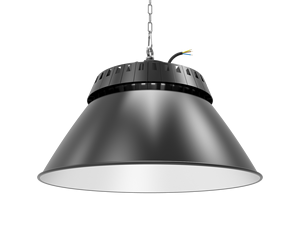
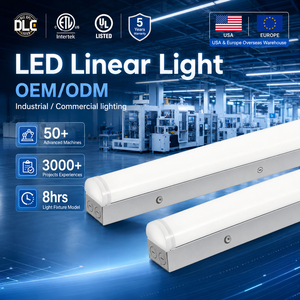
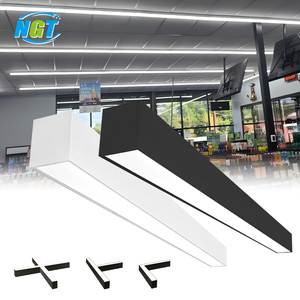
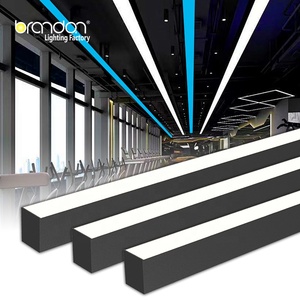
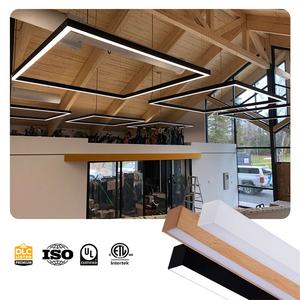
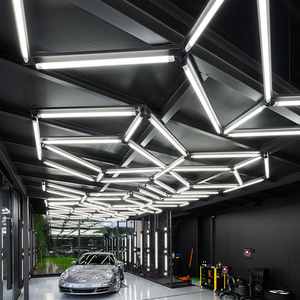
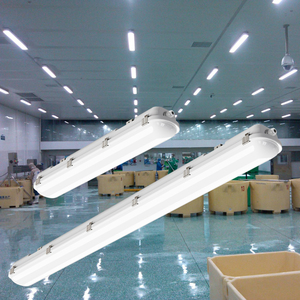
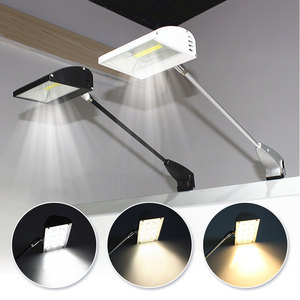
From custom metal spinning and precision aluminum extrusion to SMT surface mounting and optical photometric validation, our vertically integrated OEM workshop handles every step under one strict quality regimen.
Spanning 60,000 ft², our production facility houses heavy metal spinning, laser cutting, CNC bending, automated powder coating lines, clean-room SMT LED array assembly, and darkroom integrating sphere photometrics.
Our engineered luminaires carry comprehensive safety and performance certifications including UL, ETL, DLC 5.1 Premium, CE, RoHS, CB, and IP65 wet location listings, supporting Title 24 energy standards and seismic specs.
We turn design intent sketches, CAD ceiling plans, and architectural spec sheets into complete 3D shop drawings, precise IES files, thermal management simulations, and prototype mock-ups in as little as 3–4 weeks.
In the contemporary built environment, commercial lighting is no longer treated as a static hardware commodity. Architects, lighting designers, electrical contractors, and facility managers increasingly demand modular luminaire architectures that adapt seamlessly to spatial transformations, evolving building control protocols, and rigorous sustainability decarbonization mandates.
As a leading modular lighting factory and global exporter, our engineering group continuously analyzes key macro procurement trends shaping international markets across North America, Europe, the Middle East, and Asia-Pacific. Below is an in-depth analytical breakdown of the technological and economic drivers defining the future of commercial and industrial illumination.
Traditional sealed LED fixtures posed significant maintenance challenges: when an internal driver failed or an LED chip degraded, entire luminaire housings had to be scrapped and replaced, generating unacceptable electronic waste and escalating building maintenance costs. Modern modular lighting architecture resolves this systemic vulnerability through circular engineering principles.
For lighting distributors, importers, and project contractors, managing hundreds of distinct stock keeping units (SKUs) for varying wattages and color temperatures imposes severe inventory carrying costs. Dynamic field-selectable technology has transformed bulk procurement.
By incorporating multi-stage DIP switches directly onto the internal driver board and optical engine, a single modular batten or high-bay fixture can be configured on-site for multiple wattage outputs (e.g., 100W / 150W / 200W) and correlated color temperatures (3000K / 4000K / 5000K). This flexibility reduces warehouse stock requirements by up to 65% while guaranteeing installation crews have the exact photometric parameters required for any room geometry.
| Luminaire System Category | Optical Efficiency Range | Standard Control Protocols | Structural Materials & Thermal Management | Compliance & Application |
|---|---|---|---|---|
| IP65 Modular High Bay | 160 – 180 lm/W | 0-10V, DALI-2, Microwave Sensor, Zigbee Node | Die-Cast ADC12 Aluminum + Phase-Change Heat Sink | UL/ETL Listed, Warehouse, Heavy Industry, Cold Storage |
| Architectural Linear Pendant | 130 – 150 lm/W | DALI-2, Phase-Cut, Bluetooth Mesh, Matter | Extruded 6063-T5 Aluminum + Micro-Prismatic Lens | CE, DLC 5.1 Premium, Corporate Offices, Education, Retail |
| Vapor-Tight Tri-Proof Modular | 140 – 160 lm/W | Emergency Backup (90-Min), Bi-Level Dimming | Polycarbonate Housing + Stainless Steel Locking Clamps | IP65/IP66 Wet Location, Food Processing, Parking Decks |
| Connectable Exhibition Arm | 110 – 130 lm/W | On/Off, Phase Dimming, Master-Slave Link | Anodized Aluminum Arm + Heat-Dissipating Fin Cluster | CE, RoHS, Display Systems, Trade Shows, Art Galleries |
Occupant well-being, circadian alignment, and optical comfort are central to modern commercial interior specifications. Architectural standards such as WELL Building Standard v2 and LEED v4.1 strictly mandate low Unified Glare Ratings (UGR) to prevent visual fatigue in office, healthcare, and educational environments.
Our factory utilizes multi-layer optical stacks combining micro-prismatic glare reduction diffusers, batwing optical lenses, and indirect-direct light distribution channels (70% downlight / 30% uplight). This approach delivers smooth volumetric illumination across task planes while maintaining UGR ratings well below 19, ensuring compliance with strict European EN 12464-1 standards.
The future of modular commercial lighting lies in transforming luminaires into intelligent building data backbones. By standardizing ZHAGA Book 18 and ANSI C136.41 socket interfaces on our modular luminaire housings, fixtures become future-proof digital hubs.
From architectural vision to site installation supervision, we provide global project teams with complete engineering accountability at every stage.
Analysis of design sketches, CAD drawings, reflected ceiling plans (RCP), and targeted lux calculations.
Generation of dimensioned 3D shop drawings, thermal modeling, IES photometrics, and finish samples.
Rapid 3-week fabrication of physical working prototypes for mock-up approval and field verification.
Metal fabrication, SMT assembly, automated powder coating, electrical wiring, and 24-hour burn-in testing.
Numbered crate packing matched to installation zones, complete with mounting manuals and field support.
Clear, definitive answers to technical, commercial, certification, and logistical questions commonly raised during international tender submissions.
