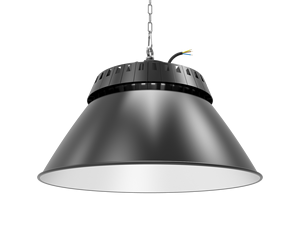
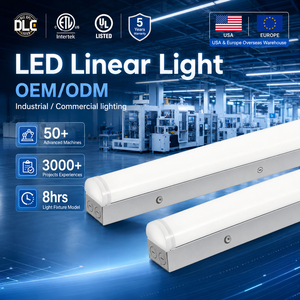
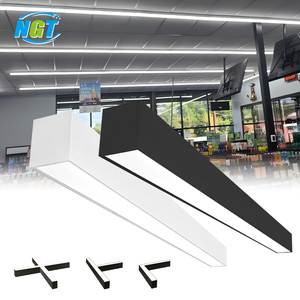
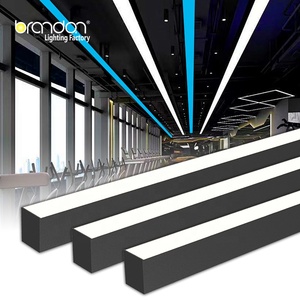
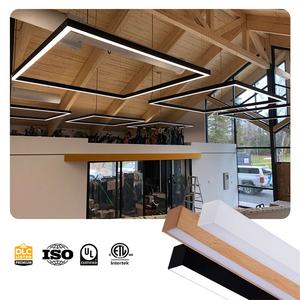
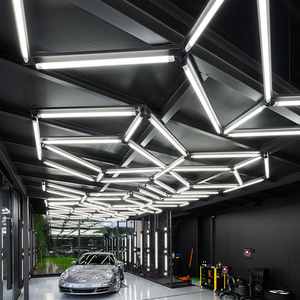
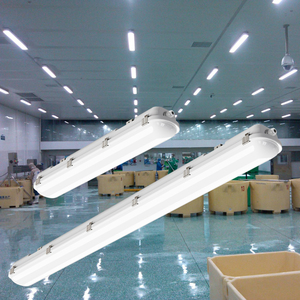
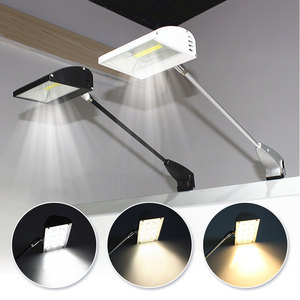
High-performance luminaires engineered for demanding commercial, industrial, and exterior landscape applications. Select a specification-grade fixture below to request technical data sheets and instant factory pricing.
In architectural lighting design, subsurface luminaires represent the most challenging engineering frontier. Ground-recessed fixtures operate under relentless environmental strain, subject to hydrostatic pressure, thermal shock, soil chemistry, and structural load-bearing requirements.
Standard IP67 seals frequently fail due to the "vacuum effect"—where internal heating expands air inside the housing, and cooling pulls moist air back through cable glands. Specification-grade inground manufacturers utilize IP68 continuous-immersion sealing combined with integrated Gore-Tex pressure equalizer valves (anti-wicking breathers) to neutralize differential pressure while eliminating internal condensation.
Inground lights deployed in public plazas, driveways, and pedestrian precincts require rigorous mechanical load verification. Top tier suppliers employ walk-over (500 kg) to drive-over (5,000 kg static load) structural designs. Utilizing 10mm–15mm extra-clear tempered step-glass and CNC-machined die-cast 316L stainless steel or passivated marine-grade aluminum (A360), these housings resist shearing forces and vehicular stress without micro-fracturing.
Trapped within concrete backfill or soil, subterranean luminaires face restricted thermal convection. Leading factories engineered specialized thermal pathway conduits using high-purity copper heat pipes and graphite thermal pads, keeping junction temperatures ($T_j$) below 75°C. This thermal discipline preserves lumen maintenance ($L_{80}B_{10} > 60,000\text{ hours}$) and prevents premature driver degradation.
More than 70% of ground-light field failures occur not from lens breach, but from capillary water transport through the electrical supply cable. When outer insulation breaks down or junction boxes flood, moisture travels along copper strands directly into the driver cavity. Premier manufacturers install factory-potted resin barriers and anti-wicking cable joints inside the fixture sleeve, guaranteeing total galvanic isolation regardless of field wiring conditions.
To ensure complete alignment with project specifications, architects, lighting designers, and electrical contractors must evaluate technical metrics prior to submittal approval. The table below outlines key structural parameters supplied by leading OEM/ODM inground manufacturers.
| Specification Parameter | Standard Commercial Grade | Specification / Heavy Industrial Grade | Architectural Custom (Lusive/NGT Standard) |
|---|---|---|---|
| Ingress Protection Rating | IP65 / IP67 | IP68 (Submersible up to 3m) | IP68 Continuous Hydrostatic Barrier + Gore Vent |
| Impact Protection (IK Level) | IK07 / IK08 | IK09 / IK10 | IK10 Glass + Shock-Absorbing EPDM Gaskets |
| Maximum Load Capacity | Pedestrian Walkover (200 kg) | Vehicular Drive-Over (2,000 - 3,500 kg) | Heavy Commercial (up to 5,000 kg Static Load) |
| Housing Metallurgy | Standard Die-Cast Aluminum | Anodized Marine-Grade Aluminum (A360) | 316L Stainless Steel Faceplate + Passivated Core |
| Optical Control & Glare | Clear Glass, Broad Beam (60°) | Honeycomb Louver, 15° to 45° Beam | Adjustable Tilt (±20°), Wall Washers, UGR < 16 |
| Color Rendering Index (CRI) | 80+ CRI | 90+ CRI | 95+ CRI (R9 > 80 for True Architectural Tones) |
| Driver Integration & Dimming | On/Off Standard Switch | 0-10V / Phase Dimming | DALI-2, Casambi Wireless, DMX512 Color Tuning |
As global urban infrastructure accelerates toward sustainability, intelligence, and human-centric design, the manufacturing landscape for inground, linear, and high-bay lighting is undergoing a paradigm shift. Specifiers must anticipate these four core technological trends:
Architectural projects increasingly demand natural lighting transitions that mirror circadian rhythms. Modern subsurface wall-washers and linear suspended fixtures now incorporate multi-channel COB arrays delivering smooth 2200K to 6500K color tuning without shift in chromaticity coordinates ($SDCM < 3$). High R9 values ensure that natural stone, vegetation, and brick facades maintain vivid fidelity under artificial night lighting.
Historical inground luminaires were permanently potted with epoxy resins, rendering them non-repairable upon component end-of-life. Future-ready manufacturers are shifting to circular design methodologies—featuring modular engine cassettes, hot-swappable LED boards, and field-replaceable drivers housed in sealable IP68 sub-chassis. This dramatically reduces total cost of ownership (TCO) and embedded carbon footprints.
The integration of Bluetooth Low Energy (BLE), Casambi, and DALI-2 protocols directly inside subsurface housings enables individual fixture addressing. Smart landscape networks can automatically modulate brightness based on pedestrian motion, execute dynamic light shows across public plazas, and report real-time power consumption or thermal alarms back to central Building Management Systems (BMS).
Light pollution regulations (Dark-Sky compliance) require strict spill-light cutoff. Advanced inground wall wash optics now leverage asymmetrical TIR (Total Internal Reflection) lenses that throw light flush against facade walls up to 15 meters high while minimizing sky glow. Deep-recessed optical baffles ensure complete glare suppression for pedestrians.
Combining over two decades of custom architectural metalworking, metal spinning, and electronic assembly with global project support—from initial concept sketch to site installation.
Our internal engineering group translates concept sketches, CAD files, or reflected ceiling plans into full shop drawings, photometric IES simulations, and mechanical submittals within 72 hours. Custom scale, finish, and optics are crafted to project constraints.
All custom and catalog fixtures undergo rigorous burn-in testing, water immersion trials, and surge protection validation. Fixtures are fully certified to UL 1598, UL 2108, ETL, CE, and Title 24 energy standards for commercial and hospitality compliance.
Physical prototypes are produced in 3–4 weeks for design team on-site review. Production runs complete in 10–14 weeks, packed in custom numbered assembly crates with detailed installation manuals and field engineering support.
Submit your design intent drawings, bills of quantities, or photometrics to consult with our Senior Application Engineers today.
Get a QuoteKey considerations for architects, lighting specifiers, and electrical contractors.
Yes. Our core specialty lies in engineering buildable fixtures directly from design intent sketches, CAD models, or physical samples. We provide comprehensive shop drawings, photometric IES file downloads, and finish sample sets for architectural sign-off prior to tooling and full fabrication.
Our inground luminaires utilize a dual-barrier protection system: IP68 structural silicone sealing around the toughened glass interface, combined with internal factory resin potting at the cable gland entry. Integrated pressure equalization valves (Gore vents) equalize thermal pressure differentials, eliminating moisture siphonage.
Our heavy-duty inground luminaires are certified to withstand static loads ranging from 2,000 kg up to 5,000 kg (EN 60598-2-13 compliant), making them suitable for slow-moving commercial vehicular traffic, municipal driveways, and pedestrian urban plazas.
For custom engineering programs, full physical mock-ups are typically delivered in 3 to 4 weeks. Full factory production runs require 10 to 14 weeks following final shop drawing approval. Express scheduling options are available for standard catalog modifications.
Every custom project is archived with its exact CAD files, finish chemical formulas, driver batch records, and optical lens codes. We maintain long-term availability for spare components, ensuring that building owners can reorder exact matching units decades after initial handover.