Engineered for high-end hospitality, architectural commercial rest spaces, and luxury residential developments. Built to withstand moisture, thermal degradation, and rigorous optical demands.
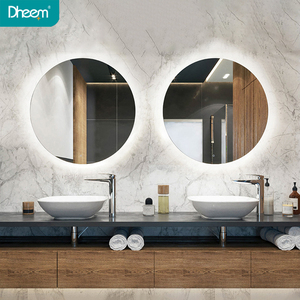
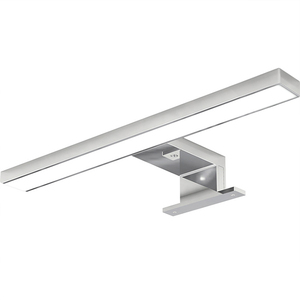
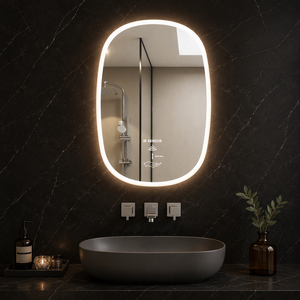
Unlike standard trading operations, our manufacturing philosophy centers on complete single-roof execution. From initial design intent sketches and CAD submittals to precision metal spinning, custom glass blowing, hand-applied patinas, and certified electrical assembly, every mirror light system is engineered to perform for decades in demanding commercial environments.
"Engineering mirror illumination requires an intimate understanding of shadow reduction, thermal management behind sealed glass, and color rendering. Our custom mock-up process allows design teams to evaluate light quality in situ before full production begins."
How leading procurement teams, interior designers, and MEP engineers select Tier-1 mirror light suppliers globally.
Top-tier manufacturers prioritize high Color Rendering Index values (CRI Ra > 90, with R9 red values > 50). Accurate color fidelity is vital for vanity lighting in hospitality guestrooms, high-end retail, and residential makeup application, ensuring true-to-life skin tone representation without greenish tint shift.
Bathroom and wet area mirror lighting demands rigorous sealing protocols. Leading OEMs engineer specialized silicone gaskets, waterproof aluminum extrusions, and potted LED drivers to achieve verified IP44 (damp location) and IP65 (splash-proof) compliance, preventing internal fogging, condensation damage, and electrical shorting.
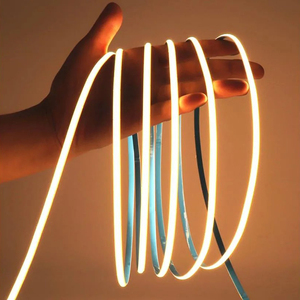
Modern mirror light manufacturers have shifted heavily toward Chip-on-Board (COB) LED strips. COB technology eliminates the visible "dotting" effect associated with traditional SMD LEDs, delivering a seamless, continuous linear glow through frosted acrylic diffusers without requiring heavy, space-consuming optical lenses.
A mirror light fixture is only as durable as its mirror plate. Premier manufacturers utilize 5mm copper-free, lead-free silver mirrors with anti-corrosion edge sealant coating. This construction prevents black edge oxidation caused by humidity and cleaning chemicals over extended commercial lifecycles.
Because mirror housings are compact and often sealed behind glass, thermal dissipation is a primary failure vector. Leading manufacturers incorporate structural aluminum heat sinks directly into the frame extrusion, maintaining LED junction temperatures ($T_j$) below 65°C for 50,000+ hour L70 lifespans.
Commercial specifiers require seamless integration with building automation systems. Superior manufacturers support universal dimming protocols, including 0-10V, DALI-2, TRIAC/ELV, and smart wireless systems (Zigbee/Bluetooth mesh), ensuring flicker-free dimming down to 1% light output.
How emerging optoelectronics, smart controls, and architectural material science are redefining mirror lighting systems.
Modern luxury hotels and high-end residential projects are rapidly moving beyond static color temperatures. Current mirror light designs incorporate dual-channel CCT dynamic white engines (ranging from warm 2200K to daylight 6500K). This allows automated tuning—offering soft, warm light for evening relaxation and crisp, high-kelvin daylight for morning grooming routines.
The integration of micro-thin PTC (Positive Temperature Coefficient) heating films bonded directly behind the mirror glass has become an industry standard for luxury procurement. Operating simultaneously with the lighting circuit or via dedicated touch controls, defoggers clear mirror condensation within 10–30 seconds of shower operation.
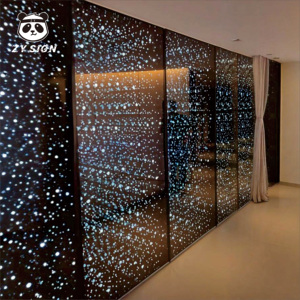
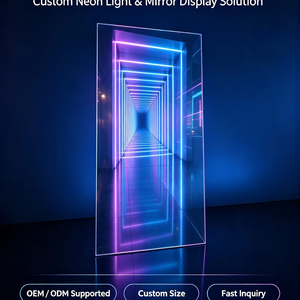
As seen in commercial bar interiors, luxury lounges, and avant-garde spa environments, infinity mirror technology utilizes semi-transparent two-way mirrors paired with high-density LED perimeter arrays to project an optical illusion of infinite visual depth. These assemblies require ultra-precise CNC panel cutting and airtight edge assembly to prevent dust ingress between glass layers.
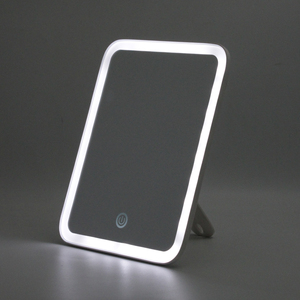
Mechanical rocker switches are being replaced by seamless glass-embedded interface controls. Capacitive touch buttons etched directly into the mirror surface provide power toggle, CCT adjustment, and stepless dimming. Furthermore, non-contact hand-sweep infrared sensors and microwave motion detectors allow touchless hygienic operation—critical for commercial rest spaces and healthcare facilities.
To achieve ultra-thin profile mirrors (under 25mm depth), advanced manufacturers employ edge-lit Light Guide Plates (LGP). Laser-etched dot patterns across optical grade acrylic sheets convert perimeter LED emission into perfectly uniform, face-illuminating light without hotspot artifacts or deep back-box housing requirements.
When specifying ultra-thin LGP mirror lights, ensure light transmission efficiency exceeds 85% with an opal PMMA diffuser to avoid lumen loss while maintaining dot-free continuous lighting.
A quick-reference architectural specification guide comparing structural materials, LED light engines, and drive optics.
| Specification Parameter | Commercial Grade Standard | High-End Hospitality / Architectural Grade | Procurement Impact & Benefit |
|---|---|---|---|
| LED Chip Structure | SMD 2835 / SMD 5050 Strips | COB Continuous Strip | COB eliminates visual pixelation; allows ultra-slim diffuser channels. |
| Color Rendering Index (CRI) | CRI > 80 Ra (R9 > 0) | CRI > 90-95 Ra (R9 > 50) | Provides accurate facial skin rendering and cosmetic color matching. |
| Glass Substrate | 3mm Standard Aluminum Mirror | 5mm Copper-Free Silver Mirror | Eliminates edge corrosion/black spots in high-humidity zones. |
| Ingress Protection Rating | IP20 (Dry Location Only) | IP44 / IP65 Sealed System | Ensures electrical safety and prevents fog/water vapor intrusion. |
| Driver Isolation & Lifespan | Non-isolated Capacitive Driver (10k hrs) | Class 2 Constant Voltage Isolated (50k hrs) | Prevents electrical shock, withstands voltage spikes, and ensures longevity. |
| Dimming Protocol Support | On/Off Switch Only | DALI-2 / 0-10V / TRIAC / Smart Touch | Integrates directly into central hotel BMS and modern home automation. |
Anticipating regulatory changes, eco-design mandates, and supply chain shifts in commercial lighting specification.
Global environmental regulations (such as EU Eco-Design Directives and Title 24 compliance) are mandating that LED light sources and control gear be easily replaceable without destroying the entire mirror assembly. Procurement teams are moving toward modular mirror back-plate chassis design where drivers and LED strips can be serviced on-site by hotel maintenance teams.
ESG-driven developer requirements have made material origin a key selection criterion. Leading mirror lights manufacturers are adopting low-carbon recycled aluminum extrusions, water-based back-coatings, and plastic-free packaging solutions to lower scope 3 embodied carbon metrics for LEED certified buildings.
The mirror light is fast becoming a core display and sensor hub within smart guestroom ecosystems. Modern mirror assemblies now integrate Bluetooth speaker modules, digital clock displays, room occupancy sensors, and weather updates directly behind the semi-silvered glass pane, operated via centralized room management software.
How our workshop turns complex architectural sketches into fully certified mirror lighting installations.
We analyze architectural elevations, reflected ceiling plans, CAD drawings, or physical samples, calculating lumen output requirements, thermal loads, and mounting constraints.
Our engineering team issues fully dimensioned submittal drawings, electrical wiring diagrams, photometric simulation files, and finish sample cards for architect approval.
For large project orders, a fully functioning 1:1 scale prototype mirror fixture is produced within 3–4 weeks for on-site design team evaluation and optical approval.
Metal extrusions are cut, spun, welded, and patinated in-house. Optical diffusers and silver mirrors are CNC edged, fitted with IP-rated electronics, and subjected to 24-hour burn-in testing.
Fixtures are packed in custom wooden crates with numbered component tagging, step-by-step installation guides, and direct site supervision support for complex projects.
Addressing core technical questions regarding customization, certifications, lead times, and post-installation support.
Yes. We specialize in custom manufacturing tailored to architect and lighting designer specifications. Our engineering team works directly from concept sketches, CAD models, or physical samples, providing comprehensive shop drawings, photometrics, and finish samples prior to full production. All design IP remains exclusively yours.
All custom and standard mirror lighting fixtures are built in compliance with UL, ETL, and CE standards, specifically rated for damp (IP44) or wet locations (IP65) as required by project specs. Electrical drivers carry Class 2 ratings, Title 24 high-efficacy compliance, and optional seismic bracing details for high-rise commercial structures.
Standard prototype mock-ups require 3–4 weeks from final shop drawing approval. Full production runs typically require 10–14 weeks depending on batch volume, custom metal finishes, and special glass requirements. Fast-track options are available for ongoing hospitality program rollouts.
We integrate high-thermal-conductivity 6063-T5 anodized aluminum backing channels directly into the mirror chassis. This design acts as a continuous heat sink, pulling heat away from the COB/SMD diodes and maintaining driver ambient temperatures well within safe operating parameters to guarantee 50,000+ hour operational lifespans.
Absolutely. Our driver configurations support universal control interfaces including 0-10V, DALI-2, TRIAC, ELV, and dry-contact relay integration. Whether connecting to Lutron, Crestron, Schneider, or custom RMS setups, our systems deliver smooth, flicker-free dimming performance down to 1%.
Every commercial order is archived with complete bill-of-materials (BOM), CAD drawings, LED binning codes, and custom metal finish formulas. If a replacement mirror plate, driver, or LED module is needed years after handover, we reproduce exact matching parts from our archived records.
