
Technical Whitepaper: Strategic OEM/ODM Manufacturing & Global Procurement Roadmap for Architectural Pendant Lighting
In the contemporary landscape of international architectural design and commercial real estate development, decorative and functional lighting fixtures no longer serve as isolated cosmetic embellishments. Instead, pendant lights and custom chandeliers have evolved into integral architectural components that dictate spatial ergonomics, brand atmosphere, occupant wellbeing, and energy conservation. For global procurement directors, hospitality specifiers, and OEM/ODM brand managers, sourcing pendant lighting requires a sophisticated balance between artistic design intent, rigorous electrical engineering, material longevity, and strict international compliance standards.
This technical whitepaper provides an exhaustive analysis of contract pendant light manufacturing, examining the transition from conceptual design intent to global site deployment, evaluating material selection science, exploring advanced optical and thermal management, and outlining future procurement trends for 2025–2030.
1. The Architectural OEM/ODM Workflow: From Sketch to Installation
The realization of bespoke lighting features in large-scale commercial facilities—such as five-star hotels, luxury casino resorts, multi-family residential towers, and corporate headquarters—demands an integrated manufacturing protocol. A common point of friction for specification teams is the misinterpretation of initial design intent by traditional off-the-shelf light exporters. Comprehensive OEM/ODM partnerships mitigate this risk through a systematic five-stage lifecycle:
- Design Intent & Engineering Audit: The process initiates with the analysis of conceptual renderings, hand sketches, or CAD drawings provided by interior architects. Our in-house engineering team evaluates structural loads, mounting hardware interfaces, wiring pathways, thermal envelopes, and maintenance access points before finalizing electrical topologies.
- Shop Drawing & Photometric Submittals: Prior to raw material procurement, fully dimensioned shop drawings are generated alongside 3D rendered models and IES photometric distribution reports. These submittals specify exact wall thicknesses, wire gauge sizes, LED chip binning tolerances (SDCM < 3), driver protocols (0-10V, DALI-2, Phase-cut), and complete finish samples for physical review.
- Physical Mock-Up & Prototyping: To guarantee that scale, glare control, and light throw align with spatial expectations, physical prototypes are created within 3 to 4 weeks. Mock-ups undergo rigorously monitored burn-in testing, color temperature verification (CRI > 95, R9 > 80), and mechanical strain tests.
- In-House Precision Fabrication: Utilizing metal spinning, laser cutting, hand-brazing, and proprietary finishing tanks, raw brass, bronze, aluminum, alabaster, and glass components are transformed into engineered fixtures under strict ISO 9001 quality management systems.
- Crating & Field Support Logistics: Complex, multi-tiered pendant features are disassembled into logical, numbered modules. Assemblies are packaged in custom-engineered, export-grade wooden crates alongside step-by-step installation blueprints, field assembly hardware kits, and optional on-site engineering supervision.
Standard OEM/ODM Engineering Parameters & Material Options
The matrix below details the standard technical baseline parameters established for contract OEM/ODM production across hospitality, commercial, and luxury residential projects:
| Specification Category | OEM Standard Baseline Options | Custom ODM Engineering Ranges |
|---|---|---|
| Structural Metalwork | H65 Solid Brass, Aircraft-Grade 6063 Aluminum, 304 Stainless Steel | 316 Marine-Grade Stainless, Forged Iron, Architectural Bronze |
| Optical Materials | Hand-Blown Borosilicate Glass, Spanish Natural Alabaster, PMMA Light Guides | Slumped Seeded Glass, Cast Resin, Natural Woven Rattan/Burlap, Carved Marble |
| Light Engine & LEDs | Bridgelux / Cree / OSRAM COB LED Modules, SMD arrays | Tunable White (2200K–6500K), Dim-to-Warm (3000K–1800K), RGBW Architectural |
| Color Rendering (CRI) | CRI 90+ Standard (R9 > 50) | CRI 98 High-Fidelity Museum Grade (R9 > 90, TM-30-18 Certified) |
| Driver & Controls | Mean Well / Lifud / Tridonic; 0-10V, Triac Dimmable | DALI-2, DMX512, Zigbee 3.0, Casambi Wireless Smart Control Integration |
| IP & Safety Rating | IP20 Interior Dry, IP44 Damp Location Corridor Rated | IP65 Exterior / Bathroom Wet Location, IP68 Submersible Decorative Elements |
| Regulatory Compliance | UL 1598, CSA C22.2, CE, RoHS, EAC | Title 24 JA8 Compliance, Nom-003, SAA, SASO, Seismic Category D/E Bracing |
2. Technical Analysis of Decorative Materials: Natural Stone, Glass, and Solid Alloys
Materiality dictates both the visual weight and longevity of architectural pendant lights. Understanding the physical and optical characteristics of raw materials allows specifiers to choose the appropriate media for high-traffic or demanding environmental conditions:
A. Genuine Spanish Alabaster vs. Synthetic Resin Alternatives
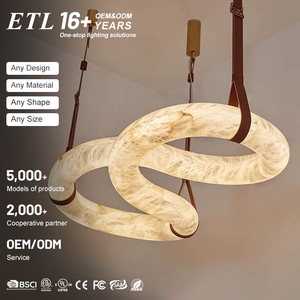
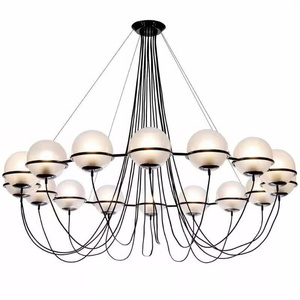
Natural Spanish alabaster is a translucent gypsum stone famed for its soft, cloud-like veining and low thermal conductivity. When illuminated internally by low-heat LED arrays, alabaster diffuses light without visible hotspots, yielding an ambient luminescence ideal for luxury hotel lobbies and high-end dining environments. However, because natural stone exhibits organic structural micro-fractures, OEM manufacturing requires precision diamond-tool carving and reinforced inner brass skeletons to prevent shear failure during transport. For budget-constrained projects or extreme high-humidity environments, cast optical resin alternatives can be color-matched and molded to mimic alabaster veining while offering superior impact resistance.
B. Hand-Blown vs. Mold-Pressed Glass Optics
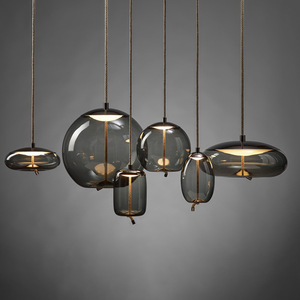
Glass remains the quintessential medium for decorative light refractivity. Artisan hand-blown glass—including seeded, clear, smoke gray, and amber tints—introduces subtle organic bubbles and wave distortions that render each fixture unique. Conversely, machine-pressed soda-lime glass offers precise wall thickness consistency, which is crucial for uniform photometrics in commercial multi-pendant installations. For high-output LED applications, thermal-shock resistant borosilicate glass is specified to prevent cracking caused by localized heat accumulation.
C. Solid Alloys and Hand-Applied Living Finishes
Cheap commercial fixtures frequently rely on thin electroplated iron, which is vulnerable to oxidation and delamination in humid coastal environments. Contract OEM manufacturing prioritizes solid H65 brass and marine-grade stainless steel. Finishes are applied through multi-stage electroplating, physical vapor deposition (PVD), or hand-applied chemical patination (e.g., antique brass, oil-rubbed bronze, brushed nickel) sealed with baked micro-clear lacquer coatings capable of passing 96-hour salt-spray corrosion tests.
3. Global Procurement Trends Shaping the Lighting Industry (2025–2030 Roadmap)
As global supply chains realign around sustainability, digital intelligence, and modular construction, commercial procurement teams must anticipate key technological and economic shifts shaping the pendant light export sector:
Trend 1: Biophilic Aesthetics and Natural Organic Textures
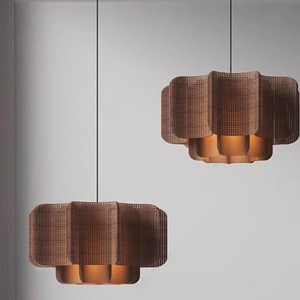
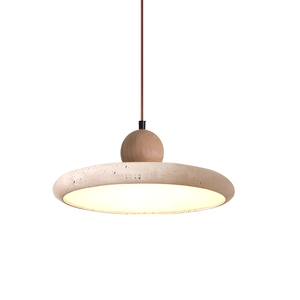
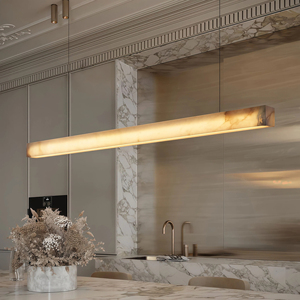
Modern commercial architecture is rapidly embracing biophilic design—integrating organic shapes, tactile natural materials, and earthy aesthetics to reduce stress and enhance occupant well-being. This shift has accelerated global demand for Wabi-sabi inspired cloud pendant lights, hand-woven rattan chandeliers, untreated ceramic shades, and raw marble linear lights. OEM suppliers are responding by pairing traditional organic hand-craftsmanship with concealed, high-efficiency architectural LED light engines.
Trend 2: Circadian Rhythm Tuning and Human-Centric Lighting (HCL)
Static color temperature lighting is becoming obsolete in high-end office environments, wellness resorts, and luxury residential projects. The market is pivoting toward Human-Centric Lighting systems that dynamic-tune color temperature and lux levels throughout the day to mirror natural sunlight. Advanced ODM pendant lights now integrate multi-channel LED chips capable of smooth transitions from energizing 4000K white light at mid-day down to warm 2200K low-blue light in the evening, controlled seamlessly via DALI-2 protocols.
Trend 3: Modular Engineering for Rapid Maintenance and Circular Economy Compliance
Historically, custom chandeliers required full fixture teardown or scaffolding erection to service failed drivers or light engines. The future of contract lighting lies in modular architectural assembly. Leading OEM exporters are designing pendant systems with magnetic quick-connect LED modules, drop-down driver trays, and concealed ceiling winch pockets. This allows facility maintenance teams to replace internal components within minutes without disturbing ceiling drywalls or requiring specialized trades.
Trend 4: Smart Control Protocol Integration (Casambi, Matter, DALI-2)
Commercial specifiers no longer accept isolated lighting fixtures. Every pendant light must integrate into broader Building Management Systems (BMS). Modern ODM production incorporates smart wireless node pockets within ceiling canopies, enabling native compatibility with Bluetooth Mesh networks, Casambi platforms, and Matter smart home ecosystems for granular zone control and predictive energy reporting.