Precision-engineered luminaires tailored for smart office, industrial, retail, and architectural deployments worldwide.
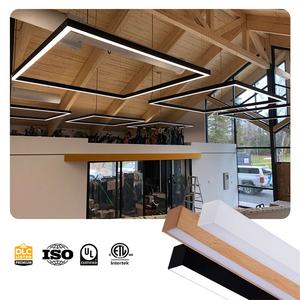
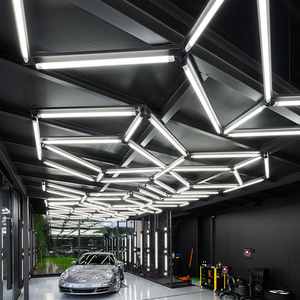
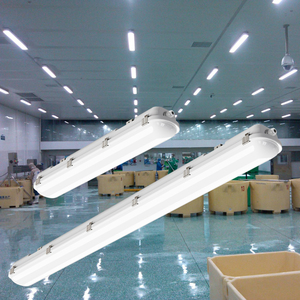
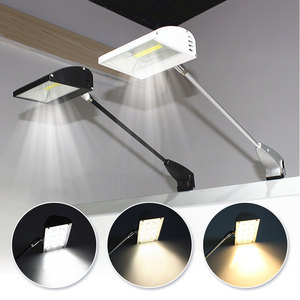
An authoritative breakdown of IoT driver ecosystems, thermal physics, and spectral customization in modern contract lighting manufacturing.
Modern commercial specification requires OEM factories to move beyond basic luminaire assembly. Integrating smart controls directly into fixture architecture demands precision thermal separation between the LED board, driver compartment, and wireless IoT nodes (such as Bluetooth Mesh, Zigbee 3.0, and Matter-over-Thread controllers).
Our engineering team designs custom heat-sink enclosures with isolated driver bays, ensuring ambient operating temperatures inside smart control cavities remain below 65°C to prevent signal drift, component degradation, or premature failure of wireless microcontrollers.
Human-Centric Lighting (HCL) is transitioning from a premium novelty to a standard specification item in corporate, healthcare, and educational lighting packages. OEM manufacturing of dual-channel or multichannel linear systems requires high spectral uniformity and zero binning variances (MacAdam 3-Step Ellipse standard).
We implement advanced multichannel LED arrays featuring continuous CCT tuning from 2700K to 6500K with color rendering indices (CRI) exceeding 90 to 95+, paired with customized smooth curve 0-10V, DALI-2 DT8, or wireless dimming drivers that maintain steady lumen output across the entire chromatic spectrum.
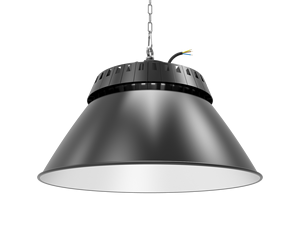
Luminaire longevity is dictated by thermal boundary condition management. Our factory utilizes high-conductivity 6063-T5 extruded aluminum for linear profiles and cold-forged aluminum heatsinks for high-bay fixtures, achieving thermal dissipation coefficients capable of supporting lumen maintenance ratings of L90/B10 at 50,000+ hours.
Optical performance is systematically engineered using high-transmittance optical PMMA lenses and micro-prismatic diffusers, guaranteeing Unified Glare Ratings (UGR) under 19 for office compliance while maximizing system efficacy up to 160 lm/W.
Below are the standardized technical parameters available across our custom OEM and ODM manufacturing runs:
| Parameter Category | OEM Specification & Standard Capability | Testing & Compliance Standard |
|---|---|---|
| Optical Efficacy | 130 lm/W up to 170 lm/W (Option for ultra-high output arrays) | LM-79-08 / LM-80 / TM-21 |
| Color Rendering Index (CRI) | Ra > 80, Ra > 90, Ra > 95 (R9 > 50 for realistic skin tones) | CIE 13.3-1995 / IES TM-30-18 |
| Smart Dimming Protocols | 0-10V, 1-10V, DALI-2 (DT6 & DT8), Phase-Cut (Triac/ELV), Bluetooth Mesh, Zigbee, Matter | IEC 62386 (DALI Standard) |
| Enclosure Protection | IP20 (Indoor Architectural), IP65/IP66 (Industrial Tri-Proof & High Bay) | EN 60529 / IEC 60529 |
| Impact Resistance | IK08 to IK10 High Polycarbonate / Tempered Glass diffusers | IEC 62262 Impact Rating |
| Mechanical Materials | Extruded 6063-T5 Aluminum, Cold-Rolled Steel, Spun Brass/Copper, Acrylic | ASTM B221 Industrial Aluminum |
| Certifications | UL, cUL, ETL, CE, RoHS, DLC 5.1 Premium, Title 24 JA8 compliant | Intertek / UL Solutions Audited |
Key market forces reshaping global contract lighting manufacturing, procurement risk management, and smart factory integration.
Enterprise buyers are moving away from sealed, disposable fixtures toward modular architectural linear systems. Procurement directives now prioritize fixtures featuring tool-less driver tray access and standardized Zhaga-book sensor sockets (Zhaga Book 18 / Book 20).
Our factory manufactures standardized gear trays that allow facility managers to swap or upgrade smart wireless control nodes in the field without dismounting the fixture body or rewiring the ceiling grid, extending luminaire service life to over 15 years.
Design teams and specifiers no longer wait weeks for photometric cut sheets. Modern OEM factories must provide instant access to high-accuracy IES and LDT photometric data files, as well as 3D BIM (Building Information Modeling) Revit files with embedded smart electrical parameters.
We maintain an in-house Type-C Goniophotometer and integrating sphere darkroom, producing certified IES files directly from physical prototypes so lighting designers can drop precise photometric digital twins into Dialux or Relux software immediately.
Environmental, Social, and Governance (ESG) compliance has become a mandatory criterion for commercial construction contracts in North America and Western Europe. Sourcing leads require transparent Environmental Product Declarations (EPD) detailing embodied carbon across raw metal sourcing, powder coating, and assembly.
Our production lines incorporate up to 75% recycled aluminum extrusions, zero-VOC powder coat finishes, and plastic-free recyclable packaging engineered to minimize volume footprint during international ocean shipping.
From initial hand-sketch concepts and CAD engineering drawings to custom metal spinning, automated surface mounting (SMT), burn-in testing, and on-site deployment guidance—our single-roof manufacturing facility provides total quality accountability.
Direct technical answers to common engineering, customization, and certification questions raised by specifiers and OEM purchasing officers.
Yes. Our engineering department specializes in translating design intent sketches, CAD models, reflected ceiling plans (RCP), or physical prototypes into fully buildable, code-compliant commercial luminaires. Before launching production, we issue comprehensive submittal packages including detailed 2D/3D shop drawings, thermal calculation data, photometric simulations, and physical finish chip samples for approval.
We work with leading driver and control system providers (such as Philips Xitanium, Tridonic, Osram, Casambi, and Silvair) or integrate customer-specified proprietary microcontrollers. During the engineering stage, we design custom aluminum driver enclosures to isolate control chips from thermal zones, test antenna signal propagation through optical diffusers, and perform 100% functional burn-in testing to guarantee zero packet loss on site.
Our production facility operates under rigorous ISO 9001 quality control protocols. Custom and standardized luminaires are engineered to meet UL 1598 / CSA C22.2 No. 250.0 standards for safety, with official UL/ETL marks provided. For European markets, fixtures carry CE and RoHS compliance certification. DLC 5.1 Premium qualifications and California Title 24 JA8 compliance are integrated as requested during specification.
For custom engineered fixtures, initial physical mock-ups or working prototypes are typically delivered within 3 to 4 weeks following final shop drawing approval. Full production runs generally require 10 to 14 weeks, depending on component availability, glass blowing complexity, and finishing requirements. Express engineering tracks are available for fast-tracked commercial tenant fit-outs.
Every custom OEM production run is cataloged in our engineering archive with complete bill-of-materials (BOM), CAD tooling files, optical spectrum profiles, and custom finish powder/plating recipes. Because we perform metal spinning, CNC machining, and finishing in-house, we can re-manufacture exact matching replacement components, diffusers, or LED engines years after initial handover for phase-two building expansions.
Upload your lighting schedules, CAD sketches, or project specifications today. Our engineering team will review your requirements and provide detailed shop drawings, photometrics, and factory-direct pricing within 48 hours.
Contact Us