Engineered to commercial specs with customizable power, color temperature, optical diffusion, and mechanical finishes.
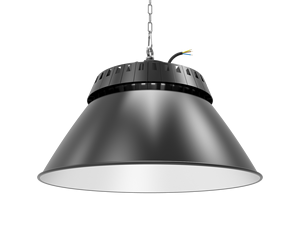
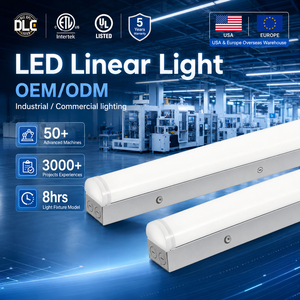
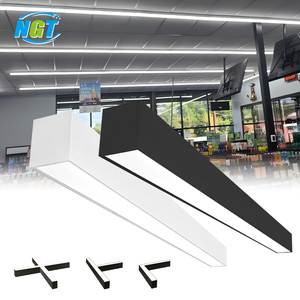
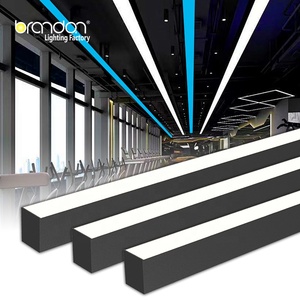
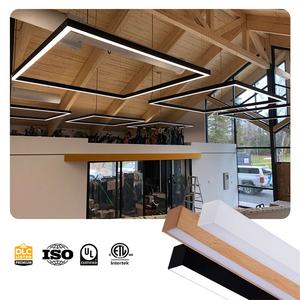
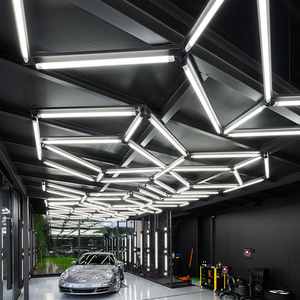
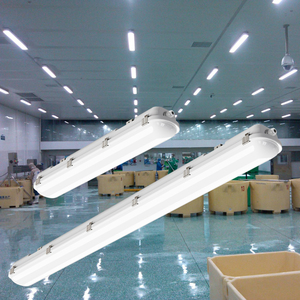
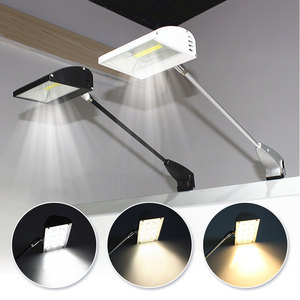
In modern architectural design, automotive spatial engineering, and luxury commercial interiors, ambient lighting has evolved from a passive illumination utility into a foundational element of spatial psychology and environmental identity. For global tier-1 specifiers, brand owners, lighting designers, and procurement managers, selecting an authentic Custom OEM Ambient Lighting Manufacturer & Factory is a critical decision that influences project longevity, photometrical performance, regulatory safety, and total cost of ownership (TCO).
True OEM (Original Equipment Manufacturer) capability in ambient lighting demands far more than basic component assembly. It necessitates a vertically integrated ecosystem comprising advanced optical engineering, precision metal spinning, computerized SMT (Surface Mount Technology) LED board placement, custom glass forming, and rigorous thermal dynamics simulation. As lighting standards shift towards high CRI (Color Rendering Index Ra > 95, R9 > 80), human-centric circadian tuning, and addressable dynamic control systems, factories must supply verifiable engineering integrity alongside flexible production scale.
Custom light guides engineered to achieve uniform micro-prismatic diffusion without micro-glare or hotspots, maintaining strict MacAdam Ellipse 2-step / 3-step consistency.
Solid brass, copper, aircraft-grade aluminum extrusion, and stainless steel fabrication utilizing high-precision CNC spinning and hand-applied patinas.
Full compliance with UL 1598, ETL, CE, and RoHS, featuring dedicated wet-location sealing, Title 24 energy efficiency, and seismic resistance engineering.
Our US-engineered, global manufacturing operation bridges the gap between ambitious designer intent and flawless commercial execution. Operating out of a state-of-the-art 60,000 square-foot production workshop, we manage the complete fabrication life cycle in-house. This centralized control eliminates subcontractor delays, guarantees material traceability, and enforces strict quality assurance protocols at every stage of production.


To assist specifiers and engineering teams during early-stage procurement and submittal phases, the matrix below details our standard OEM parameter envelope:
| Engineering Parameter | OEM Factory Standard Specification | Custom / Bespoke Options |
|---|---|---|
| Structural Materials | Extruded 6063-T5 Aluminum, Cold-Rolled Steel, Solid Brass | Architectural Bronze, Copper, Stainless Steel 316, Cast Glass, Alabaster |
| Luminous Efficacy | 120 - 160 lm/W (Standard Commercial Diffusers) | Up to 180 lm/W with micro-prismatic high-transmittance optics |
| Color Rendering (CRI) | Ra > 90, R9 > 50 (3-Step MacAdam Ellipse) | Ra > 97, R9 > 90, TM-30 Rf > 95 / Rg > 100 (2-Step MacAdam) |
| Dimming & Smart Control | 0–10V, Triac/ELV Phase Dimming (1% to 100%) | DALI-2 (DT6/DT8), Casambi, Zigbee 3.0, CAN/LIN Protocol, DMX512 |
| Ingress Protection | IP20 (Indoor Ceiling / Linear Dry Locations) | IP65 Waterproof, IP67 Submersible, IP68 Marine-Grade C5-M Coating |
| Certification & Safety | UL 1598 / CSA C22.2 No. 250.0, CE, RoHS Compliant | ETL Listed damp/wet, Title 24 JA8, Class 2, Seismic Restraint Bracing |
| Prototyping Lead Time | 3–4 Weeks (Approved Shop Drawings & Sample Set) | Rapid 10-day 3D-printed/machined spatial mock-ups available |
| Mass Production Lead Time | 10–14 Weeks (Standard Scale Freight Delivery) | Phased site-delivery scheduling per contractor project gantt chart |
The global contract and architectural ambient lighting market is undergoing a paradigm shift driven by smart building automation, human-centric lighting (HCL) science, and stringent energy efficiency directives (such as EU Ecodesign and US Title 24). Procurement leaders must partner with forward-thinking OEM manufacturers capable of integrating these advancements into reliable physical hardware.
Traditional ambient lighting often relied on opaque diffusers that resulted in substantial efficiency loss (up to 35% lumen attenuation). Advanced OEM manufacturing utilizes laser-etched PMMA (Polymethyl Methacrylate) optical light guides. By micro-patterning surface dots on acrylic plates, light emitted from edge-lit LEDs is redirected with edge-to-edge optical uniformity (> 92%), eliminating visible shadows and LED hotspots while maximizing optical output.
As interior architectural spaces draw design inspiration from automotive interior luxury, demand for dynamic ambient lighting has increased. Technologies originally perfected for automotive cabin lighting—such as low-latency LIN (Local Interconnect Network) and CAN bus protocol addressability—are being translated into commercial linear fixtures. This allows thousands of individually addressable RGBW nodes to deliver continuous fluid color gradients and spatial motion lighting in hotel lobbies, corporate headquarters, and high-end retail venues.
Future-proof procurement strategies prioritize sustainability and long-term serviceability. Leading OEM factories are moving toward Design for Disassembly (DfD). Modular driver enclosures, field-replaceable LED light engines, and tool-free quick-connect harnesses ensure that individual components can be serviced decades after installation without requiring total fixture destruction. Furthermore, remote-driver architectures—where LED drivers are centralized in accessible electrical rooms rather than sealed inside high-ceiling fixtures—simplify maintenance and reduce thermal stress on light engines.
Procuring custom ambient lighting fixtures for large-scale commercial, hospitality, or municipal projects involves significant capital outlay and schedule risk. Global specifiers and general contractors are optimizing their supply chains through specific operational strategies:
Contractors require fully dimensioned CAD drawings, 3D Revit/BIM models, and photometric IES/LDT files prior to issuing production deposits to eliminate spatial clashes.
Specifying 1:1 scale operational mock-up samples in 3 to 4 weeks allows architectural teams to verify color temperature, glare control, and material finishes in actual site lighting conditions.
OEM factories must package fixtures in logically numbered, zone-specific crates with factory-issued rigging hardware and clear assembly guides to streamline field installation.
Below are authoritative responses to common technical, commercial, and operational questions asked by specifiers and engineering teams during the OEM supplier selection process:
