Explore our flagship industrial aluminum profiles, commercial linear fixtures, and waterproof housings engineered for high-efficiency heat dissipation and architectural alignment.
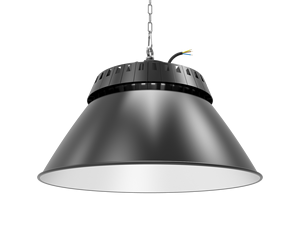
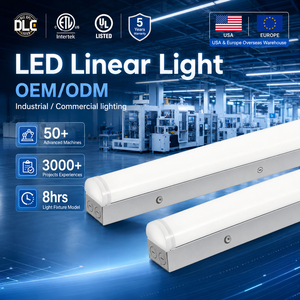
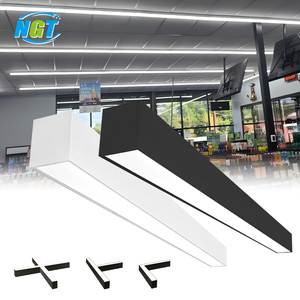
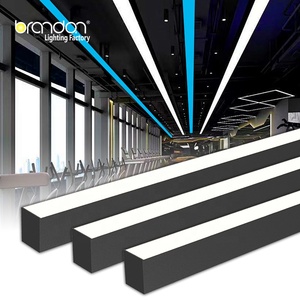
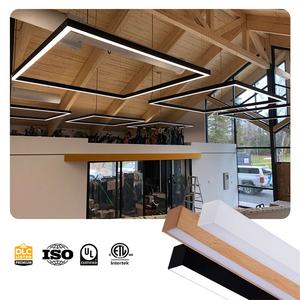
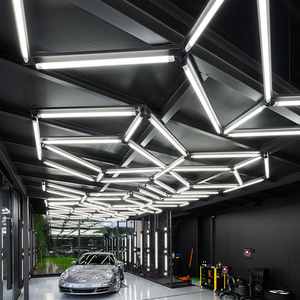
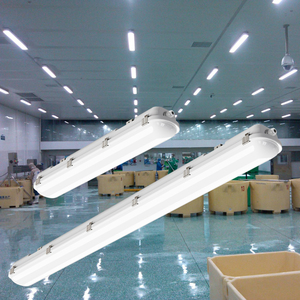
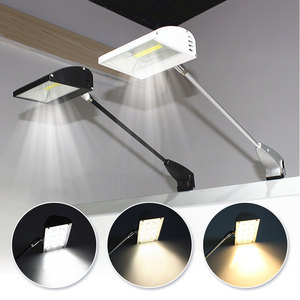
In modern commercial architecture and high-performance LED lighting systems, aluminum extrusion profiles serve as both structural skeletons and primary thermodynamic sinks. Choosing the correct China wholesale aluminum profile supplier requires a deep technical understanding of chemical alloy composition, thermal conductivity indices, mechanical yield strengths, and post-extrusion surface treatment protocols. As architectural lighting transitions into higher power densities—exceeding 180 lumens per watt—the role of precision-engineered aluminum extrusions becomes paramount to mitigating lumen depreciation and extending junction temperature boundaries.
Our manufacturing ecosystems utilize architectural-grade AL6063-T5 and structural AL6061-T6 aluminum alloys. 6063-T5 offers an optimal thermal conductivity rating of approximately $200 \text{ W/m}\cdot\text{K}$, combined with exceptional surface finish capabilities for anodic oxidation and electrostatic powder coating. Through precisely calibrated extrusion dies, aluminum billets heated to $450^\circ\text{C}-500^\circ\text{C}$ are forced through precision apertures under hydraulic forces exceeding 2,500 tons. This process ensures dimensional tolerances adhering strictly to ISO 2768-m or EN 755-9 standards, preventing optical misalignment and light leakage in continuous linear runs.
Technical Insight on Thermal Management: For every $10^\circ\text{C}$ reduction in LED junction temperature ($T_j$), the operational lifespan of the LED chip doubles. High-density finned aluminum profiles designed in our factory increase effective surface heat dissipation area by up to 340% compared to flat stamped channels.
| Alloy Grade | Thermal Conductivity | Tensile Strength (MPa) | Primary B2B Application | Surface Finish Compatibility |
|---|---|---|---|---|
| 6063-T5 | 201 W/m·K | ≥ 185 | Architectural Linear Channels, Office Lighting, LED Strips | Anodizing (10-25µm), Powder Coating, Sandblasting |
| 6061-T6 | 167 W/m·K | ≥ 310 | Heavy-Duty High Bay Framework, Structural Truss Systems | Hard Anodizing, Industrial Protective Painting |
| 6060-T6 | 209 W/m·K | ≥ 150 | Intricate Custom Geometric Profiles, Heat Sinks | High-Gloss Polishing, Electrophoretic Coating |
Operating out of an integrated 60,000 square foot manufacturing complex with over 25 years of fabrication expertise, our enterprise offers end-to-end customization that translates back-of-napkin CAD sketches into certified, deployable lighting systems. B2B procurement officers, lighting specifiers, and original equipment manufacturers (OEMs) demand predictable supply chain velocity and unyielding quality control. Our integrated manufacturing pipeline bridges design intent with scalable mass production.
In-house tooling shop capable of producing complex extrusion dies within 7 to 10 working days, accommodating ultra-slim, wide-aperture, and asymmetrical optical geometries.
Advanced co-extrusion of aluminum substrate channels with high-transmittance, UV-stabilized Polycarbonate (PC) or PMMA diffusers yielding unified light distribution without pixelation.
Full compliance engineering for UL, ETL, CE, RoHS, and DLC requirements. Integrated wireways and driver chambers designed for rapid electrical inspector sign-off.
Our engineering workflow starts with complete shop drawing validation within 48 hours of design submittal. To de-risk large commercial rollouts, we provide physical working mock-ups in 3 to 4 weeks, enabling architectural teams to evaluate glare control, light distribution, mechanical joining integrity, and surface finish tone under actual project conditions. Full production runs are executed in 10 to 14 weeks, backed by rigorous batch testing, micro-hardness testing (Webster hardness ≥ 11), layer thickness measurement, and automated optical inspection (AOI).
Procurement executives navigating the global aluminum profile market must align their sourcing strategies with three structural shifts: total carbon footprint accountability, modularization for rapid field installation, and smart building sensor integration.
With carbon border adjustment mechanisms (such as the EU's CBAM) coming into full effect, top-tier commercial projects demand low-carbon primary aluminum billets produced via hydroelectric power or high-percentage recycled content (post-industrial scrap). Sourcing aluminum profiles from manufacturers utilizing green billet processing reduces Scope 3 embedded carbon emissions by up to 65%, providing a massive strategic advantage for LEED and BREEAM building certifications.
On-site labor costs represent an increasing percentage of total installed lighting budgets in North America and Western Europe. Future profile designs are moving away from traditional mechanical screws toward toolless, snap-in mounting tracks, magnetic gear trays, and quick-connect inline joiners. Extrusion channels designed with dual-side mechanical keyways allow continuous linear runs exceeding 100 meters with zero light leakage at profile intersections.
Aluminum profile extrusions are no longer passive housing; they are active technology conduits. Future-proof aluminum profiles feature dedicated secondary raceways for low-voltage power busbars, DALI-2 dimming control lines, occupancy sensor modules, and emergency battery backup packs. By designing profiles with multi-cavity isolation walls, line-voltage wiring and low-voltage control signals co-exist safely within a single compact aluminum housing.
As linear lighting becomes deeply unified with interior acoustics and structural ceiling grids, factory product development roadmap teams must focus on multi-functional material integration. Over the next decade, we anticipate three core developmental trajectories:
Submit your CAD files, project bill of materials, or custom extrusion requirements to our senior engineering team for immediate technical review and competitive wholesale pricing within 24 hours.
Contact Us