Precision-engineered CE, RoHS, UL, and DLC certified commercial luminaires built for high visual acuity, thermal efficiency, and long-term operating stability.
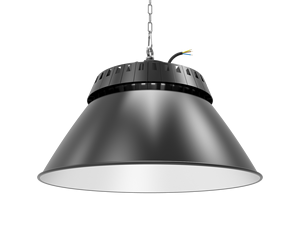
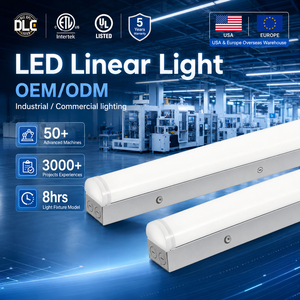
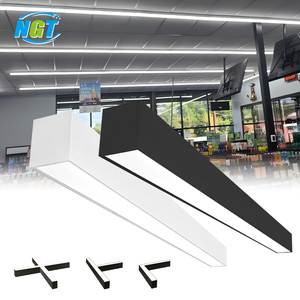
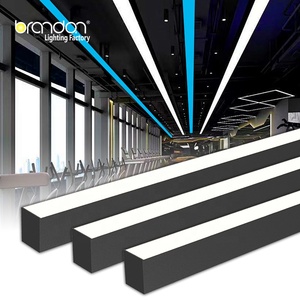
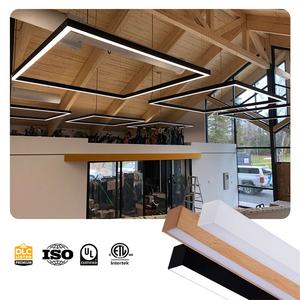
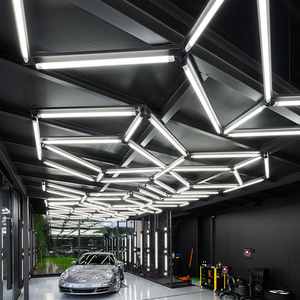
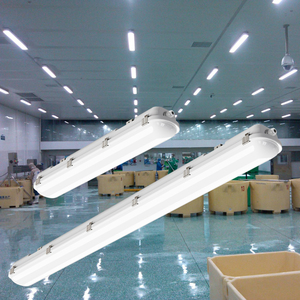
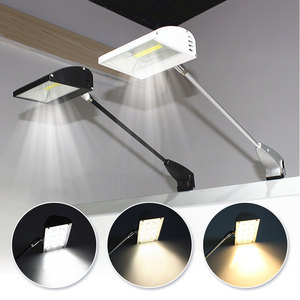
In modern retail environments, lighting is far more than a utility—it is a critical revenue driver, an architectural branding medium, and a fundamental component of operational energy control. Commercial lighting specifiers, retail store planners, and global procurement directors face unprecedented pressure to balance high optical fidelity (CRI/TM-30), unified glare rating control (UGR < 19), and strict regulatory compliance against shrinking operational expenditure budgets. Choosing a certified CE retail lighting manufacturer that owns every phase of mechanical design, driver integration, optical diffusion, and photometric validation is essential to achieving consistent store-wide execution.
Exporting commercial lighting to the European Economic Area (EEA) and global markets demands compliance beyond basic assembly. A genuine CE-certified retail lighting factory maintains rigorous quality management systems governed by ISO 9001 and executes full compliance testing under key European Directives:
Traditional CRI (Ra) metrics only measure color fidelity against 8 basic pastel swatches, often failing to accurately represent saturated reds (R9) common in apparel, fresh foods, and cosmetics. Our retail lighting manufacturing lines employ advanced LED engine arrays tested against TM-30-18 parameters, tracking both Fidelity Index ($R_f \ge 90$) and Gamut Index ($R_g \ge 100$).
DIP-switch integrated drivers allow specifiers to select 3000K, 4000K, or 5000K CCT on-site, drastically reducing regional distributor SKU inventory while enabling tailored color temperatures per retail aisle.
Engineered PMMA and polycarbonate diffusers utilize micro-structured prism optics to suppress luminance at angles above 65°, ensuring UGR < 19 compliance for modern open-ceiling retail and office spaces.
Seamless push-fit mechanical connectors and internal quick-wire harnesses allow continuous runs of up to 100 meters on a single power feed, dramatically trimming electrician installation hours.
| Parameter / Metric | Standard Commercial Grade | Our Spec-Grade CE Retail Standard | Strategic Advantage |
|---|---|---|---|
| Luminous Efficacy | 100 - 120 lm/W | 140 - 160+ lm/W | Reduces annual utility overhead by up to 35%. |
| Color Rendering Index | CRI > 80 (R9 < 0) | CRI > 90 / 95 (R9 > 50, TM-30 Rf > 92) | Vivid merchandise color pop; heightened buyer engagement. |
| Lumen Maintenance | L70B50 @ 30,000 Hours | L80B10 @ 60,000 Hours | Extends fixture replacement cycles beyond 7-10 years. |
| Flicker Metric (Pst LM / SVG) | Pst LM < 1.0, SVG < 0.9 | Pst LM < 0.2, SVG < 0.1 (Flicker-Free) | Prevents visual fatigue, headache, and store CCTV banding. |
| Thermal Management | Stamped Sheet Aluminum | 6063 T5 Heavy Aircraft Extruded Aluminum | Junction temperature maintained under 65°C for LED longevity. |
| Dimming & Smart Control | Non-dimmable / Basic Triac | 0-10V / DALI-2 / Zigbee 3.0 / Tuya Smart Mesh | Enables automated daylight harvesting and scheduling. |
As commercial spaces evolve into multi-sensory experiences, retail lighting engineering is experiencing four transformative shifts that procurement teams must factor into long-term master planning:
1. Dynamic Circadian & Tunable White Lighting: Moving beyond static CCTs, top-tier retail flagship stores are adopting automated circadian spectrum tuning (2700K to 6500K). Soft, warm tones during morning hours transition to crisp, high-energy white at mid-day, aligning human biological rhythms to improve staff alertness and create inviting shopping ambiances.
2. IoT Smart Lighting Controls & Bluetooth Mesh Asset Tracking: Modern linear battens and high bays serve as the digital backbone of smart stores. Integrating BLE (Bluetooth Low Energy) micro-beacons inside CE-certified LED drivers allows store management to track customer foot-traffic heatmaps, push location-based promotional offers to mobile apps, and perform remote automated energy metering.
3. Circular Economy & Modular Repairability: European EcoDesign mandates are penalizing single-use glued fixtures. Our factory designs feature tool-less driver slides, field-replaceable PCB modules, and recycled aluminum housings—ensuring fixtures can be upgraded or serviced in-situ without tearing down ceiling infrastructure.
4. High-Efficiency Dark-Light Optics: Modern retail design prioritizes "light on merchandise, not in the shopper's eye." Deep-recessed optical louvers and double-asymmetric aisle lenses project light directly onto retail shelves while maintaining a dark ceiling aesthetic, eliminating bright glare sources that distract consumers.
Operating as an end-to-end original equipment manufacturer (OEM) and original design manufacturer (ODM), our facility bridges the gap between architectural concept sketches and mass production rollouts. Our production architecture encompasses:
Essential guidance for commercial specifiers, electrical contractors, and wholesale distributors sourcing CE-certified retail lighting fixtures.
Every shipment includes comprehensive technical submittal files: CE Declaration of Conformity (DoC), LVD and EMC test reports from accredited third-party laboratories (SGS / TUV / Intertek), RoHS certificates, IES/LDT photometric files, and installation instruction manuals.
Yes. As a direct manufacturer, we offer full OEM/ODM customization. Aluminum profile lengths can be tailored from 2ft to 10ft, custom powder coating is available in any RAL shade (e.g., Matte Black, Signal White, Brushed Bronze), and drivers can be tuned to precise lumen outputs.
We strictly utilize single-bin LED chips constrained within a 3-Step MacAdam Ellipse (SDCM < 3). This guarantees that fixtures installed across multi-phase store expansions maintain identical chromaticity and color temperature without visible variation.
Our commercial linear and tri-proof series can be optioned with integrated 3-hour emergency battery backup modules (LiFePO4), DALI-2 dimmable drivers, 0-10V analog dimming, and microwave or PIR daylight-harvesting motion sensors.
Standard sample prototyping takes 5–7 working days. Full container production runs typically require 15–22 calendar days from final shop drawing sign-off and engineering approval.
Yes. Our in-house lighting design team provides complimentary DIALux Evo photometric simulations for qualified enterprise projects, delivering detailed false-color lux maps, glare evaluations, and energy density calculations.
