Engineered for high luminous efficacy, thermal reliability, and global regulatory compliance across commercial, signage, and video wall installations.
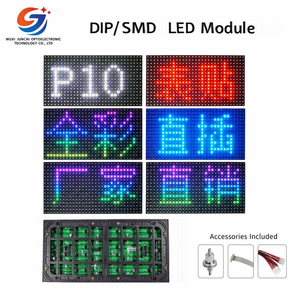
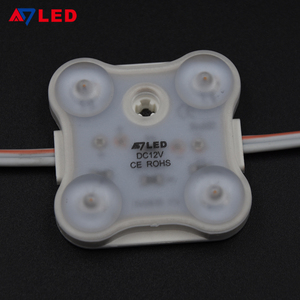
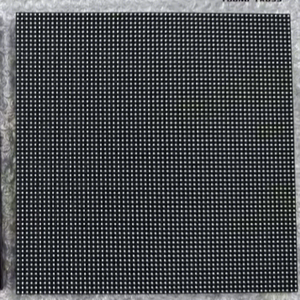
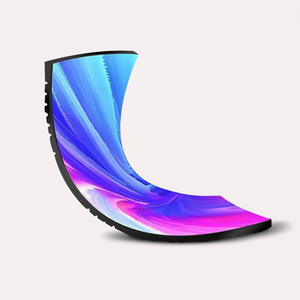
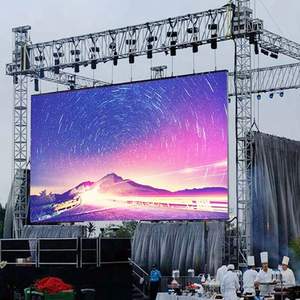
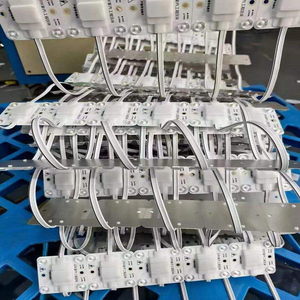
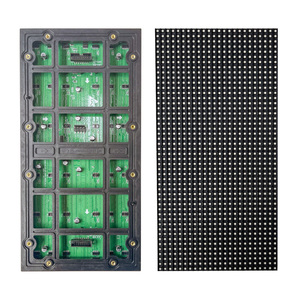
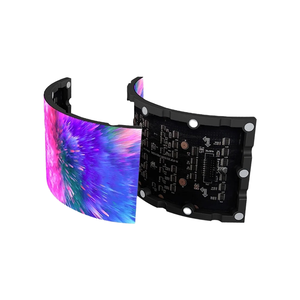
Combining 25+ years of custom luminaire & LED module engineering with automated SMT production line infrastructure to guarantee optical consistency and certified performance.
Every batch undergoes strict photobiological safety, EMC emission, and LVD voltage testing to satisfy CE, UL, and ETL directive requirements before dispatch.
Built using high-thermal-conductivity Aluminum PCB substrates (MCPCB) and silicone potting encapsulants, ensuring low junction temperatures ($T_j < 65^\circ\text{C}$) and zero thermal throttling.
From custom CAD layout and PCB trace design to physical optical mock-ups within 3 to 4 weeks, facilitating precise architectural and signage integration.
The global LED module manufacturing landscape is undergoing a structural paradigm shift driven by high-density packaging, higher energy efficacy standards, and smart control integration. Commercial specifiers, architectural designers, and industrial lighting original equipment manufacturers (OEMs) demand more than mere illumination—they require high information gain regarding long-term reliability metrics, precise color consistency, and rigorous regulatory compliance.
Key Technological Breakthrough: Transitioning from conventional surface-mount devices (SMD) to Direct COB (Chip-on-Board) and GOB (Glue-on-Board) technologies has reduced package thermal resistance ($R_{th}$) by up to 35% while dramatically raising mechanical impact protection and optical uniformity.
Modern sign cabinet and channel letter module design has shifted away from narrow $120^\circ$ Lambertian radiation patterns toward wide-angle batwing optics ($160^\circ$ to $170^\circ$). By incorporating optical-grade polycarbonate or PMMA lenses over SMD2835 and SMD3030 chips, manufacturers achieve uniform edge-to-edge light distribution. This allows procurement teams to reduce module density per square meter by 20–30% while eliminating visible hot-spots in shallow sign depth applications (down to 40mm depth).
Leading European and North American specifiers strictly demand 3-step MacAdam Ellipse (SDCM ≤ 3) color binning. Advanced LED module manufacturers utilize spectroradiometer-controlled automated binning during SMT assembly to ensure batch-to-batch color stability ($CCT$). This prevents unsightly chromatic drift across large-scale architectural facades, channel letters, and indoor LED video walls.
Thermal dissipation remains the primary determinant of LED module lifespan (L70/B50 rating). High-performance CE-certified modules utilize Metal Core Printed Circuit Boards (MCPCB) featuring dielectric layer thermal conductivity between $1.5\text{ W/m}\cdot\text{K}$ and $3.0\text{ W/m}\cdot\text{K}$. Coupled with high-purity aluminum alloy backplates, operational junction temperature ($T_j$) is kept well below critical degradation thresholds, guaranteeing lower lumen depreciation over a 50,000-hour operational life.
As international energy efficiency directives (such as the EU ErP Directive and US Title 24) become increasingly stringent, enterprise procurement managers must evaluate suppliers based on Total Cost of Ownership (TCO), circular supply chain compliance, and regulatory documentation integrity.
| Technology Standard | Traditional SMD Modules | Advanced GOB Modules | Next-Gen COB Modules |
|---|---|---|---|
| Ingress Protection | IP65 (Conformal Coating / Epoxy) | IP68 (Full Epoxy Sealing) | IP68 (Direct Encapsulation) |
| Impact Resistance | Standard (IK06) | High (IK09 - Anti-Collision) | Ultra-High (IK10 Waterproof/Dustproof) |
| Thermal Resistance ($R_{th}$) | $35 - 50^\circ\text{C/W}$ | $20 - 30^\circ\text{C/W}$ | $< 15^\circ\text{C/W}$ |
| Maintenance Cost Index | Medium (Individual Replacement) | Low (Surface Cleanable) | Very Low (Degradation Resistant) |
| Primary Sourcing Focus | Budget Backlighting & Signage | Rental Displays & Fine-Pitch Video Walls | Architectural & High-End Commercial |
A legitimate CE mark for LED modules represents non-negotiable legal compliance across European Economic Area (EEA) territories. Buyers must ensure that supplier CE documentation covers the three required sub-directives:
Mandates electrical safety, creepage distance, and insulation resistance for modules operating at or converting line voltages up to 1000V AC / 1500V DC.
Ensures LED module driver ICs and switching circuits do not emit harmful electromagnetic interference (EMI) or suffer immunity breakdown from external power surges.
Restricts hazardous substances including lead, mercury, cadmium, and hexavalent chromium in solders, substrates, and optical resins.
Addressing core technical questions regarding compliance, manufacturing specs, lead times, and custom module engineering.
A valid CE compliance dossier includes an EN 62031 test report (LED modules for general lighting safety), EN 55015 / EN 61547 reports for EMC compliance, and an official Declaration of Conformity (DoC) issued by an accredited ISO/IEC 17025 laboratory. Additionally, LM-80 test data for the underlying emitter chips should be provided to substantiate long-term lumen maintenance.
Constant Voltage (CV) modules (typically DC12V or DC24V) rely on onboard current-limiting resistors and are ideal for modular cuttable strings, channel letter signs, and decorative accent lighting. Constant Current (CC) modules integrate active IC drivers directly onto the PCB, eliminating voltage-drop brightness decay over long daisy-chained cable runs and maximizing overall system luminous efficacy ($lm/W$).
GOB technology encapsulates the entire SMT-mounted LED surface with an optically transparent epoxy resin. This transforms fragile surface LEDs into an IP68-rated, impact-resistant, anti-collision, dustproof, and moisture-proof panel. It is widely specified for rental display screens, high-traffic commercial environments, and fine-pitch indoor video walls.
Custom PCB engineering, mechanical housing modeling, and sample mock-ups are typically completed within 3 to 4 weeks. Once shop drawings, photometric targets, and sample sets are approved, mass production runs take approximately 10 to 14 business days, depending on raw material component procurement and volume burn-in testing protocols.
IP65 modules utilize conformal acrylic coatings or localized silicone covers designed to withstand water jets and ambient rain. IP68 modules utilize complete over-molded ABS/PC injection housings fully back-filled with thermal epoxy or polyurethane resin, allowing continuous underwater immersion and extreme exterior weathering.
Submit your design intent, photometrics requirements, or engineering drawings. Our technical specialists provide comprehensive shop drawings, photometric simulation files, and competitive direct-factory quotations within 24 hours.
Send an Inquiry