Engineering compliance meeting European Norms (EN 60598-2-22), CE standards, and UL/ETL certifications for heavy industrial, commercial, and emergency escape applications.
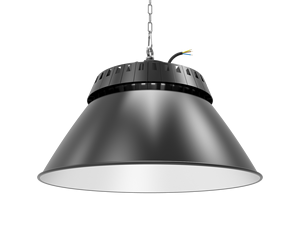
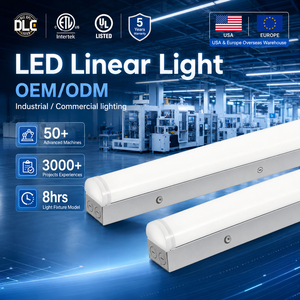
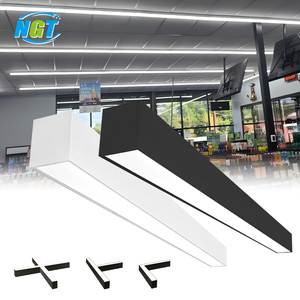
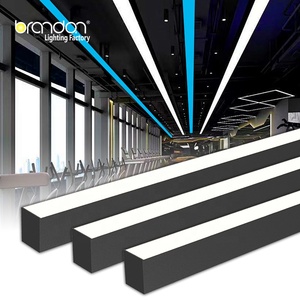
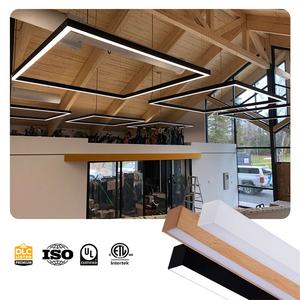
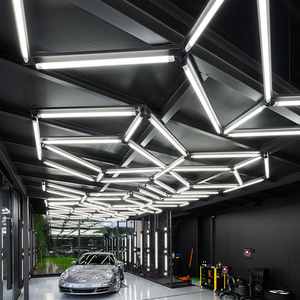
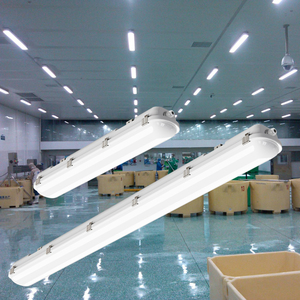
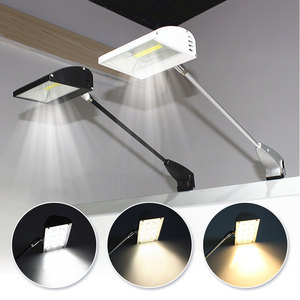
Life safety infrastructure requires an uncompromising commitment to engineering rigour, photometric compliance, and electro-chemical reliability. As premier CE Certified Emergency Lighting Suppliers & Exporters, our manufacturing paradigm is built around ensuring that illuminated escape routes, anti-panic spaces, and high-risk task areas operate flawlessly during critical power disruptions. Emergency lighting is not merely a decorative fixture; it is a life-critical safety system governed by international regulations, stringent photometric standards, and strict thermal dynamics.
Core Technical Takeaway: Under European Norm EN 60598-2-22 and emergency illumination framework EN 1838, emergency luminaires must deliver full rated lumen output within 5 seconds (0.5 seconds in high-risk areas) and maintain operational integrity for 1 to 3 hours under harsh environmental stresses.
When specifying emergency and industrial lighting fixtures for European, Middle Eastern, and North American installations, engineering procurement teams must navigate complex compliance frameworks. CE marking for emergency lighting is not a singular certification; it is an overarching declaration of compliance with multiple essential directives:
Low Voltage Directive (LVD) 2014/35/EU: Requires rigorous insulation testing, creepage distance verification, and high-pot dielectric strength testing. Luminaires designed with integrated battery power supplies must guarantee galvanic isolation between mains circuits and low-voltage emergency driver control lines.
Electromagnetic Compatibility (EMC) Directive 2014/30/EU: Ensures that emergency battery drivers, high-frequency LED power supplies, and self-testing microcontrollers do not generate conductive or radiated electromagnetic interference (EMI) that could disrupt building automation systems, wireless emergency networks, or sensitive medical equipment.
EN 60598-2-22 Safety Particulars: This specific standard mandates distinct battery charge monitoring, thermal endurance testing (Ta operating envelope from -20°C to +50°C), flame-retardant enclosure testing (glow-wire test up to 850°C), and automated self-test protocol integration (DALI-2 / IEC 62386-202 standard compliance).
The operational backbone of any self-contained emergency lighting fixture is its chemical energy storage. Traditional Nickel-Cadmium (NiCd) and Nickel-Metal Hydride (NiMH) batteries are rapidly being replaced by advanced Lithium Iron Phosphate (LiFePO4) chemistry due to fundamental physical advantages:
Thermal Stability: LiFePO4 cells maintain structural crystal stability at elevated ambient temperatures, eliminating thermal runaway risks up to 60°C. This is crucial when emergency drivers are located inside sealed IP65 vapor-tight housings or high-bay luminaires operating near warehouse ceilings where ambient heat accumulates.
Cycle Life & Degradation Kinetics: LiFePO4 batteries deliver up to 3,000 charge-discharge cycles at 80% Depth of Discharge (DoD), compared to only 500-800 cycles for NiCd cells. This reduces the total cost of ownership (TCO) by extending battery replacement intervals from 2 years to over 6-8 years.
Environmental Footprint & RoHS Compliance: Free of hazardous heavy metals like cadmium and lead, LiFePO4 systems fully align with the EU RoHS Directive 2011/65/EU and WEEE sustainability guidelines.
| Battery Chemistry | Energy Density (Wh/kg) | Service Life (Years) | Thermal Window (°C) | Eco-Impact / RoHS Compliance |
|---|---|---|---|---|
| Lithium Iron Phosphate (LiFePO4) | 120 - 160 | 6 - 10 Years | -20°C to +60°C | Fully Compliant / Non-Toxic |
| Nickel-Metal Hydride (NiMH) | 60 - 120 | 3 - 5 Years | 0°C to +45°C | Compliant / Contains Heavy Metals |
| Nickel-Cadmium (NiCd) | 40 - 60 | 2 - 4 Years | -10°C to +40°C | Restricted / High Toxicity (Cadmium) |
As commercial buildings, logistical hubs, and architectural complexes transition toward zero-carbon mandates and smart digital management, lighting procurement strategies are shifting dramatically. Key trends shaping global procurement over the coming decade include:
Manual testing of individual emergency fixtures is labor-intensive and error-prone. Modern compliance standards demand automated reporting. Integrating DALI-2 emergency drivers (IEC 62386-202) allows central emergency lighting control panels to automatically schedule monthly duration tests and weekly function tests, logging fault diagnostic data (e.g., battery degradation, LED module failure) straight to facility management cloud dashboards.
Electrical distributors and general contractors face mounting warehousing and inventory holding costs. Next-generation LED luminaires—such as our IP65 Tri-proof and High Bay series—feature dip-switch selectable power drivers (e.g., toggling 100W, 150W, and 200W within a single physical housing) alongside field-adjustable Color Correlated Temperature (3000K, 4000K, 5000K). This flexibility allows distributors to fulfill diverse specification requirements while reducing stocking SKUs by over 60%.
With strict EU Right-to-Repair mandates and Eco-Design Directive (EU) 2019/2020, specifiers favor luminaires built with modular LED engines, replaceable battery trays, and quick-disconnect terminal blocks. Luminaires engineered for modular servicing eliminate the requirement to replace complete fixtures during routine battery maintenance, slashing long-term operational expenditure.
Our engineering workshop continuously advances luminaire efficiency, optical control, and mechanical durability. Our latest manufacturing breakthroughs include:
Custom asymmetric optical lenses designed specifically for emergency escape routes (EN 1838 corridors). Achieves 15-meter fixture spacing while providing 1 lux on the central floor axis.
Patented physical separation between high-wattage LED heat sinks and internal battery compartments, preventing thermal heat transfer and safeguarding battery longevity.
Heavy-duty extruded aluminum chassis and high-impact polycarbonate diffusers engineered to withstand 20 Joules of mechanical impact (IK10) and high-pressure washdowns.
Refined over 25 years of specialized lighting production, our enterprise leverages a 60,000 square foot state-of-the-art facility capable of meeting the rigorous engineering demands of contract hospitality, industrial logistics, and municipal emergency projects.
1. Full In-House Fabrication & Metal Spinning: Unlike assemblers who source off-the-shelf components, our facility handles metal spinning, precision laser cutting, robotic welding, hand-planishing, and custom powder-coating under one roof. This guarantees total dimensional accuracy and aesthetic consistency across global projects.
2. In-House Photometric & Safety Testing Lab: Equipped with integrating spheres, goniophotometers, and automated high-temperature aging racks, every design undergoes rigorous IES file generation, thermal profiling, and 100% burn-in testing prior to crating.
3. Tailored OEM/ODM Engineering Support: From conceptual CAD sketches, reflected ceiling plans (RCP), and photometric DIALux simulations to custom shop drawings generated within 3–4 days, our engineering team works directly with architectural specifiers to solve spatial, aesthetic, and regulatory constraints.
4. Global Installation & Rigging Logistics: We deliver fully numbered assembly kits, custom mounting bracketry, and on-site field support across Europe, North America, the Middle East, and Asia—ensuring seamless handover in live operating spaces.
Our emergency lighting products undergo rigorous third-party laboratory testing to comply with EN 60598-2-22, EN 55015 EMC regulations, and LVD safety directives. Full compliance certificates, test reports, and CE Declarations of Conformity (DoC) are provided alongside technical submittal packages.
We supply emergency drivers configured for 1-hour, 2-hour, or 3-hour continuous battery discharge times operating under rated lumen output. Emergency modules feature integrated auto-test functions and smart trickle-charge management for maximum battery health.
Yes. Based on our 60,000 ft² in-house engineering and fabrication facility, we regularly customize housing lengths, RAL powder coat finishes, IP ratings, and mounting brackets (pendant, surface, wire suspension, recessed) to match exact architect intent.
Standard production lead times range between 10 to 14 weeks from shop drawing sign-off. Fast-track prototype samples and physical mock-ups are routinely turned around in 3 to 4 weeks to enable prompt on-site visual and photometric reviews.
Every commercial order is archived with complete shop drawings, electrical circuit diagrams, photometric files, and component lists. We maintain spare parts availability for over 10 years, ensuring seamless routine battery replacements or retrofits.
Contact our engineering support desk today for detailed photometric simulations, CE compliance documentation, custom shop drawings, or factory-direct B2B quotation packages.
