Engineered for rigorous European commercial standards, high luminous efficiency, flicker-free driver architecture, and versatile architectural mounting.
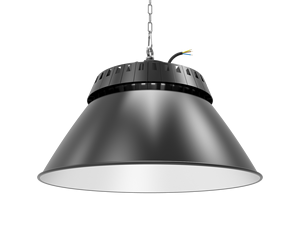
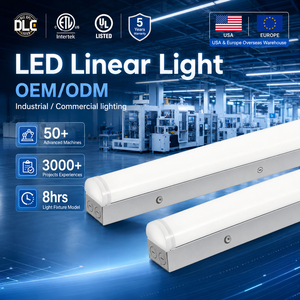
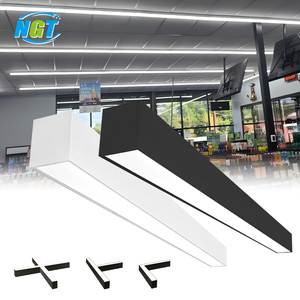
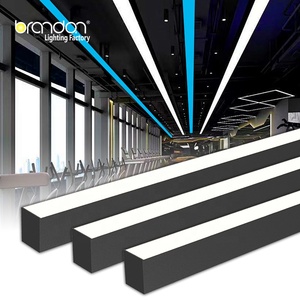
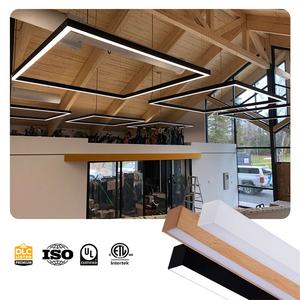
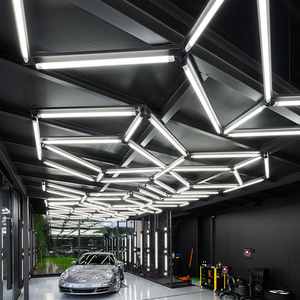
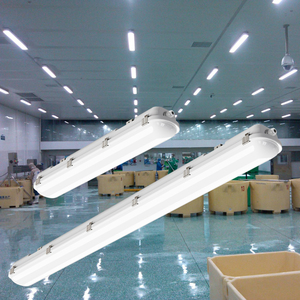
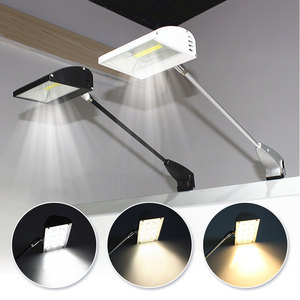
As a premiere CE certified accent lighting factory and global contract supplier, our manufacturing methodology blends precise technical execution with architectural versatility. Operating out of a state-of-the-art 60,000 ft² production facility, our team has delivered custom architectural, commercial, and hospitality lighting solutions across 30+ countries for over two decades.
Information Gain Metric: True CE compliance extends beyond a self-declared sticker. Our in-house photometric darkroom, goniophotometer testing suite, and EMC surge laboratories ensure every luminaire batch satisfies European Union Low Voltage Directive (LVD 2014/35/EU) and Electromagnetic Compatibility Directive (EMC 2014/30/EU).
Unlike standard assembly traders who source pre-molded components, our factory retains full operational control over the manufacturing lifecycle:
Heavy-gauge aluminum, solid brass, bronze, and stainless steel working. Custom extrusions milled to zero-tolerance specifications for seamless linear joining.
Die-cast ADC12 aluminum heat sinks designed for passive cooling. Junction temperatures strictly maintained below 65°C to guarantee >50,000-hour L80B10 operational lifespans.
Custom electroplating, living patinas, and electrostatic powder coating in RAL colors. Salt-spray tested to resist atmospheric oxidation in coastal installations.
For large-scale architectural projects, electrical contractors and specifiers require complete technical accountability. Our end-to-end process minimizes site risk:
| Workflow Stage | Technical Deliverables | Quality Assurance Gate |
|---|---|---|
| 1. Design Intent & Concept | CAD Review, Photometric Simulation (Dialux/Relux), Bill of Materials (BOM) drafting. | Initial Optical & Thermal Feasibility Approval |
| 2. Engineering Shop Drawings | Detailed structural dimensions, mounting hardware details, electrical load schematics. | Architectural & Electrical Sign-off |
| 3. Physical Mock-Up | 3D-printed/CNC-machined physical prototype, color rendering (CRI/TM-30) verification. | 1-to-1 On-Site or Darkroom Visual Review |
| 4. Automated Production | SMT LED placing, automated wire stripping, robotic structural welding, high-pot testing. | 100% Burn-In Testing & Dielectric Withstand Inspection |
| 5. Logistics & Rigging Kits | Numbered assembly crates, custom shock-resistant packaging, installation guides. | Final CE/UL Factory Inspector Sign-off |
The global accent lighting landscape is undergoing a technological inflection driven by strict European energy efficiency mandates (ErP directives), intelligent building protocols, and evolving human-centric design philosophies. Forward-thinking procurement managers must look beyond unit costs and align with factories capable of supporting next-generation features.
Modern commercial and hospitality specifiers no longer accept static color temperatures. Modern CE-certified accent luminaires require smooth CCT tuning (from ultra-warm 2200K ambient tones to 6500K task illumination) driven by dual-channel constant current drivers. These drivers must comply with flicker metrics: PstLM < 1.0 and SVM < 0.4 under EU EcoDesign regulations to ensure zero visual fatigue in workspace environments.
The demand for centralized building control has elevated DALI-2 (IEC 62386) and Casambi Bluetooth Mesh compatibility from luxury upgrades to baseline procurement requirements. CE-certified factories are now embedding smart sensor nodes directly into accent fixture bodies, allowing real-time power monitoring, daylight harvesting, and predictive maintenance diagnostics without extra external wiring.
Under the European Union's updated Right-to-Repair mandates and Extended Producer Responsibility (EPR) guidelines, modern luminaires must feature modular, toolless component replacement. Modern linear accent lights and spotlights are now designed with replaceable LED engines and clip-in driver trays, drastically reducing embodied carbon footprint and allowing commercial facilities to upgrade lighting efficacy without discarding structural aluminum housings.
Visual comfort is paramount in accent lighting. The industry is moving away from basic frosted diffusers toward multi-stage micro-prismatic optics and deep-recessed dark-light reflectors. By restricting beam angles and eliminating spill light, accent fixtures achieve tight center-beam candlepower (CBCP) while maintaining overall unified glare ratings (UGR) below 16—crucial for modern luxury retail and high-end corporate interiors.
Importing commercial lighting into the European Single Market exposes importers to strict legal liabilities. A compliant CE certificate issued by a accredited European Notified Body requires rigorous testing across multiple harmonize standards:
| Directive / Standard | Scope & Engineering Requirement | Testing Parameter / Pass Metric |
|---|---|---|
| EN 60598-1 / EN 60598-2-1 | General safety requirements for fixed general purpose luminaires. | Insulation resistance >2MΩ, High-voltage dielectric breakdown test at 1500V. |
| EMC Directive (2014/30/EU) | Electromagnetic interference and mains harmonic distortion suppression. | EN 55015 Radiated Emissions & EN 61000-3-2 Class C Total Harmonic Distortion (THD) < 10%. |
| RoHS Directive (2011/65/EU) | Restriction of hazardous substances in electrical soldering and components. | Strict zero-lead (Pb), mercury, and cadmium content verification via XRF spectroscopy. |
| EN 62471 Photobiological Safety | Optical radiation hazard assessment for high-intensity LED chips. | Exempt Group (RG0) or Low Risk (RG1) rating for blue light hazard prevention. |
| IP / IK Ingress & Impact Ratings | Mechanical housing seal protection against dust, water spray, and impacts. | IP65 chamber testing (dust tight + water jets); IK08 pendulum hammer impact testing. |
Factory Quality Assurance Guarantee: Every batch produced in our facilities undergoes 100% automated high-potential electrical testing, grounding continuity checks, and a minimum 4-hour thermal burn-in run prior to export crating.
Addressing primary engineering, compliance, and supply chain questions from commercial lighting buyers, wholesalers, and project specifiers.
Submit your design intent sketches, CAD files, or project tender specifications. Our senior optical and electrical engineering team will return shop drawings, photometric files, and a factory-direct quote within 24 hours.
