Arc floor lamps suit sofas, reading chairs, and compact lounges. Their curved arms project light over furniture without demanding a ceiling outlet. Measure the arm reach carefully. A beautiful arc can still feel intrusive in a narrow room.
Choosing the right Designer Floor Lamps for global buyers requires more than attractive photographs. It demands practical judgment.
A lamp may look elegant beside a velvet sofa, yet fail beside a reading chair. Its height, beam direction, base stability, and switch placement matter daily. So does the light quality. Warm, dimmable illumination can soften a hotel lobby or make a small apartment feel calmer. Cold, harsh light may do the opposite.
Ingo Maurer, the influential German lighting designer, once said, “I don’t design lamps, I design light.” That principle guides this overview. The best floor lamps should shape atmosphere, support real activities, and express a clear design language. Materials also deserve close attention. Brushed metal shows fingerprints. Marble adds weight and shipping risk. Fabric shades can create warmth but may require careful cleaning.
Global purchasing adds another layer. Buyers should check voltage compatibility, plug standards, dimmer systems, warranty coverage, replacement parts, and delivery protection. A stunning imported lamp is not truly convenient if its plug needs unsafe modifications. Certification requirements also vary by destination, so reputable sellers should provide clear technical documentation.
Details matter most.
This guide compares leading Designer Floor Lamps through design quality, usability, durability, and long-term value. It considers homes, hotels, offices, and hospitality interiors. No ranking is perfect. Personal taste, room scale, and local electrical conditions can change the result. That is worth admitting. A lamp praised by professionals may still feel too bright, too fragile, or simply too expensive for one buyer. Expect thoughtful recommendations, not effortless certainty.
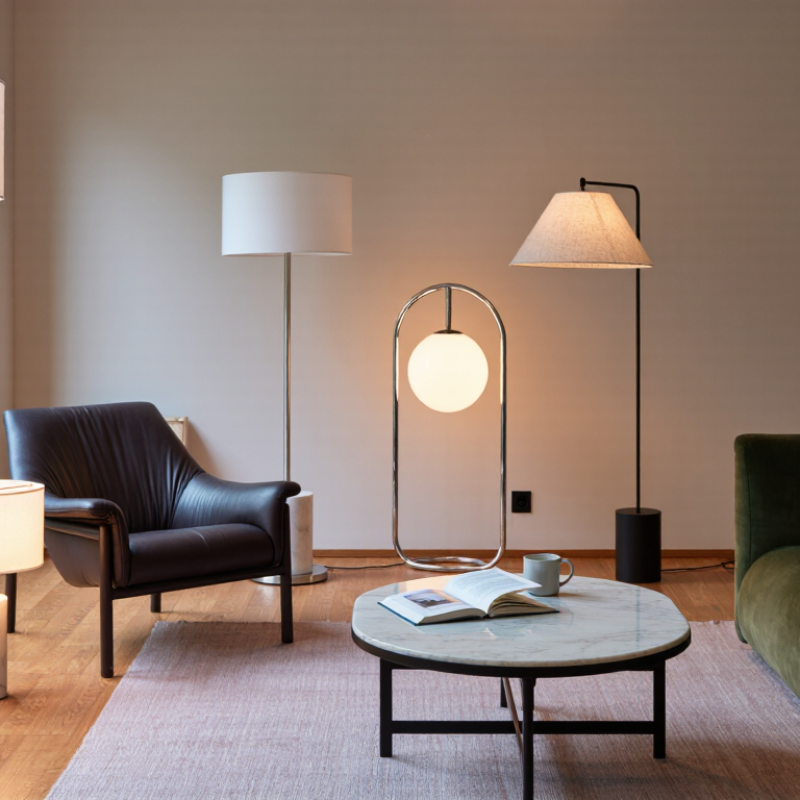
A designer floor lamp combines visual character with measurable performance. Global buyers usually assess proportion, materials, light quality, safety, and long-term serviceability. A sculptural shade may look impressive, but it can create harsh glare beside a sofa. Looks matter.
The International Energy Agency reports that lighting represents about 15% of global electricity consumption. Efficient LED systems therefore matter beyond decoration. The U.S. Department of Energy states that LEDs use at least 75% less energy and last up to 25 times longer than incandescent lighting.
International purchasing also requires technical compatibility. Buyers should check voltage ranges, plug standards, dimmer behavior, and applicable electrical certifications before ordering. A lamp with a replaceable LED module can reduce future waste and simplify maintenance.
Materials should be clearly identified, especially for metal finishes, glass, timber, and recycled components.
Vague sustainability claims weaken trust. That is practical.
Professional lighting guidance commonly recommends high color rendering for interiors where furniture, art, and skin tones must appear natural. A color rendering index above 90 is often preferred for residential display areas, although room function still matters.
Some market forecasts predict strong growth in decorative lighting, but forecast methods differ widely. I would not treat every projection as fact.
Buyers should compare test data, warranty terms, spare-part access, and real installation experience. A designer lamp earns international confidence when its beauty survives shipping, local regulations, daily use, and honest scrutiny.
Arc floor lamps suit sofas, reading chairs, and compact lounges. Their curved arms project light over furniture without demanding a ceiling outlet. Measure the arm reach carefully. A beautiful arc can still feel intrusive in a narrow room.
Tripod lamps add sculptural character to bedrooms, studios, and hospitality spaces. Their three-leg base offers visual stability, but uneven flooring may create slight movement. Test the lamp on wood, tile, and rugs before approving large orders. In my experience, adjustable shades improve usefulness more than decorative height alone.
Torchiere lamps direct light upward and soften dark corners. They work well in living rooms with pale ceilings, especially where glare needs control. Task-style lamps provide focused illumination beside desks or reading seats. The Illuminating Engineering Society generally recommends layered lighting, rather than relying on one intense source. This supports combining ambient, task, and accent fixtures.
Portable rechargeable floor lamps meet flexible-living needs, including balconies and rearranged retail displays. However, battery life, charging standards, and replacement access require closer inspection. The International Energy Agency reports that lighting uses about 15% of global electricity, making efficient LED sources a practical purchasing factor. Grand View Research also identifies energy-efficient lighting as a major market growth driver through the decade. Data helps, but room testing matters more. A lamp may photograph beautifully and still cast an uncomfortable shadow.
For global buyers, a designer floor lamp should begin with materials, not decoration. Solid aluminum keeps the frame light and resists surface corrosion in humid rooms. Powder coating adds an even finish and reduces visible scratches. Natural stone bases provide weight, but their pores need sealing and careful packing. Tempered glass can soften glare, although it still requires protective edges during shipping. I have found that material claims mean little without thickness, coating details, and test records. Ask for those documents.
Construction determines daily stability. A wide, weighted base prevents tipping beside sofas or desks. A hidden cable channel creates a cleaner profile and protects wires from chair legs. Look for reinforced joints, machine-cut threads, and a switch that feels firm after repeated use. Adjustable arms should hold their position without sudden drops. Small details matter. Yet no structure is perfect. Very slim forms may sacrifice balance, while heavy bases increase freight costs and handling risks. A sample inspection can reveal wobbling that product photos conceal.
Lighting technology should match the room and voltage environment. LED modules offer low heat, long service life, and efficient energy use. Replaceable LED boards are more practical than sealed units when repairs matter. Dimming may use a wall control, touch sensor, or wireless system, but compatibility varies by market. Confirm voltage, plug type, color temperature, and flicker performance before purchase. Warm light near 2700K suits reading corners and hospitality spaces. Around 4000K appears clearer for work areas. In my view, color accuracy deserves equal attention; a beautiful lamp can still distort fabric colors. Request measurable data, not vague words like “premium” or “eye-friendly.”
A practical comparison of premium floor-lamp categories, using commonly specified materials, construction methods, and lighting technologies for international residential and hospitality projects.
| Lamp Category | Typical Materials | Construction Features | Light Source and Output | Color Quality | Control and Dimming | Global Buyer Considerations | Best Use |
|---|---|---|---|---|---|---|---|
| Arc Floor Lamp | Powder-coated steel or aluminum frame; marble, granite, or weighted steel base; fabric, acrylic, or metal shade. | Extended curved arm projects light over seating areas. A wide weighted base improves stability and reduces floor clearance requirements. | LED: 8–20 W Approximately 600–1,600 lumens depending on diffuser and optical design. |
Commonly 2,700–3,000 K for warm residential lighting; CRI 80+ is typical, while CRI 90+ is preferred for color-sensitive interiors. | Inline dimmer, touch control, or trailing-edge-compatible LED driver. Some models support remote or smart controls. | Check packed dimensions, base weight, plug type, voltage compatibility, and tip-over stability documentation. | Living rooms, reading corners, lounges, and open-plan seating zones. |
| Tripod Floor Lamp | Solid wood, bamboo, steel, or aluminum legs with cotton, linen, paper, or synthetic-fiber shade. | Three-point leg structure provides a broad footprint. Replaceable shades and adjustable leg angles are common construction options. | LED bulb or integrated LED: 6–15 W Approximately 450–1,200 lumens. |
Warm white settings around 2,700–3,000 K are widely used. CRI 80+ is suitable for general ambient lighting. | Foot switch, inline switch, or dimmable bulb compatibility. Integrated dimming depends on the driver and control system. | Wood components may require moisture protection and appropriate packaging. Confirm socket standard and replacement-bulb availability. | Residential interiors, boutique hospitality spaces, bedrooms, and informal lounge areas. |
| Torchiere Lamp | Aluminum or steel body with an upward-facing glass, acrylic, or polycarbonate diffuser. | Indirect uplight distributes light across the ceiling. A weighted base and concealed cable routing improve stability and appearance. | LED: 15–35 W Approximately 1,000–2,800 lumens for general room illumination. |
Typical options range from 2,700 K to 4,000 K. CRI 80+ is common; CRI 90+ is preferable where artwork or furnishings need accurate color. | Rotary dimmer, touch dimmer, remote control, or wall-control-compatible driver. | Verify heat management, driver replacement access, regional voltage range, and electromagnetic-compatibility requirements. | Ambient lighting for living rooms, corridors, reception areas, and larger interiors. |
| Globe Floor Lamp | Opal glass, frosted acrylic, metal structure, and stone or metal base materials. | Diffused spherical shade minimizes harsh shadows. Blown glass requires protective packaging and careful impact testing. | LED: 8–25 W Approximately 600–2,000 lumens, depending on globe size and diffusion. |
Warm white 2,700–3,000 K is typical. CRI 80+ provides acceptable general color rendering. | Foot switch, inline dimmer, or compatible dimmable LED lamp. Smart-control support varies by the selected light source. | Assess glass breakage risk, carton protection, replacement diffuser availability, and compliance labeling for the destination market. | Decorative ambient lighting in hospitality, dining, bedroom, and lounge environments. |
| Linear LED Floor Lamp | Extruded aluminum profile, steel base, polycarbonate diffuser, and silicone or acrylic optical components. | Slim vertical or horizontal profile with concealed LED strip and integrated heat sink. Modular parts can simplify service and assembly. | LED: 10–30 W Approximately 800–2,400 lumens with efficient directional or diffuse optics. |
Commonly available in 2,700 K, 3,000 K, and 4,000 K. CRI 90+ is widely specified for premium interiors. | Touch, gesture, remote, app, DALI, or 0–10 V control may be available when the correct driver is installed. | Confirm driver input range, dimming protocol, flicker performance, replacement-driver access, and regional certification needs. | Modern residential interiors, offices, galleries, and architectural accent schemes. |
| Adjustable Reading Lamp | Aluminum or steel arm, cast-metal base, polycarbonate lens, and silicone grip or cable-management details. | Multi-joint arm or rotating head enables task positioning. A stable base and controlled beam reduce unwanted glare. | LED: 5–12 W Approximately 400–1,000 lumens with focused task distribution. |
2,700–3,000 K supports comfortable reading. CRI 90+ helps preserve accurate book, textile, and artwork colors. | Touch dimming, rotary control, push button, or memory function. Some units offer adjustable color temperature. | Check arm-cycle durability, joint locking performance, glare rating, cable length, and plug or adapter compatibility. | Reading chairs, libraries, bedside areas, studies, and hotel guest rooms. |
| Smart Tunable-White Lamp | Aluminum heat sink, steel or molded polymer housing, polycarbonate diffuser, and weighted base. | Integrated LED module with electronic driver and wireless communication module. Firmware and driver access affect long-term serviceability. | LED: 10–30 W Approximately 700–2,400 lumens with adjustable brightness. |
Typical color-temperature range is 2,700–6,500 K. CRI 80+ is common; premium configurations may provide CRI 90+. | App, voice assistant, Bluetooth, Wi-Fi, remote, touch, or scheduled scene control, depending on system architecture. | Confirm wireless frequency, data-security policy, app availability, regional cloud support, voltage, and offline control options. | Connected homes, hospitality rooms, wellness spaces, and flexible work environments. |
| Sculptural Statement Lamp | Cast aluminum, stainless steel, brass, ceramic, glass, stone, or carefully finished composite materials. | Emphasizes form, proportion, surface finish, and concealed wiring. Custom geometry may require reinforced joints and specialized packing. | LED: 8–30 W Approximately 500–2,300 lumens, often optimized for decorative rather than uniform task lighting. |
Usually 2,700–3,000 K for a warm visual effect. CRI 80+ is adequate for ambient decorative use. | Inline dimmer, phase-cut dimming, touch control, or integrated smart driver depending on the design. | Review material weight, surface-finish protection, assembly instructions, spare parts, and transit testing for oversized components. | Feature corners, hotel lobbies, restaurants, galleries, and high-end residential interiors. |
Technical values are typical market ranges rather than specifications for a single product. Actual performance depends on LED package, driver, diffuser, thermal design, control system, and local electrical requirements.
Top Designer Floor Lamps for Global Buyers?
How to Compare Quality, Price, Safety, and Global Compatibility
A designer floor lamp deserves more than a polished photograph. Compare the frame, shade, base, and wiring separately. Solid metal or finished timber should feel stable, not hollow or sharp. Check every joint for movement after several adjustments. A heavy base matters on thick carpet. The shade should sit evenly and cover the socket neatly. Ask for material details, assembly instructions, warranty terms, and replacement-part availability. These documents reveal professional control better than decorative language.
Price should reflect construction, testing, shipping, and after-sales support. Compare identical specifications, not just listed prices. A cheaper lamp may exclude the bulb, compatible plug, duties, or protective packaging. Calculate the delivered cost to your location. Inspect energy use and bulb availability too. An efficient LED source can reduce running costs, but replacements must be easy to find. I once overlooked packaging quality during a purchase review. The lamp arrived with a bent shade. Appearance alone is not enough.
Safety requires careful regional checking. Confirm the destination voltage, frequency, plug type, and dimmer compatibility before ordering. Request test reports or conformity information suitable for the receiving market. A grounded metal body needs correctly designed wiring and a suitable plug. Keep the lamp away from curtains, wet areas, and unstable furniture. Ask whether the manual lists maximum wattage, heat clearance, and cleaning instructions. Global compatibility is not universal. A lamp may work electrically yet fail your socket, adapter, or local requirements. That mismatch can become an expensive return.
Top Designer Floor Lamps for Global Buyers?
A striking floor lamp should fit your room before it fits your mood. Measure ceiling height, walking paths, and nearby furniture carefully. A tall arc lamp may need 60 centimeters of clearance from doors and shelves. Check the base diameter, shade width, and total weight before ordering. I once underestimated a heavy marble base, and moving it upstairs required two people. Visual appeal can mislead.
Global purchasing requires practical checks. Confirm the lamp’s voltage, plug type, frequency, and included adapter before payment. Ask for testing documents and installation instructions in clear English. Request reinforced packaging, corner protection, and a photographed inspection before dispatch. Record carton damage immediately after delivery. Shipping costs may include insurance, customs charges, storage, or remote-area fees. These details are often overlooked. They should not be.
Installation depends on the lamp’s structure and your local electrical standards. Hire a qualified electrician for hardwired models. Keep cables away from heat, moisture, and busy walkways. Use the recommended bulb wattage and allow ventilation around the shade. Dust fabric shades with a soft brush, then wipe metal parts with a dry microfiber cloth. Avoid abrasive cleaners. For imported lamps, replacement parts may take weeks. I still prefer ordering spare bulbs and small fittings early, although that habit is not always convenient. Damage sometimes comes from rushed assembly, not poor construction.
It should combine balanced proportions, reliable materials, comfortable light, safety, and serviceable parts. Beauty alone is not enough.
Check metal thickness, coating details, timber quality, glass protection, and stone sealing. Ask for test records and clear material descriptions.
Inspect the base, joints, cable channel, threads, and switch. A stable lamp should not wobble beside a sofa or desk.
Warm light around 2700K suits reading corners. Light near 4000K can suit work areas. Room purpose still matters.
High color rendering helps furniture, artwork, and skin tones look natural. A beautiful lamp can still distort fabric colors.
Check voltage, frequency, plug type, dimmer behavior, and local electrical requirements. Compatibility is not universal.
Yes. They can simplify repairs and reduce future waste. Sealed systems may become difficult to maintain.
Compare matching specifications and calculate delivered cost. Include packaging, shipping, duties, bulbs, plugs, and after-sales support.
Request instructions covering maximum wattage, heat clearance, cleaning, wiring, and suitable installation conditions. Small omissions can matter.
It may expose wobbling, rough edges, weak switches, bent shades, or poor packaging. Product photos hide some problems.
Ask for specific material details, recycled-content information, and supporting documents. Vague claims do not prove much.
Not always. Slim forms may sacrifice balance, while heavy bases increase freight and handling risks. That trade-off deserves review.
Designer Floor Lamps combine functional illumination with distinctive form, refined materials, and thoughtful details that appeal to international buyers. This guide explains how to recognize designer quality through balanced proportions, durable construction, reliable finishes, and lighting performance. It explores major styles, including minimalist, sculptural, industrial, traditional, and adjustable designs, while showing how each suits different interiors, activities, and room layouts.
The article also compares materials, craftsmanship, bulb types, smart features, energy efficiency, pricing, safety considerations, voltage compatibility, and plug requirements for global use. Buyers will learn how to evaluate product specifications, packaging, shipping conditions, assembly instructions, and installation needs before purchasing. Practical advice on cleaning, handling, replacement parts, and long-term care helps preserve both appearance and performance, making it easier to select a floor lamp that offers lasting value across different markets and living environments.