China has become a major sourcing base for Decorative Wall Lighting, serving hotels, homes, restaurants, and retail projects worldwide. The sector now extends beyond attractive finishes. Buyers examine optical performance, LED efficiency, material consistency, warranty terms, and export experience.
The International Energy Agency’s Energy Efficiency 2024 report identifies lighting efficiency as an important energy-saving opportunity. The U.S. Department of Energy also reports that LED products can use at least 75% less energy than incandescent lamps. These findings make responsible product selection more practical, not merely fashionable. Grand View Research and Fortune Business Insights both describe continued growth in decorative lighting demand, supported by renovation, hospitality, and smart-home applications.
Human comfort still matters. Mariana Figueiro, director of the Light and Health Research Center, has said, “Light is the most powerful synchronizer of the circadian system.” Her observation reminds buyers to consider glare, color temperature, and nighttime brightness. A beautiful wall lamp can still feel harsh beside a bed or dining table.
China’s strongest suppliers often combine in-house design, photometric testing, metal fabrication, glass production, and quality inspection. Some provide impressive catalogs. Not all provide equally reliable documentation. That distinction matters.
This guide examines China’s top Decorative Wall Lighting suppliers through practical criteria, including certifications, customization, sample quality, production capacity, and communication. Factory visits and independent testing remain valuable. Online claims can be polished. Reality may be less perfect. That is precisely why careful comparison is necessary.
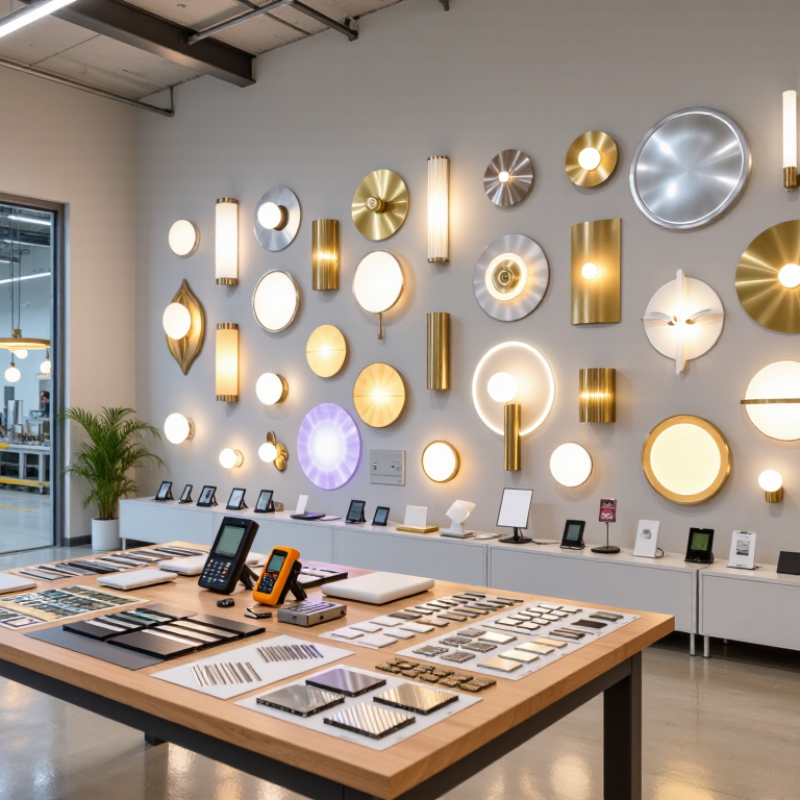
A decorative wall lighting supplier in China may be a factory, trading company, or design-and-production partner. The label alone proves little. Buyers should clarify who controls product engineering, assembly, testing, and export documentation. Ask for drawings, material specifications, and recent production photos. For a brass-finish sconce, check how the finish looks around joints and screw heads, not only in a polished catalogue image. Small details matter.
The U.S. Department of Energy’s 2022 LED lighting overview reports that LED products use at least 75% less energy and last up to 25 times longer than incandescent lighting. This is a useful benchmark, not a guarantee for every decorative fixture. A capable supplier should provide verifiable light-source and driver specifications, test records, and clear warranty terms. Confirm whether samples match mass-production materials. Sometimes they do not, and that deserves a closer look.
Tips: Request a sample and inspect its weight, finish, wiring, and mounting plate. Ask who performs electrical and quality checks, and whether records can be shared. Compare lead times against the stated production steps. Be cautious when answers stay vague. A supplier’s real strength is easier to judge through traceable process details than broad claims.
China’s decorative wall-light suppliers cluster around several manufacturing regions. Zhongshan’s Guzhen town in Guangdong is known for lighting assembly, component sourcing, and export-focused factories. Nearby Foshan and Shenzhen suppliers often combine metalwork, electronics, and custom finishing. Zhejiang and Jiangsu offer additional capacity, particularly for metal parts and contract manufacturing. The differences matter. A polished showroom sample may conceal a long chain of subcontractors.
Supplier types range from integrated factories to specialist workshops and trading companies. Integrated producers may handle design, driver selection, assembly, and testing in one facility. Specialist workshops can be better for brass finishes, glass shades, or small custom runs, but usually require closer quality checks. IEA reporting indicates LEDs represented about half of global lighting sales in 2022, supporting demand for efficient fixtures; decorative wall lights still vary widely in driver quality and dimming compatibility. Ask suppliers for photometric files, material specifications, sample lead times, and inspection records. Check the actual workshop, not only the catalog. I would not assume a large factory is always safer: documentation and consistent samples matter more.
When comparing decorative wall lighting suppliers in China, look beyond polished catalog images. Ask for close-up photos of welds, joints, finishes, and mounting plates. These details reveal how carefully a fixture is made. Request samples when practical, and inspect them under warm and cool light. A brushed brass finish can look very different in a showroom photo.
Quality also depends on clear specifications. Check the stated materials, dimensions, socket type, light source compatibility, and installation requirements. Ask how the supplier tests electrical components and checks each production batch. Documentation matters. If answers are vague, pause and ask for measurable details, such as finish tolerance or inspection steps. I’ve found that a tidy sample does not always represent a whole shipment, so consistency deserves attention.
Design capability shows in more than attractive shapes. Share a room plan, ceiling height, and preferred finish, then see whether the supplier can adapt proportions or provide accurate drawings. Good communication helps prevent a shade from crowding a narrow hallway. Review prototypes against the approved drawings before production. There may still be small compromises; discuss them early, and keep decisions in writing.
China’s decorative wall lighting suppliers should be judged beyond appearance and price. Certifications are a practical starting point. A credible supplier should provide current test reports, factory quality records, and traceable product information. Depending on the destination, buyers may request CE, RoHS, UKCA, or other market-specific compliance documents. Certificates should match the exact model, not merely a similar product.
Customization often includes metal finishes, glass shapes, dimensions, color temperature, dimming methods, and mounting plates. Outdoor projects may require an appropriate IP rating, while hotel interiors may need low-glare light distribution. Ask for a functional sample before approving mass production. Small details matter, such as screw alignment and cable length. A sample can still look slightly different from the final batch, so written tolerances are worth adding to the purchase agreement.
Reliable export service includes reinforced cartons, moisture protection, clear labeling, and accurate commercial documents. Suppliers should support packing lists, invoices, certificates of origin, and shipping coordination. Experience shows that export delays often come from incomplete information, not production problems. Factory audits, pre-shipment inspections, and batch photos can improve accountability. However, no inspection removes every risk. Buyers should keep approval records, confirm replacement procedures, and review communication speed before placing large orders.
China’s decorative wall lighting suppliers often quote attractive factory prices, but the lowest offer is rarely the cheapest project cost. Compare identical specifications: aluminum grade, coating thickness, LED efficiency, driver warranty, packaging, and test requirements. The World Bank’s 2023 Logistics Performance Index ranked China 19th among 139 economies, with a score of 3.7 out of 5. That supports strong export capability, but it does not guarantee every supplier performs equally.
Lead times should be separated into sampling, production, and shipping. Ask for a dated production schedule, not “15–20 days” alone. Require weekly updates and measure on-time, in-full delivery across several orders. The 2024 Global Supply Chain Pressure Index from the Federal Reserve Bank of New York shows that global logistics conditions can change quickly, so freight time should include a realistic buffer. Small batches may take longer because suppliers prioritize larger runs. That matters.
Reliability needs evidence. Review recent inspection records, aging-test results, defect rates, and corrective-action reports. A pre-shipment inspection can verify dimensions, light output, grounding, carton strength, and labeling. The ISO Survey reports millions of certified management-system sites worldwide, yet certification remains only one signal. It does not replace factory communication or product testing. In my view, a supplier with clear documents and slower promises is safer than one offering an unrealistically fast delivery. Price comparisons still need improvement. Exchange rates, tooling, spare parts, and replacement freight are often ignored. A low quote can still be expensive.
Supplier-neutral sourcing comparison. The figures below are indicative planning ranges, not verified quotations or guarantees; actual pricing and lead times depend on design, materials, order quantity, customization, and shipping terms.
| Supplier profile | Indicative unit-price range (EXW, USD) | Typical MOQ | Sample lead time | Production lead time | Reliability checks | Best suited for |
|---|---|---|---|---|---|---|
| Standard-model manufacturer | About $8–$35 | Often 50–200 units per model | About 7–15 days | About 25–40 days | Confirm production capacity, inspection records, and applicable test reports. | Buyers seeking established designs and moderate order volumes. |
| Custom-design factory | About $20–$100+ | Often 100–500 units per design | About 15–30 days | About 35–60 days after design approval | Approve drawings, finish samples, and a pre-production sample before bulk production. | Projects requiring custom dimensions, finishes, or construction. |
| Small-batch workshop | About $15–$80+ | Sometimes 10–50 units per model | About 7–20 days | About 30–50 days; capacity may vary | Check workshop capacity, component sourcing, batch consistency, and backup production plans. | Pilot orders, varied designs, and lower initial quantities. |
| Export-focused supplier | About $12–$70+ | Often 50–300 units per model | About 10–20 days | About 30–50 days | Verify destination-market compliance documents, packaging specifications, and shipment references. | Buyers needing export documentation and shipment coordination. |
Before placing an order, request a dated quotation with itemized specifications, confirm whether the price includes drivers and bulbs, verify certification applicability for the destination market, and agree in writing on inspection criteria, lead-time start point, packaging, and remedies for defects or delays.
Guzhen in Guangdong is a major lighting production center. Nearby areas often combine metalwork, electronics, and finishing. Other eastern regions provide metal parts and contract manufacturing. A showroom sample may hide several subcontractors.
Integrated factories may manage design, drivers, assembly, and testing. Specialist workshops often handle brass finishes, glass shades, or small custom runs. Trading companies may coordinate production without owning a factory. Check the actual workshop.
Request current test reports and factory quality records. Ask for material specifications, photometric files, and inspection history. Compliance documents should match the exact product model. Similar paperwork is not enough.
Suppliers may customize finishes, glass shapes, dimensions, and color temperature. Dimming methods and mounting plates can also change. Outdoor products need a suitable protection rating. Hotel projects may require low-glare distribution.
A working sample reveals light output, dimming behavior, and assembly quality. Check screw alignment, cable length, finish consistency, and mounting fit. The final batch can still vary slightly. Add written tolerances to the purchase agreement.
Export support should include reinforced cartons and moisture protection. Labels, packing lists, invoices, and origin documents must be accurate. Shipping coordination can prevent avoidable delays. Incomplete information causes trouble.
Compare identical materials, coating thickness, efficiency, driver coverage, and packaging. Include testing, tooling, spare parts, and replacement freight. The lowest quotation may create higher project costs. Cheap is not always cheap.
Review recent inspection records, aging-test results, defect rates, and corrective actions. Separate sample time, production time, and shipping time. Request dated schedules and regular progress updates. A slower promise may be safer.
No inspection catches everything. Pre-shipment checks can verify dimensions, light output, grounding, cartons, and labels. Keep approval records and confirm replacement procedures. Communication speed also matters, perhaps more than expected.
China’s Decorative Wall Lighting suppliers include specialized factories, design-oriented manufacturers, trading companies, and integrated exporters serving residential, hospitality, commercial, and architectural projects. Major production regions often differ in strengths, from large-scale manufacturing and component sourcing to refined finishing and customized design. When evaluating suppliers, buyers should review material quality, surface treatment, structural safety, lighting performance, and the supplier’s ability to develop consistent designs across different product series.
Important considerations also include relevant certifications, electrical compliance, customization options, packaging standards, and export experience. A capable supplier should be able to provide clear technical specifications, samples, drawings, and reliable communication throughout the order process. Price comparisons should account for materials, production volume, customization, quality control, and shipping terms rather than focusing only on the lowest quotation. Buyers should also compare lead times, payment conditions, inspection procedures, after-sales support, and production stability to identify a dependable long-term partner.