0%

Commercial Lighting Installations are reshaping offices, retail spaces, hotels, factories, and public facilities across China. The opportunity is substantial. The International Energy Agency reports that lighting uses about 15% of global electricity. Its Energy Efficiency 2023 analysis also shows LEDs now represent roughly half of global lighting sales. These figures make supplier selection a financial and environmental decision, not merely a purchasing task.

China’s leading suppliers compete through LED efficiency, optical design, smart controls, emergency systems, and installation support. Strong candidates provide IES or LDT photometric files, LM-80 and TM-21 evidence, clear warranty terms, and documented project experience. They should also explain beam angles, glare control, color rendering, and maintenance access. A bright showroom sample proves little. Site measurements matter more. Ceiling height, daylight, dust, occupancy, and operating hours can change the final result.

Human comfort deserves equal attention. Dr. Mariana Figueiro, a leading lighting researcher, states, “Light is a powerful biological stimulus.” That reminder belongs in every Commercial Lighting Installations evaluation. Good suppliers connect energy savings with visual comfort, safety, productivity, and dependable controls.

This comparison will examine China Top Commercial Lighting Installations Suppliers through products, certifications, engineering ability, delivery performance, and after-sales service. The ranking is not perfectly objective. Project budgets and regional service capacity can distort comparisons. I may also underweight smaller manufacturers with impressive local work. Still, transparent evidence offers a practical starting point. Look beyond price. Inspect the details. A failed driver, harsh glare, or weak commissioning can undermine an otherwise attractive installation.
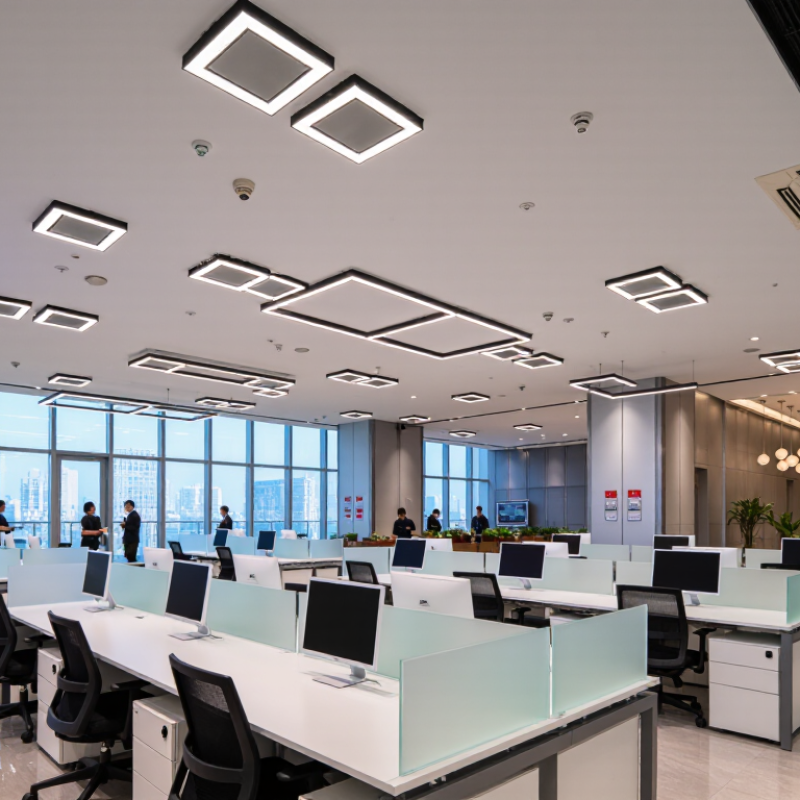
China Top Commercial Lighting Installations Suppliers

Commercial Lighting Installation Suppliers in China: Industry Overview

China Top Commercial Lighting Installations Suppliers

Commercial lighting installation suppliers in China increasingly provide more than fixtures. Many support lighting design, photometric calculations, procurement, installation, commissioning, and maintenance. This integrated approach can simplify projects for offices, warehouses, hotels, retail spaces, and public facilities. Experienced suppliers usually review ceiling plans, wiring routes, mounting heights, and working conditions before quoting. A site survey matters. A warehouse aisle needs different beam control from a hotel lobby. Suppliers with engineering teams can also prepare lighting simulations and installation drawings. These documents help contractors reduce errors during ceiling and electrical work.

Reliable suppliers should explain product performance in measurable terms. Ask for test reports, lumen maintenance data, colour consistency information, and electrical safety documentation. Project requirements may also include local building rules and accepted international standards. Qualified installation teams should understand cable management, emergency lighting, dimming controls, and commissioning procedures. On-site checks are valuable. A small aiming mistake can create glare across a conference table. Good suppliers provide training, spare parts, warranty conditions, and a clear response process for defects.

Price remains important, but the lowest quotation can conceal transport, replacement, or labour costs. I have seen specifications change after approval, creating delays and uncomfortable negotiations. That risk deserves attention. Communication can also fail when drawings, translations, and site instructions are not controlled carefully. A practical supplier should assign one technical contact, confirm revisions in writing, and use a sample area before full installation. Some projects still need independent inspection. That is not distrust; it is sensible risk management.

Core Services Offered by Chinese Commercial Lighting Installers

China Top Commercial Lighting Installations Suppliers

Chinese commercial lighting installers now provide more than fixture placement. Their core service usually begins with a site audit. Technicians measure ceiling height, task areas, daylight, glare, and existing power loads. They then create photometric layouts for offices, warehouses, retail spaces, and hospitality projects. The U.S. Department of Energy reports that LED lighting uses at least 75% less energy than incandescent lighting and lasts up to 25 times longer. These figures support energy-focused retrofit planning, but actual savings depend on operating hours and controls.

Installers also manage product matching, wiring, emergency lighting, sensor integration, and on-site commissioning. A reliable team checks lux levels after installation, labels circuits, and provides maintenance records. The International Energy Agency states that lighting represents about 15% of global electricity consumption. This makes occupancy sensors, daylight dimming, and scheduled controls practical services, not decorative extras. Still, a brighter room is not always a better room. I have seen projects with high lux levels but uncomfortable glare. The design needed more reflection.

Tips: Request a written lighting audit, lux targets, control logic, warranty terms, and testing records. Ask who will correct uneven light after handover. Confirm local electrical compliance before shipment. Energy calculations should use real operating schedules, not ideal assumptions. That small detail can change the payback period.

China Top Commercial Lighting Installations Suppliers - Core Services Offered by Chinese Commercial Lighting Installers

Core Service Typical Work Included Main Deliverables Common Commercial Applications Typical Project Stage Relevant Technical Considerations
Site Survey and Lighting Assessment Review ceiling heights, mounting points, electrical routes, existing luminaires, daylight conditions, and operating requirements. Site survey report, measurements, photographs, risk notes, and installation recommendations. Offices, retail stores, warehouses, hotels, factories, schools, and healthcare facilities. Pre-design and quotation Illuminance targets, glare control, emergency access, ceiling structure, and local electrical conditions.
Lighting Design and Layout Prepare fixture layouts, lighting calculations, zoning plans, mounting details, and installation drawings. Reflected ceiling plans, lighting schedules, photometric calculations, circuit plans, and installation details. Open-plan offices, supermarkets, showrooms, production areas, corridors, and parking facilities. Design development Uniformity, maintained illuminance, color temperature, color rendering, glare rating, and energy efficiency.
Electrical and Control-System Installation Install wiring, drivers, control panels, sensors, dimming components, switching circuits, and lighting-control interfaces. Installed circuits, labeled control points, cable routes, panel schedules, and commissioning records. Smart offices, retail environments, warehouses, hospitality venues, and large commercial buildings. Construction and fit-out Load capacity, voltage compatibility, circuit protection, dimming protocol compatibility, and cable segregation.
Indoor Luminaire Installation Mount and connect recessed, surface-mounted, suspended, track, linear, downlight, and panel luminaires. Securely mounted fixtures, aligned lighting rows, completed connections, and installation inspection records. Offices, classrooms, shops, hotels, conference rooms, corridors, and public interiors. Interior installation Mounting load, ceiling material, access clearance, heat dissipation, glare, and maintenance access.
Industrial and High-Bay Lighting Installation Install high-bay fixtures, industrial linear systems, suspended fittings, protective housings, and height-access equipment. High-level installation plan, access method statement, fixture alignment, and safety inspection documentation. Factories, logistics centers, workshops, distribution hubs, and sports facilities. Industrial fit-out Mounting height, impact protection, dust or moisture exposure, uniformity, emergency lighting, and safe working-at-height procedures.
Exterior and Facade Lighting Install wall-mounted, flood, landscape, pathway, canopy, sign, and architectural facade lighting systems. Outdoor mounting details, aiming plan, weatherproof cable entries, and nighttime adjustment records. Commercial buildings, hotels, shopping centers, campuses, entrances, and parking areas. External works Ingress protection, corrosion resistance, drainage, wind exposure, glare to neighbors, and light-spill control.
Emergency and Exit Lighting Install emergency luminaires, exit signs, central monitoring connections, batteries, and emergency test switches. Emergency lighting layout, test results, battery verification, and compliance documentation. Offices, shopping centers, hotels, public buildings, warehouses, and entertainment venues. Life-safety installation Escape routes, open-area coverage, required duration, test facilities, visibility, and applicable local fire-safety rules.
Testing, Commissioning, and Handover Perform functional tests, circuit checks, control-system programming, aiming, lux measurements, and client demonstrations. Commissioning report, test certificates, as-built drawings, operating instructions, and maintenance recommendations. All commercial lighting projects, especially multi-zone and large-scale installations. Project completion Illuminance verification, control response, emergency operation, electrical safety, documentation accuracy, and snag correction.
Maintenance and Retrofit Support Replace failed components, upgrade inefficient systems, clean fixtures, adjust controls, and provide scheduled inspections. Maintenance schedule, replacement recommendations, fault records, energy-saving assessment, and retrofit plan. Existing offices, retail chains, industrial buildings, schools, hotels, and public facilities. Operation and lifecycle management Spare-part availability, access equipment, compatibility with existing wiring, reduced downtime, and total cost of ownership.

Key Selection Criteria for Commercial Lighting Suppliers

Choosing China’s commercial lighting installation suppliers requires more than comparing unit prices. The IEA reports that lighting represents roughly 15% of global electricity consumption. The U.S. Department of Energy found that solid-state lighting could reduce lighting energy use by up to 75% by 2035. These figures make efficiency important, but they do not replace proper site evaluation.

Ask suppliers for verified photometric files, not attractive catalog images. Check delivered lumens, efficacy, color rendering, color temperature, glare control, and beam distribution. For warehouses, review mounting height and aisle visibility. For offices, examine UGR values and daylight-control compatibility. Request LM-80 and TM-21 evidence, plus L70 projections. Independent testing matters. Factory audits should also confirm driver quality, thermal design, batch consistency, and spare-part access.

Installation support is equally important. A supplier should provide lighting calculations, wiring diagrams, commissioning assistance, and clear warranty conditions. Certifications must match the project’s destination market. The DLC’s SSL Technical Requirements show how performance criteria can screen inefficient products, but compliance alone cannot guarantee good installation. A low bid can look efficient on paper. It may not be. One recurring mistake is accepting a long warranty without checking response times or replacement procedures. I would score lifecycle cost, maintenance access, and documented field experience beside price. No supplier scorecard is perfect. Real project feedback can expose what specifications miss.

Leading Supplier Types and Their Typical Project Applications

Commercial lighting suppliers in China generally fall into four groups: manufacturers, distributors, lighting designers, and installation contractors. Each serves different project needs. Manufacturers suit large retail chains, office buildings, and standardized hotel programs. They often provide product drawings, photometric files, samples, and bulk pricing. Distributors help contractors source mixed products for schools, restaurants, and smaller commercial renovations.

Lighting designers and system integrators are more valuable when a project needs visual coordination. They can plan layered lighting for hotel lobbies, shopping centers, galleries, and premium restaurants. Their work may include daylight analysis, glare control, emergency lighting layouts, and dimming schedules. Installation contractors handle wiring, mounting, testing, and on-site adjustments. A competent team should understand ceiling conditions, access equipment, local electrical codes, and maintenance requirements.

Details matter. During supplier evaluation, request a sample fixture and compare its beam pattern on the actual ceiling height. Check color consistency, driver performance, ingress protection, warranty terms, and replacement lead times. A factory may offer lower pricing, but communication gaps can complicate site changes. That risk is easy to underestimate. One practical lesson is to confirm drawings before production, not after shipment. Even reliable suppliers can misread reflected ceiling plans or overlook unusual voltage requirements. A site survey, clear acceptance criteria, and documented testing usually prevent expensive rework.

How to read this chart: The score from 1 to 5 represents the typical suitability of each supplier type for a project application, based on common commercial lighting procurement and delivery models. A higher score indicates stronger suitability for that application.

Procurement, Installation, and Quality Assessment Process

China Top Commercial Lighting Installations Suppliers

Procurement, Installation, and Quality Assessment Process

Choosing commercial lighting suppliers in China requires more than comparing unit prices. The IEA’s Energy Efficiency 2023 report estimates that lighting uses about 15% of global electricity demand. A poor specification can therefore increase operating costs for years. Request photometric files, measured wattage, power factor, colour rendering, glare control, and expected lifetime. LM-79 test reports and LM-80/TM-21 projections add useful evidence, but they are not perfect substitutes for site testing.

Installation quality begins with a scaled mock-up. Check the beam pattern on desks, shelves, walkways, and reflective surfaces before approving mass production. Electricians should verify cable routing, grounding, emergency circuits, dimming controls, and heat dissipation. Small errors matter.

At handover, measure maintained illuminance and uniformity with a calibrated lux meter. Compare results with the approved design and applicable GB or IEC requirements. Inspect flicker, colour consistency, driver noise, visible damage, and control response. ENERGY STAR reports that LED products can use at least 75% less energy and last up to 25 times longer than incandescent lighting, yet real performance depends on temperature, drivers, and maintenance. A supplier’s warranty is useful, but not enough. I would retain samples and records from each batch. One weakness remains: many projects test brightness, but overlook glare after furniture and signage are installed.

FAQS

What services do commercial lighting installers usually provide?

They audit the site, design lighting layouts, match products, install wiring, and integrate controls. They also test lux levels and label circuits. Installation is only part of the work.

Why is a site lighting audit important?

Technicians check ceiling height, daylight, glare, task areas, and existing power loads. These details shape beam angles and fixture positions. Skipping the audit can create dark aisles or harsh reflections.

How can suppliers support energy-efficient lighting projects?

They can recommend efficient fixtures, occupancy sensors, daylight dimming, and scheduled controls. Actual savings depend on operating hours and control settings. Estimates based on ideal schedules may disappoint.

What technical information should buyers request?

Request verified photometric files, delivered lumens, efficacy, color temperature, color rendering, and glare data. Ask for beam distribution at the planned mounting height. Catalog images are not enough.

What should be checked for warehouse lighting?

Review aisle visibility, mounting height, beam spread, and shadow control. Test a sample fixture on the actual ceiling. A bright floor does not always mean safe visibility.

What should office projects consider besides brightness?

Offices need glare control, comfortable color quality, and compatible daylight controls. High lux levels can still cause screen reflections. More light is not always better.

How can buyers evaluate supplier quality beyond price?

Compare lifecycle cost, maintenance access, spare-part availability, warranty response times, and field experience. Check driver quality, thermal design, and batch consistency. A low bid may hide later service problems.

What installation and handover records should be required?

Require wiring diagrams, commissioning results, lux measurements, circuit labels, maintenance records, and warranty terms. Confirm who corrects uneven lighting after handover. Paperwork matters later.

When should drawings and electrical requirements be confirmed?

Confirm reflected ceiling plans, voltage requirements, control logic, and acceptance criteria before production. Even reliable teams can misunderstand unusual site conditions. Rework is expensive.

Conclusion

China’s commercial lighting sector offers a broad range of suppliers capable of supporting offices, retail spaces, hotels, factories, warehouses, and public facilities. Commercial Lighting Installations typically involve lighting design, product selection, energy-efficiency planning, control system integration, wiring coordination, on-site installation, testing, and ongoing maintenance. Many suppliers can provide customized solutions based on project size, ceiling structure, operating hours, visual requirements, and local regulations.

When selecting a supplier, buyers should assess technical expertise, product quality, certification, project experience, delivery capacity, warranty terms, and communication efficiency. Different supplier types may specialize in architectural lighting, industrial lighting, smart control systems, or turnkey project services, with each suited to specific applications. A reliable procurement process should include clear specifications, sample evaluation, cost comparison, schedule confirmation, and quality inspection. During installation, attention should be given to safety, wiring standards, illumination performance, energy consumption, and final system testing to ensure dependable long-term operation.

Ethan

Ethan

Ethan is a professional marketing specialist dedicated to helping businesses understand products, markets, and customer needs through clear, practical, and trustworthy communication. With extensive knowledge of the company’s product portfolio, industry trends, and customer applications, he......