China’s luxury lighting sector has grown from factory production into a design-led industry. This guide examines China Top 10 Luxury Interior Lighting Suppliers? through practical, verifiable criteria. It focuses on craftsmanship, design capability, customization, production control, and export experience. These factors matter when a chandelier becomes the visual centre of a hotel lobby or private residence.
The selection considers material quality, including crystal clarity, brass finishing, glass consistency, and concealed wiring. It also reviews lighting performance, colour temperature options, dimming compatibility, photometric data, and documented project experience. Supplier reliability deserves equal attention. Factory audits, sample approval, quality inspections, packaging standards, and responsive after-sales service can prevent expensive installation problems. References from hospitality, residential, retail, and commercial projects may reveal more than polished brochures. Some suppliers appear impressive online but provide limited technical documentation. That weakness should not be ignored. Buyers should verify product certifications for each destination market and request clear lead times before signing contracts. Pricing alone cannot define luxury. A low quote may hide thinner materials, weaker finishing, or inconsistent colour matching. Yet this comparison is not absolute; supplier capabilities change, and rankings can reflect incomplete public information. That is an important limitation. Readers should treat this overview as a professional starting point, not a final purchasing decision. Direct factory communication, physical samples, and independent inspection remain essential when selecting Luxury Interior Lighting for a demanding project.
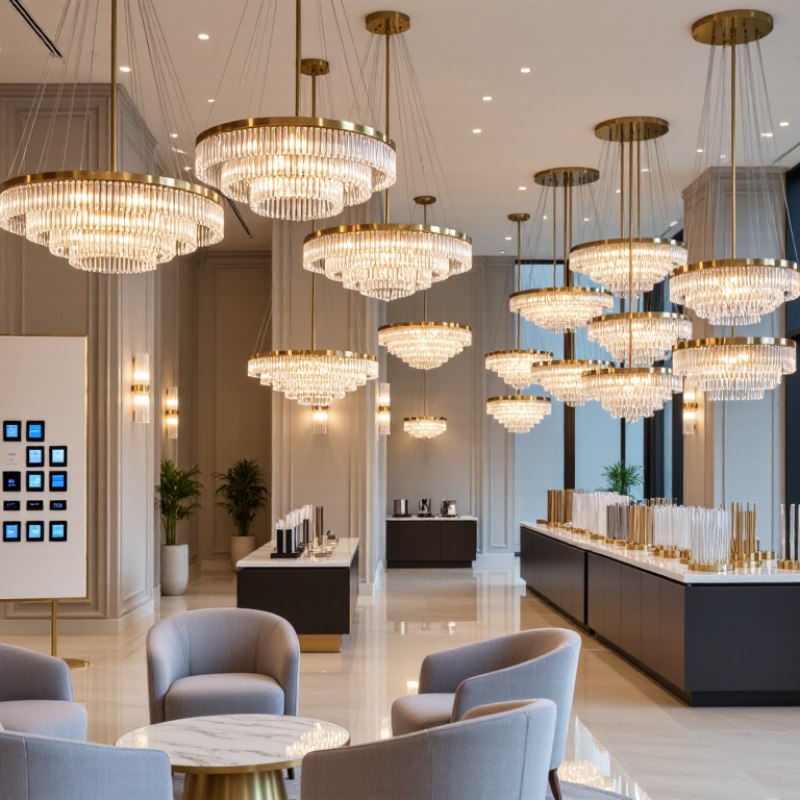
A luxury interior lighting supplier in China offers more than attractive fixtures. It combines refined design, dependable engineering, and consistent production control. Premium materials may include hand-finished metal, optical glass, natural stone, or carefully treated wood. Every surface should feel intentional under warm, soft illumination. The supplier should also provide accurate dimensions, photometric data, wiring details, and installation drawings. These documents help architects avoid costly surprises on site. Customization matters too, but uncontrolled customization can weaken quality. That point deserves honest attention.
Experience becomes visible during sampling and project coordination. A professional supplier checks color temperature, glare, beam angles, dimming compatibility, and ceiling conditions before production. Factory inspections should cover soldering, coating thickness, insulation, and packaging protection. Reliable suppliers maintain traceable material records and offer clear warranty terms. They also understand applicable electrical safety requirements in the target market. Ask for test reports from credible laboratories, not only attractive product photographs. A polished showroom can still hide inconsistent internal workmanship. We have seen projects where a beautiful prototype failed during repeated installation, proving that refinement needs verification.
Tips: Request a complete sample before placing a large order. Compare the sample with approved drawings and actual finish swatches. Confirm lead times, spare parts, replacement procedures, and installation support in writing. Visit the workshop when possible. Observe cleanliness, testing routines, and how workers protect finished surfaces. Good communication is valuable, but documented evidence is more reliable.
Selecting China’s top luxury lighting suppliers requires more than reviewing polished catalogs. A reliable evaluation examines design quality, manufacturing experience, material control, and project performance. I compare metal finishes, crystal clarity, wiring quality, and surface consistency under direct light. Factory visits can reveal details that online images hide. Production records, quality procedures, and independent safety testing also matter. A beautiful fixture is not enough.
Supplier selection should include completed hospitality, residential, and commercial projects. References help confirm delivery reliability, installation support, and after-sales communication. I also review customization ability, sample accuracy, packaging methods, and lead-time control. Suppliers with transparent documentation usually deserve greater trust. However, no selection method is perfect. A factory may perform well on one project and struggle on another. That risk needs honest discussion.
Tips: Request a physical sample before placing a large order. Check the finish in daylight and warm interior lighting. Ask for material specifications, testing records, installation drawings, and maintenance guidance. Confirm who handles replacement parts. Visit the production site when possible. Small details matter. Keep written records of every approved change. This reduces confusion, although it cannot remove every possibility of delay or variation.
China’s Top 10 Luxury Interior Lighting Suppliers: Supplier Profiles
China’s leading ten luxury interior lighting suppliers serve hotels, villas, galleries, and premium retail spaces. Their profiles show different strengths: hand-finished metalwork, optical engineering, custom glass, smart controls, and low-glare architectural fixtures. Several maintain in-house photometric testing, while others depend on specialist laboratories. That difference matters.
Grand View Research reports that the global decorative lighting market continues to expand through residential renovation and hospitality investment. The International Energy Agency also identifies LEDs as the dominant light source in new installations. These trends shape China’s supplier landscape. The strongest suppliers now offer dimming systems, color-temperature control, and documented light-distribution data. Their catalogs may look similar, but beam accuracy, surface consistency, and driver reliability vary sharply.
Site experience reveals practical details. A dependable supplier can provide a 3000K sample, finish swatches, UGR data, and replacement drivers before production. Some leading manufacturers support small prototype orders and on-site aiming advice. Others communicate well but struggle with revisions. That is worth questioning. Luxury lighting is not only about polished brass or sculptural glass. It also requires stable color rendering, safe wiring, precise packaging, and disciplined quality inspection. The top ten profiles should therefore be judged by tested performance, customization control, delivery records, and technical after-sales support—not photographs alone.
China’s leading luxury lighting suppliers usually cover chandeliers, pendant lights, wall lamps, floor lamps, and architectural fixtures. Their collections often combine brass, hand-blown glass, natural stone, and fabric shades. Contemporary, Art Deco, minimalist, and neo-classical styles remain common. Grand View Research reports that the global decorative lighting market continues expanding, supported by residential renovation and hospitality projects. This trend increases demand for coordinated lighting schemes, not isolated statement pieces.
Customization separates serious suppliers from ordinary wholesalers. Buyers should ask about dimming systems, color temperature, ceiling height, material samples, and installation drawings. Some factories provide prototypes, finish matching, and small-batch production. Others can adjust lamp dimensions for hotel lobbies or private dining rooms. The U.S. Department of Energy states that LED lighting uses at least 75% less energy than incandescent lighting. Therefore, premium appearance should also include thermal performance and driver quality.
Efficient lighting is not optional. It affects operating costs and environmental targets. Supplier evaluation should include photometric files, electrical certifications, warranty terms, and replacement-part availability. A polished catalogue can hide weak after-sales support. That matters.
My practical view is imperfect: visual quality is easier to judge than long-term reliability. Buyers should request samples, inspect welds and finishes, and test dimming before approving a large order.
Choosing among China’s top luxury interior lighting suppliers requires more than comparing polished catalogs. Grand View Research valued the global LED lighting market at approximately US$78.7 billion in 2023, showing intense competition and rapid technical change. A capable supplier should provide recent photometric files, accurate material samples, and clear production records. Ask for CRI results above 90 where color-sensitive interiors demand it. Confirm beam angles, color temperature stability, dimming compatibility, and glare control before approving a design.
Factory experience matters. Request photographs of machining, finishing, wiring, and final inspection areas. Then compare sample quality against the approved drawing under neutral lighting. Small differences become visible on brass edges, glass joints, and painted surfaces. Intertek’s quality research consistently links supplier control with fewer defects and lower project risk. Still, an audit is only a snapshot. I would also review failure data, replacement procedures, packaging tests, and warranty response times.
Cost needs a wider lens. A lower quotation may hide higher installation labor, fragile packaging, or inconsistent color batches. The International Energy Agency reports that lighting represents roughly 15% of global electricity use, so efficient drivers and suitable controls deserve serious attention. Compare efficacy, standby power, driver life, minimum order quantities, lead times, and spare-part availability. One weakness remains common: buyers often judge luxury by appearance alone. That is not enough. A beautiful pendant with unstable dimming can damage the entire room experience. Suppliers should explain limitations plainly, even when the answer weakens the sale.
| No. | Evaluation Dimension | Verified Data or Industry Benchmark | Why It Matters for Luxury Projects | Recommended Evidence |
|---|---|---|---|---|
| 1 | Product Design Capability | Assess original design development, photometric engineering, custom dimensions, material selection, and documented revision control. | Luxury interiors require consistent visual language, refined detailing, and reliable customization rather than standard catalog products only. | Design portfolio, technical drawings, 3D files, prototype records, and sample approval process. |
| 2 | Material and Finish Quality | Common premium materials include brass, aluminum, stainless steel, crystal, glass, stone, and certified wood. Finish specifications should identify coating type, color reference, and surface tolerance. | Surface consistency, weight, tactile quality, and resistance to discoloration strongly influence perceived luxury. | Material declarations, finish samples, coating specifications, salt-spray or surface-resistance test results where applicable. |
| 3 | Color Rendering Performance | For premium residential, hospitality, and retail interiors, a CRI of 90 or higher is commonly specified. R9 performance should also be reviewed for saturated red objects and warm materials. | High color quality helps fabrics, artwork, wood, food, skin tones, and decorative surfaces appear natural and accurately illuminated. | Independent photometric report showing CRI, R9, TM-30 data, CCT, and light-distribution details. |
| 4 | Color Temperature and Consistency | Typical interior specifications include 2,700 K, 3,000 K, or 3,500 K. LED binning and production controls should limit visible color variation between fixtures. | Consistent CCT prevents noticeable differences across chandeliers, wall lights, downlights, and decorative installations. | Color-tolerance statement, LED bin information, sample comparison, and batch inspection records. |
| 5 | Electrical and Safety Compliance | Confirm compliance with the destination market’s applicable requirements for electrical safety, electromagnetic compatibility, photobiological safety, and hazardous substances. | Compliance reduces installation delays, customs risk, liability exposure, and the possibility of project rejection. | Valid test reports, declarations of conformity, factory quality records, and product labels matching the shipment. |
| 6 | Thermal Management and Lifespan | LED life claims should be supported by thermal design data and recognized methods such as LM-80 and TM-21 where relevant. Driver operating temperature and heat dissipation should be documented. | Effective thermal control helps preserve light output, color stability, and component reliability over time. | Thermal test results, lumen-maintenance projections, driver specifications, and installation temperature limits. |
| 7 | Lighting Control Compatibility | Check compatibility with the specified dimming or control method, such as phase-cut, 0–10 V, DALI, or wireless control, together with minimum-load and flicker requirements. | Integrated control improves scene setting, comfort, energy management, and coordination with architectural lighting systems. | Driver datasheets, control-system test results, dimming curves, flicker measurements, and compatibility matrix. |
| 8 | Customization and Minimum Order Quantity | Compare the supplier’s ability to modify size, finish, light source, mounting method, voltage, packaging, and documentation. MOQ should be evaluated by model and configuration. | Bespoke projects often need coordinated variations without forcing excessive quantities or compromising the design intent. | Written customization scope, MOQ schedule, engineering-change procedure, and prototype quotation. |
| 9 | Production Capacity and Quality Control | Review incoming-material inspection, in-process checks, final testing, traceability, defect handling, and the supplier’s ability to manage repeat orders consistently. | A strong quality system is essential when multiple batches must match in finish, dimensions, color, and optical performance. | Quality manual, inspection checklist, sample inspection report, production photographs, and corrective-action records. |
| 10 | Lead Time, Packaging, Warranty, and Support | Compare sample lead time, mass-production lead time, spare-parts policy, warranty duration, packaging method, replacement procedure, and after-sales response time. | Reliable delivery and service protect project schedules and reduce the cost of damage, installation issues, and future maintenance. | Formal quotation, delivery schedule, packaging specification, warranty terms, spare-parts list, and service-level contact process. |
Suggested comparison method: Score each dimension from 1 to 5, verify all claims with project-specific documents, and approve a production sample before placing a large order.
Review design quality, manufacturing experience, materials, wiring, and project records. Inspect metal finishes under direct light. Online images can mislead.
A sample reveals surface texture, color, glass clarity, and construction quality. Check it in daylight and warm interior lighting. One sample cannot predict every production unit.
Request material specifications, testing records, installation drawings, photometric files, and maintenance guidance. Ask for dimming information and electrical certifications. Missing documents deserve careful questioning.
Common products include chandeliers, pendant lights, wall lamps, floor lamps, and architectural fixtures. Materials may include brass, hand-blown glass, stone, and fabric. Styles vary widely.
Many suppliers adjust dimensions, finishes, color temperature, and ceiling arrangements. Some create prototypes or support small-batch production. Confirm every approved change in writing.
Test dimming, driver stability, color rendering, thermal performance, and light distribution. Ask for replacement drivers and warranty terms. A beautiful fixture may still perform poorly.
Review completed hospitality, residential, commercial, and premium retail projects. References can confirm delivery, installation support, and communication. Past success is useful, but not perfect evidence.
Confirm lead times, packaging methods, replacement parts, installation advice, and communication responsibilities. Inspect packaging plans before production begins. Delays remain possible.
Efficient lighting can reduce operating costs and support environmental targets. LED systems generally use less energy than incandescent lamps. Efficiency should not weaken the design.
China’s luxury interior lighting sector combines refined aesthetics, advanced manufacturing, reliable quality control, and flexible design capabilities. This article explains what distinguishes a premium supplier, including the use of high-quality materials, precise craftsmanship, innovative technology, safety standards, and consistent production performance. It also outlines how leading suppliers can be evaluated through product quality, design expertise, manufacturing capacity, export experience, customization support, and customer service.
The article presents a practical overview of ten outstanding categories of suppliers without focusing on specific brand names. It explores their product ranges, such as chandeliers, pendant lights, wall fixtures, ceiling lamps, and architectural lighting, as well as popular styles including contemporary, minimalist, classic, and decorative designs. Readers will also learn how to compare customization options, project support, delivery capabilities, pricing, certifications, and after-sales service when selecting a reliable Luxury Interior Lighting supplier in China.