0%

Architectural Ceiling Lighting shapes how people read space, materials, and movement. It is not merely a technical layer above the room. A recessed downlight can sharpen a stone wall, while a concealed linear system can soften a hotel corridor. The best manufacturers understand both effects.

This overview examines leading Architectural Ceiling Lighting manufacturers worldwide. It considers optical performance, glare control, thermal management, controls, customization, certifications, and long-term service. Product photographs can look impressive. Real projects reveal more. We will look at beam consistency, driver reliability, installation access, and how fixtures behave after years of cleaning and maintenance.

Architect Louis Kahn is widely credited with saying, “The sun never knew how great it was until it hit the side of a building.” His observation remains useful for ceiling-lighting decisions. Light gains meaning through surfaces, proportion, and human activity. That principle separates thoughtful manufacturers from companies offering attractive catalogs alone. Yet rankings are never completely neutral. Regional standards, project budgets, supply conditions, and designer preferences can change the result. Some smaller manufacturers may outperform larger brands in a specific application. That possibility deserves attention.

This guide therefore uses practical, evidence-based criteria rather than reputation alone. It compares global reach with local technical support. It also considers whether a manufacturer helps designers solve difficult details, such as low-ceiling glare, exposed concrete, narrow coffers, or uneven refurbishment conditions. The strongest brands do not promise perfection. They provide measurable performance, clear documentation, and dependable collaboration from specification to commissioning.
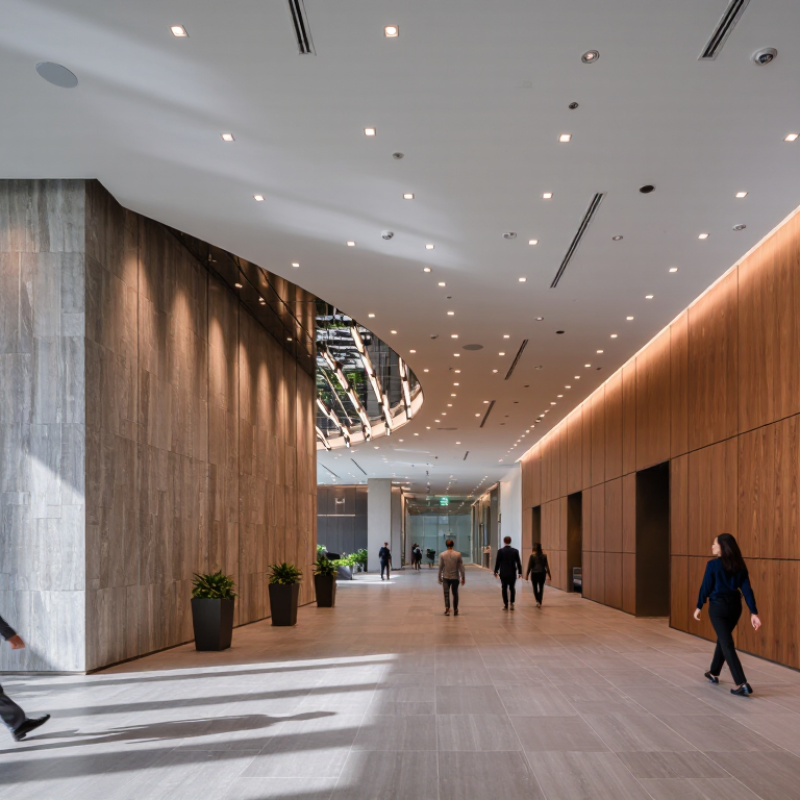
Top Architectural Ceiling Lighting Manufacturers Worldwide

Definition and Scope of Architectural Ceiling Lighting

Definition and Scope of Architectural Ceiling Lighting

Architectural ceiling lighting refers to integrated or coordinated luminaires installed within, on, or above ceilings. Its purpose extends beyond basic illumination. It shapes visual comfort, spatial hierarchy, material appearance, and wayfinding. The scope includes recessed downlights, linear systems, luminous ceilings, concealed cove lighting, suspended architectural fixtures, and smart control interfaces.

Professional practice separates these systems from decorative lighting by evaluating performance and integration. The Illuminating Engineering Society recommends assessing illuminance, glare, color quality, maintenance, and control response together. That approach matters in offices, hospitals, hotels, retail spaces, and transport interiors. A ceiling can look seamless at noon, yet produce uncomfortable glare after sunset. The boundary is not always clean.

Energy performance also defines the market’s direction. The International Energy Agency reports that lighting uses roughly 15% of global electricity. Its energy-efficiency analysis identifies connected controls, LEDs, and improved design as major reduction opportunities. The U.S. Department of Energy’s solid-state lighting research reports also highlight longer service life, higher efficacy, and better optical control. These findings support architectural systems that dim by daylight, respond to occupancy, and maintain consistent color appearance.

Scope decisions should include ceiling structure, installation access, emergency requirements, acoustic coordination, and future replacement. Designers often specify high efficacy but overlook driver access. That is a practical weakness. Reliable projects document photometric data, glare ratings, color consistency, control protocols, and maintenance intervals. Market comparisons should therefore examine complete system performance, not fixture appearance alone.

Criteria for Evaluating Leading Global Manufacturers

Evaluating leading architectural ceiling lighting manufacturers requires more than attractive product images. I examine photometric files, beam consistency, glare control, and color stability. Reliable manufacturers provide clear testing records and traceable component information. Their products should meet relevant regional safety and performance standards. Documentation matters.

Experience also reveals practical differences. A strong manufacturer explains installation limits, ceiling compatibility, driver access, and maintenance requirements. I look for evidence from completed commercial, hospitality, and public projects. Detailed case studies are useful when they show lighting plans, measured results, and project conditions. Vague claims deserve caution. Pricing alone can mislead.

Tips: Request samples before large orders. Test dimming at low output. Check flicker performance with cameras and sensitive equipment. Confirm replacement-part availability and warranty terms in writing. Ask how quality is controlled across different production batches. Communication speed matters, but technical honesty matters more. A supplier that admits limitations may be safer than one promising perfection. I would also compare energy calculations using the same operating hours. Small specification changes can alter lifetime costs significantly. Supplier reviews help, but independent verification remains essential.

Top Architectural Ceiling Lighting Manufacturers Worldwide

Criteria for Evaluating Leading Global Manufacturers

This evaluation framework assigns transparent importance weights to the main criteria used when comparing architectural ceiling-lighting manufacturers. Photometric performance, glare control, energy efficiency, durability, regulatory compliance, and control-system compatibility reflect commonly specified requirements in commercial and institutional lighting projects. The percentages represent an analytical scoring model rather than company or brand performance data.

Major Architectural Ceiling Lighting Manufacturers by Region

Major Architectural Ceiling Lighting Manufacturers by Region

Architectural ceiling lighting manufacturers vary widely by region, climate, and construction practice. European producers often emphasize precise optics, restrained forms, and energy performance. Their products commonly suit museums, offices, hotels, and protected interiors where glare control matters.

North American manufacturers frequently develop modular systems for large commercial projects. They often focus on easy installation, replaceable components, and compatibility with smart building controls.

In Asia-Pacific, production ranges from high-volume recessed fixtures to highly customized luminaires. Manufacturers in Japan and South Korea often prioritize compact engineering and refined detailing. Chinese suppliers may offer broad configurations, but quality verification remains essential.

Middle Eastern manufacturers respond to intense daylight, heat, and ambitious hospitality projects. Durable finishes and reliable thermal management become practical concerns. Latin American producers often adapt designs to local contractors, voltage conditions, and project budgets. African suppliers are growing through regional assembly and imported components, although technical support can differ sharply between markets.

Regional labels can mislead. A manufacturer may design in one country, produce in another, and test components elsewhere. I have found that factory visits, photometric files, warranty terms, and sample testing reveal more than a polished catalog.

Check beam angles on site. Review emergency-lighting compatibility. Confirm color consistency across batches.

Some manufacturers still provide weak installation guidance, and that gap can delay a finished ceiling. Even respected suppliers may overlook acoustic coordination, maintenance access, or local certification requirements. Good architectural lighting depends on these unglamorous details.

Key Product Types and Lighting Technologies

Architectural ceiling lighting manufacturers worldwide typically develop several product families for different spatial needs. Recessed downlights create clean ceilings and focused pools of light. Surface-mounted fixtures suit shallow voids or concrete structures. Linear systems provide continuous illumination across offices, corridors, and retail interiors. Pendant luminaires add visual identity above reception desks and dining areas. Adjustable spotlights help galleries direct light toward changing displays.

LED remains the dominant technology because it offers long service life, low heat, and precise optical control. However, performance depends on more than wattage. A narrow beam can highlight artwork, while a wider beam reduces harsh contrasts on work surfaces. Tunable-white systems shift from cool morning light to warmer evening tones. DALI, 0–10 V, and wireless controls support dimming and scene management. Occupancy and daylight sensors can reduce unnecessary energy use.

Good manufacturers also consider glare, color rendering, maintenance access, and ceiling coordination. A high CRI rating is valuable in hospitality and retail spaces, but it does not solve every visual problem. Diffusers may soften light, yet they can reduce efficiency. Smart controls sound impressive, though poorly commissioned systems often frustrate occupants. Photometric testing, thermal checks, and mock-up installations reveal weaknesses before mass production. No specification is perfect. Careful review still matters.

Top Architectural Ceiling Lighting Manufacturers Worldwide - Key Product Types and Lighting Technologies

Technical values are representative ranges commonly available in architectural ceiling-lighting products; actual performance varies by model, optics, installation conditions, and regional standards.
Product Type Typical Mounting Light Distribution Primary Lighting Technology Typical Power Range Typical Efficacy Common CCT Range Typical CRI Control Options Typical Applications
Recessed Downlight Recessed into gypsum, metal, or modular ceilings Narrow, medium, or wide beam; usually direct Integrated LED with reflector or lens optics 6–40 W 80–120 lm/W 2700–4000 K CRI 80–95 On/off, phase dimming, 0–10 V, DALI-2, wireless controls Hotels, residences, retail, offices, galleries
Linear Recessed Luminaire Continuous recessed ceiling channel Direct, asymmetric, or direct/indirect LED boards with diffused or louvered optics 15–45 W/m 90–140 lm/W 2700–5000 K CRI 80–90+ 0–10 V, DALI-2, DMX, wireless, daylight and occupancy sensing Corporate offices, corridors, education, transport interiors
Suspended Linear Pendant Cable, rod, or stem suspended from the ceiling Direct/indirect, commonly 30/70 or 50/50 LED with separate upper and lower optical systems 20–70 W/m 85–125 lm/W 2700–4000 K CRI 80–90+ Dual-channel dimming, DALI-2, 0–10 V, wireless scene control Open-plan offices, meeting rooms, hospitality, libraries
LED Troffer and Modular Ceiling Panel Lay-in, tegular, or surface-mounted modular ceiling Wide direct distribution with controlled glare Edge-lit or back-lit LED with micro-prismatic diffuser 25–45 W per 600 × 600 mm module 90–125 lm/W 3000–5000 K CRI 80–90 0–10 V, DALI-2, occupancy sensing, daylight harvesting Offices, schools, healthcare, commercial interiors
Surface-Mounted Panel Directly fixed to concrete or finished ceilings Broad, uniform direct illumination Back-lit LED or edge-lit LED with diffuser 20–60 W per fixture 85–120 lm/W 3000–5000 K CRI 80–90 On/off, phase dimming, 0–10 V, DALI-2 Renovation projects, retail, classrooms, low-ceiling spaces
Cove and Perimeter Lighting Concealed in ceiling coves, reveals, or architectural details Indirect wall-wash or ceiling-wash distribution Flexible LED strips or rigid linear LED modules 5–25 W/m 60–110 lm/W 2200–6500 K; RGB/RGBW options CRI 80–95 PWM, 0–10 V, DALI-2, DMX, tunable-white controls Hospitality, museums, theaters, residences, feature ceilings
Acoustic Ceiling Luminaire Suspended or integrated with acoustic panels and baffles Direct, indirect, or diffuse omnidirectional light LED combined with sound-absorbing textile or mineral materials 20–80 W per fixture 70–115 lm/W 2700–4000 K CRI 80–90+ DALI-2, 0–10 V, wireless scenes, occupancy sensing Open offices, restaurants, collaborative areas, public interiors
Adjustable Architectural Spotlight Recessed, surface-mounted, or installed on ceiling tracks Accent, wall-wash, or adjustable directional beam High-output LED with interchangeable lenses or reflectors 10–50 W per head 70–115 lm/W 2700–4000 K CRI 90–98 Phase dimming, DALI-2, 0–10 V, DMX in specialist systems Retail, art galleries, museums, hospitality, showrooms
High-Bay Architectural Luminaire Suspended, surface-mounted, or cable-hung from high ceilings Wide or aisle-specific direct distribution High-output LED with thermal management and precision optics 80–250 W per fixture 120–180 lm/W 3500–5000 K CRI 80–90 0–10 V, DALI-2, occupancy and daylight sensors Warehouses, sports halls, production spaces, atriums
Key Lighting Technologies: Integrated LED, edge-lit and back-lit LED panels, micro-prismatic optics, tunable white, RGB/RGBW color mixing, direct/indirect illumination, daylight harvesting, occupancy sensing, DALI-2, 0–10 V, DMX, wireless lighting controls, emergency lighting, and smart-building connectivity.

Factors for Comparing Manufacturers and Selecting a Supplier

Choosing an architectural ceiling lighting supplier requires more than comparing catalog prices. A low quote may hide tooling, testing, packaging, or replacement costs. Start with the project brief: ceiling type, mounting depth, beam angle, color temperature, glare limits, and control protocol. Ask each manufacturer for matching technical data, not attractive product photographs. Photometric files, tolerance ranges, and installation drawings reveal practical competence.

Evaluate manufacturing evidence. Review material samples, LED binning policies, driver sources, thermal test reports, and quality-control records. A reliable supplier should explain how output remains consistent across batches. Request a pre-production sample and inspect its finish under strong light. Check screw alignment, cable length, diffuser seating, and access for future maintenance. Small details become expensive when hundreds of fixtures are installed. Test the details. Factory audits or independent testing can add confidence, especially for commercial projects.

Compare lead times realistically, including approval changes and shipping buffers. Confirm warranty terms, spare-part availability, dimming compatibility, and response times after delivery. Ask who owns photometric revisions when the ceiling layout changes. Good suppliers answer clearly and document decisions. Yet no comparison is perfect. A polished sample can mislead, and a long warranty means little without service capacity. Leave room for a pilot installation, then measure glare, uniformity, noise, and actual energy use before releasing the full order. Record the exceptions.

FAQS

How do architectural ceiling lighting manufacturers differ by region?

European producers often emphasize precise optics, restrained forms, and glare control. North American suppliers commonly offer modular systems for large commercial buildings. Asian manufacturers range from high-volume recessed fixtures to customized luminaires. Regional habits matter.

Which ceiling lighting types suit different interior spaces?

Recessed downlights create clean ceilings and focused light pools. Surface-mounted fixtures work well beneath concrete slabs or shallow ceiling voids. Linear systems suit offices and corridors. Pendants add identity above reception desks or dining tables.

Why is LED technology widely used in architectural lighting?

LED fixtures usually provide long service life, low heat, and accurate beam control. They can support narrow beams for artwork or wider beams for work surfaces. Wattage alone does not prove good performance.

How can buyers compare manufacturers beyond regional labels?

Review photometric files, warranty conditions, factory information, and physical samples. Test beam angles inside the actual space. A polished catalog can still mislead. I would not trust paperwork alone.

What should buyers check before approving a lighting sample?

Check glare, color consistency, thermal behavior, and installation access. Confirm performance across several fixtures, not just one sample. Small details matter. Batch variation can become visible on a long ceiling.

Are smart lighting controls always beneficial?

Wired or wireless controls can support dimming, scenes, occupancy sensing, and daylight response. Poor commissioning may confuse occupants and waste time. Keep the settings understandable. Smart is not automatically better.

How do climate and construction conditions influence fixture selection?

Hot regions require durable finishes and reliable heat management. Concrete structures may favor surface-mounted fixtures. Local voltage conditions and contractor practices also affect compatibility. The best design on paper may install badly.

What common problems can delay an architectural lighting project?

Weak installation guidance may slow ceiling completion. Designers can also overlook acoustic coordination, maintenance access, emergency-lighting compatibility, or local certification. Review these early. The boring checks often protect the schedule.

Conclusion

Architectural Ceiling Lighting refers to integrated lighting systems designed for ceilings in commercial, residential, hospitality, healthcare, retail, and public environments. This article examines how leading global manufacturers are evaluated through criteria such as product quality, optical performance, energy efficiency, design flexibility, safety standards, customization capabilities, manufacturing reliability, and after-sales support. It also provides a regional overview of major market participants without focusing on individual brand names.

The discussion covers key product categories, including recessed, surface-mounted, track-compatible, linear, modular, and smart ceiling fixtures, along with technologies such as LED sources, advanced lenses, dimming controls, occupancy sensors, and connected lighting systems. To compare manufacturers effectively, buyers should consider application requirements, installation conditions, light quality, control compatibility, maintenance needs, certifications, delivery capability, and total lifecycle cost. These factors help project owners, designers, and contractors select reliable suppliers that balance aesthetics, performance, sustainability, and long-term value.

Ethan

Ethan

Ethan is a professional marketing specialist dedicated to helping businesses understand products, markets, and customer needs through clear, practical, and trustworthy communication. With extensive knowledge of the company’s product portfolio, industry trends, and customer applications, he......