Finding the right contract lighting manufacturer requires more than comparing catalog prices. It means examining design capability, production controls, certifications, and communication practices. A reliable partner should explain how an initial sketch becomes a tested lighting fixture. Ask about materials, LED components, thermal management, dimming systems, and expected service life. Factory photographs help, but documented evidence matters more.
Contract Lighting Manufacturing works best when the manufacturer understands your project’s technical and commercial goals. Request samples before approving large quantities. Inspect the finish under bright light, check cable routing, and test the fixture after several hours of operation. Discuss tooling ownership, minimum order quantities, packaging, lead times, and replacement procedures in writing. Experienced manufacturers can also identify design risks early, such as heat buildup inside a narrow metal housing.
Do not choose a supplier only because its quotation looks attractive. That approach often creates delays later. A capable manufacturer should provide clear test reports, quality checkpoints, and references from comparable projects. You may also arrange a factory audit or independent pre-shipment inspection. However, no process is perfect. Specifications can still be misunderstood, especially when drawings lack tolerances or installation details. Leave room for questions and revisions. The best partnership develops through transparent communication, realistic deadlines, and evidence-based decisions. This guide explains how to compare manufacturers carefully and avoid expensive assumptions before production begins.
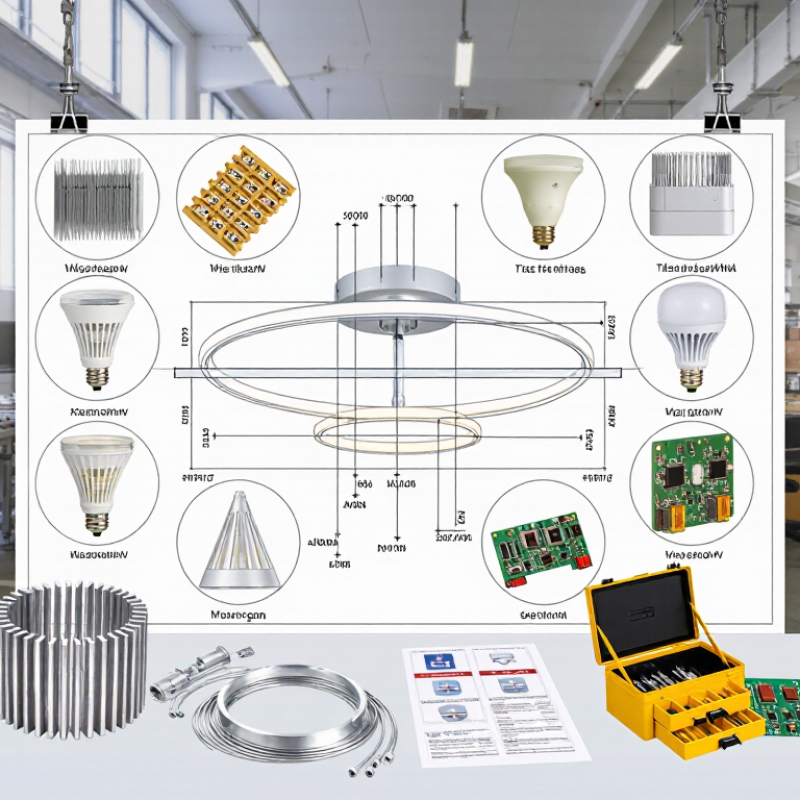
A contract lighting manufacturer turns a lighting concept into a repeatable product. Its role may include engineering, prototyping, component sourcing, assembly, testing, and quality control. It should also translate your performance goals into measurable specifications. These may include lumen output, color temperature, beam angle, thermal limits, dimming behavior, and expected service life. The manufacturer is not simply a factory. It becomes an operational partner responsible for consistency.
Define the scope before comparing suppliers. Request clear details about design ownership, tooling, sample approvals, material substitutions, inspection methods, packaging, and delivery responsibilities. Ask for test reports and production samples, not only attractive photographs. A reliable manufacturer will explain limitations early.
In practical project reviews, unclear ownership often causes costly revisions. A perfect specification rarely exists. Leave room for technical refinement, but document every approved change.
Tips: Prepare a short product brief with drawings, target quantities, finish requirements, and installation conditions. Ask who manages quality checks on the production line. Confirm how defects are recorded and corrected. Test a pilot batch before full production. Small details matter. A warm metal surface, a loose connector, or uneven light can reveal weak process control. Also question assumptions. The cheapest quotation may exclude testing, packaging, or engineering support. That gap deserves careful attention.
How to Find a Contract Lighting Manufacturer?
Set Product, Compliance, and Production Requirements
A reliable search begins with a precise product brief. Define lumen output, CCT, CRI, beam angle, dimming method, lifetime, and operating temperature. Add drawings, target materials, finish samples, and photometric files. The International Energy Agency reports that lighting uses about 15% of global electricity. Efficiency claims therefore need measured evidence, not attractive estimates. Request LM-80 data, thermal test results, and lumen-maintenance projections for the intended environment.
Compliance must match the destination market. Specify required testing for electrical safety, electromagnetic compatibility, photobiological risk, and restricted substances. Standards such as IEC 60598 and IEC 62471 may apply, depending on the product. Ask the manufacturer to provide current test reports, component traceability, and calibration records. The U.S. Department of Energy’s solid-state lighting research reports show continuing gains in LED efficacy, but higher efficacy does not automatically prove product quality. That distinction is often missed.
Production requirements should be measurable. Set acceptable defect levels, inspection stages, packaging tests, minimum order quantities, tooling ownership, and delivery windows. Require a pilot run before volume production. Check whether the factory controls drivers, optics, thermal interfaces, and final assembly in-house. Ask for corrective-action records, not only factory photographs. I have found that polished samples can hide weak process control. My own requirement lists have also been too ambitious at times. A shorter specification may be better than an impressive one nobody can manufacture consistently. Review samples under real installation conditions, including heat, dust, glare, and repeated switching.
| Requirement Area | Data Dimension | Recommended Requirement | Verification Method | Applicable Reference | Supplier Status |
|---|---|---|---|---|---|
| Product Definition | Application and installation type | Define indoor, outdoor, dry, damp, or wet-location use; ceiling, wall, surface, recessed, track, or portable installation; and mounting limitations. | Review the product specification, installation drawings, environmental rating, and intended-use statement. | Use the applicable luminaire safety standard and the installation requirements for the target market. | Required |
| Product Definition | Optical performance | Specify delivered lumens, beam angle, color temperature, color rendering index, glare limits, and lumen-maintenance expectations. Typical CCT options include 2700 K, 3000 K, 4000 K, and 5000 K. | Verify integrating-sphere test results, photometric files, color measurements, and a production sample. | IES LM-79 for electrical and photometric measurements; ANSI C78.377 for LED chromaticity recommendations. | Required |
| Product Definition | Electrical input and control | Define nominal voltage, frequency, input current, power factor, total harmonic distortion, dimming method, control protocol, standby power, and connector type. A universal-input design may be specified as 100–277 V AC, 50/60 Hz when appropriate. | Review driver specifications and test measured input characteristics under minimum, nominal, and maximum load conditions. | Relevant requirements may include IEC 61347, IEC 62384, power-quality rules, and local electrical regulations. | Required |
| Product Definition | Mechanical and thermal design | Set dimensions, material, finish, mounting points, allowable weight, operating temperature, storage temperature, heat-sink design, and access requirements for maintenance. | Check approved drawings, material declarations, dimensional inspection reports, and thermal test results at rated load. | Use the environmental and temperature limits stated in the product safety evaluation and installation instructions. | Required |
| Safety Compliance | Luminaire safety construction | Require protection against electric shock, suitable insulation, grounding or double insulation, safe wiring, secure terminals, strain relief, flammability control, and accessible-part protection. | Request a compliance test report, construction review, critical-component list, and production-line safety inspection records. | IEC 60598-1 for general luminaire safety; IEC 60598-2 for relevant luminaire types; UL 1598 may apply in the United States. | Required |
| Environmental Compliance | Ingress protection | Specify the required IP rating according to the installation environment. For example, IP20 is generally intended for protection against solid objects larger than 12.5 mm, while IP65 provides dust-tight protection and protection against water jets. | Confirm the marked IP rating through a recognized test report and inspect seals, joints, cable entries, and enclosure construction. | IEC 60529 defines IP code classifications and test conditions. | Conditional |
| Environmental Compliance | Restricted substances | Require controlled use of lead, mercury, cadmium, hexavalent chromium, PBB, PBDE, and restricted phthalates where applicable. Obtain material declarations for LEDs, drivers, plastics, cables, solder, and coatings. | Review supplier declarations, material test reports, bills of materials, and laboratory screening results for high-risk materials. | EU RoHS Directive 2011/65/EU and its amendments; EU REACH Regulation (EC) No. 1907/2006 where applicable. | Required |
| EMC Compliance | Emissions and immunity | Define conducted and radiated emission limits, electrostatic-discharge immunity, electrical-fast-transient immunity, surge immunity, and radio-frequency immunity for the target market. | Require EMC test reports using production-representative samples, final configuration, and intended control accessories. | IEC 61547 for lighting equipment immunity and CISPR 15 for lighting-equipment radio-frequency disturbance limits. | Required |
| Reliability | LED lifetime and lumen maintenance | State the rated lifetime with the operating temperature, drive current, failure definition, and warranty conditions. Avoid quoting lifetime without test conditions or a defined lumen-maintenance endpoint. | Review LM-80 data for LED packages or modules and the TM-21 calculation used for projected lumen maintenance. Verify thermal conditions in the finished luminaire. | IES LM-80 for LED lumen-maintenance testing and IES TM-21 for projecting lumen maintenance. | Required |
| Production Control | Approved sample and first-article inspection | Freeze the approved golden sample, drawings, bill of materials, firmware version, color bin, finish, packaging, labels, and inspection limits before mass production. | Complete a first-article inspection and compare measured results with the approved specification before releasing the production order. | Use a documented engineering-change and sample-approval procedure; ISO 9001 provides a quality-management framework. | Required |
| Production Control | Incoming and in-process inspection | Inspect critical components such as LED modules, drivers, capacitors, connectors, lenses, heat sinks, and safety-critical fasteners. Record torque, soldering, wiring, polarity, and assembly checks. | Review inspection plans, component traceability, calibration records, process-control sheets, and nonconformance reports. | A risk-based quality plan should identify critical, major, and minor characteristics for each assembly stage. | Required |
| Production Control | End-of-line testing | Test every finished unit for electrical safety and basic functionality. Depending on the product, include input power, light output, dimming response, polarity, grounding continuity, dielectric strength, and insulation resistance. | Request test-station records linked to serial number, batch number, operator, test limits, measured values, and disposition of failed units. | Test limits should be derived from the approved design, applicable safety standard, and certification conditions. | Required |
| Quality Acceptance | Sampling plan and defect limits | Define lot size, inspection level, sample size, critical-defect rules, major-defect acceptance limits, minor-defect acceptance limits, and escalation procedures. | Use a written outgoing-quality-control report and retain inspection photographs, measurements, and corrective-action records. | ISO 2859-1 provides sampling procedures and acceptance levels for attribute inspection. | Required |
| Traceability | Records and change management | Require batch or serial-number traceability for components, assembly date, test results, operator, inspection status, firmware, and shipment carton. | Conduct a mock recall or traceability exercise from finished product back to critical components and production records. | The record-retention period should match contractual, regulatory, warranty, and certification requirements. | Required |
| Commercial Readiness | Packaging and documentation | Specify product labels, rating labels, installation instructions, wiring diagrams, safety warnings, photometric files, compliance documents, spare-part requirements, and packaging drop-protection criteria. | Approve artwork and manuals before production; inspect carton markings, barcode accuracy, accessory completeness, and packaging performance. | Documentation must match the certified construction, approved product configuration, and destination-market requirements. | Required |
Note: Compliance requirements depend on the product type, electrical configuration, installation environment, and destination market. Final requirements should be confirmed with the applicable certification body, testing laboratory, and local regulatory authority.
A qualified contract lighting manufacturer should be shortlisted through evidence, not attractive photographs. Define your product needs before contacting suppliers. Record wattage, dimensions, finishes, certifications, control systems, packaging, and expected annual volume. Clear specifications reveal whether a factory understands your project or simply wants an order.
Request recent project examples with similar materials and production methods. Ask for sample units, tolerance data, testing records, and a realistic production schedule. A reliable partner should explain how it manages heat dissipation, color consistency, driver performance, and final inspection. Look beyond the brochure. Details matter.
Visit the facility when possible, or arrange a live video audit. Observe assembly areas, testing equipment, warehouse conditions, and quality records. Speak with the engineering and production teams, not only sales staff. I once overvalued a polished presentation and underestimated weak documentation. That judgment was incomplete. Ask how the manufacturer handles design changes, failed samples, delayed components, and corrective actions. Honest answers often reveal more than perfect samples.
Compare shortlisted partners using the same scorecard. Include technical capability, communication speed, sample accuracy, minimum order quantities, lead times, payment terms, and after-sales support. Check whether the quoted price includes testing, tooling, packaging, and replacement procedures. An unusually low quote deserves careful questioning. Choose the manufacturer that can repeatedly meet your requirements, not merely promise them once.
Research and shortlist qualified manufacturing partners by evaluating production capability, quality systems, compliance, customization, lead time, and commercial fit.
The chart uses a practical 100-point procurement framework. Higher weights indicate factors that typically have greater influence when qualifying a contract lighting manufacturing partner.
Finding a contract lighting manufacturer starts with evidence, not a polished factory tour. Ask for production capacity by product type, monthly output, tooling ownership, and testing equipment. A capable team should explain how it controls LED bins, thermal performance, driver compatibility, and photometric consistency. The IEA reports that lighting represents about 15% of global electricity consumption. Small efficiency errors can become expensive at scale.
Quality systems deserve equal scrutiny. The ISO Survey 2023 recorded more than 1.2 million ISO 9001 certificates worldwide, but certification alone proves little. Request the current certificate, audit scope, corrective-action records, and sample inspection plans. Review how workers identify a failed solder joint or a loose terminal. Ask for test reports covering electrical safety, ingress protection, lifetime, and color consistency. Do not accept a generic laboratory certificate for every model.
Project experience should resemble your project. Examine three completed examples with similar wattage, housing material, installation environment, and order volume. Ask what changed after pilot production. Good manufacturers can show revision records, batch photos, aging-test results, and shipment-quality data. A supplier may claim “zero defects,” yet that phrase needs context. Was the sample size large enough? Were field returns included? I would also speak with a recent customer, not only a prepared reference. Factory capability can look impressive on Tuesday and disappoint during peak season.
That uncomfortable possibility deserves a written contingency plan.
Finding a contract lighting manufacturer starts with a disciplined quote comparison. The International Energy Agency reports that lighting uses about 15% of global electricity. Efficiency claims deserve careful verification. Request itemized pricing for LED modules, drivers, housings, optics, testing, packaging, tooling, and freight. A low unit price may hide expensive molds or high minimum order quantities. Ask for samples with identical color temperature, beam angle, and finish. Inspect them under the same room lighting. Small differences become obvious on a retail ceiling.
Compare more than price. The U.S. Department of Energy’s solid-state lighting reports emphasize the importance of tested performance and long-term reliability. Request LM-79 photometric reports, LM-80 data, TM-21 projections, driver specifications, and thermal test results. Confirm lumen output, color rendering, power factor, dimming behavior, and rated life. A useful quote should state lead time, payment milestones, warranty coverage, defect handling, and Incoterms. It should also identify who pays for rework when a pre-production sample fails.
Negotiate terms around measurable risks. Tie the final payment to inspection approval, not shipment alone. Set written tolerances for color shift, scratches, assembly gaps, and electrical performance. Discuss spare parts and engineering changes before signing. A reliable manufacturer welcomes factory audits and keeps revision-controlled drawings. Still, no report replaces practical experience. I once underestimated packaging volume; freight erased the apparent savings. Build a landed-cost spreadsheet with three scenarios, including delays and replacement units. Leave room for doubt. That makes the final partner easier to evaluate.
It may handle engineering, prototypes, component sourcing, assembly, testing, and quality control. Consistency matters most.
Specify lumen output, color temperature, color rendering, beam angle, dimming method, lifetime, and operating temperature. Add drawings and finish samples.
Request photometric files, thermal results, maintenance projections, and production samples. Do not rely on bright photographs alone.
Confirm electrical safety, electromagnetic compatibility, material restrictions, and photobiological testing for the destination market. Ask for current reports and traceable components.
Request recent examples, tolerance data, testing records, and a realistic schedule. A live video audit can reveal assembly gaps.
Check assembly areas, test equipment, storage conditions, calibration records, and defect-tracking procedures. Speak with engineers, not only sales staff.
It exposes uneven light, loose connectors, heat problems, packaging damage, and repeated-switching failures. Small batches tell uncomfortable truths.
Use one scorecard covering capability, communication, sample accuracy, order quantities, lead time, pricing, and support. The cheapest quote may exclude testing or packaging.
Record the approved change, responsible person, revised drawing, sample result, and production date. Informal changes create expensive confusion.
Test real samples under heat, dust, glare, and installation pressure. My earlier assumptions were sometimes too optimistic.
Finding the right contract lighting manufacturer begins with clearly defining the partner’s role, project scope, and expected responsibilities. Determine whether you need support with product design, engineering, sourcing, assembly, testing, packaging, or full project management. Next, establish detailed product specifications, performance targets, compliance requirements, production volumes, delivery schedules, and quality expectations. These details create a practical foundation for evaluating potential partners and reducing misunderstandings during development.
Research and shortlist manufacturers with relevant experience, suitable equipment, reliable supply chains, and proven production capacity. During evaluation, review their quality-control systems, testing processes, engineering resources, certifications, communication practices, and experience with comparable projects. Request samples or pilot production where appropriate to verify workmanship and consistency. Finally, compare quotations carefully, considering tooling, materials, testing, logistics, payment terms, lead times, warranty support, and change-management procedures. A successful Contract Lighting Manufacturing partnership depends not only on competitive pricing, but also on technical capability, transparent communication, dependable quality, and the manufacturer’s ability to support the project from concept through delivery.