Finding the best Custom Pendant Fixtures in China requires more than comparing catalog prices. It demands careful research, practical testing, and clear communication with manufacturers. China offers extensive design options, from hand-finished brass shades to large, layered fixtures for hotel lobbies. However, attractive photographs do not prove reliable performance.
A dependable sourcing process begins with verified factory information. Review production experience, export markets, quality systems, and product documentation. Ask for material specifications, wiring details, load capacity, and suitable certifications for your destination market. Request physical samples whenever possible. A fixture may look elegant online but feel unstable when handled. Details matter.
Experienced buyers also compare minimum order quantities, tooling charges, packaging quality, lead times, and warranty terms. Discuss ceiling compatibility and installation instructions before approving production. For hospitality projects, confirm consistent color, finish, and dimensions across every unit. Factory audits, video inspections, and independent testing can reduce uncertainty. They cannot remove it entirely.
Some suppliers communicate confidently but provide vague technical answers. That is a warning sign. A professional manufacturer should explain tolerances, testing procedures, replacement policies, and shipping protection in specific terms. Independent verification remains valuable, even when a supplier appears established.
The best choice is not always the cheapest quote. A lower price may hide fragile finishes, weak cartons, or delayed components. Still, premium pricing does not guarantee excellence. This is where buyers need honest comparison, not assumptions. By examining samples, records, production controls, and after-sales support, you can select Custom Pendant Fixtures that match the project’s design, safety expectations, budget, and long-term use. Mistakes can still happen. Good sourcing simply makes them less expensive and less likely.
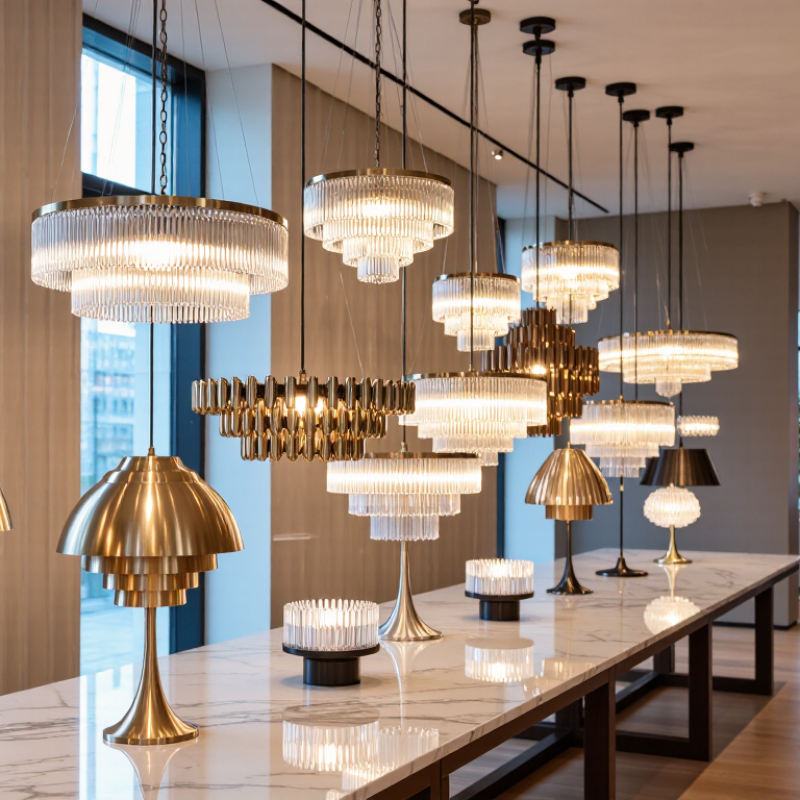
Defining your custom pendant fixture requirements starts with the space, not the shape. Measure the ceiling height, table width, and available installation area. A dining fixture often needs balanced coverage without blocking eye contact. Record the desired fixture diameter, drop length, and number of pendants. Small errors can affect the whole room.
Specify the lighting performance clearly. State the target brightness, color temperature, color rendering, dimming method, and operating voltage. For a restaurant, warm light may improve atmosphere, while a retail area may need stronger color accuracy.
Choose materials that match cleaning conditions and indoor humidity. Also define the canopy size, cable finish, socket type, and maintenance access. Ask an electrical professional to review load limits and local safety requirements.
My project experience shows that vague drawings create expensive revisions. One client selected the finish first and measured the ceiling later. The result looked attractive but hung too low. I should have insisted on a full-scale height check earlier.
Request dimensioned drawings, material samples, wiring details, and a production sample before approval. Include acceptable tolerances for color, size, and alignment.
Perfection is unlikely. Clear limits make small variations manageable. Keep every requirement in one signed specification sheet.
Measure ceiling height, table width, installation space, fixture diameter, and cable drop length. Small errors matter. Record everything.
State brightness, color temperature, color rendering, dimming method, operating voltage, and pendant quantity. Include the socket type.
Match materials with cleaning routines, indoor humidity, and expected heat. Inspect metal, glass, wood, or plated alloy under direct light.
Look for uneven coating, sharp edges, loose sockets, poor soldering, and weak cable strain relief. The fixture should hang straight.
Request dimensioned drawings, wiring details, material samples, inspection reports, and a production prototype. A certificate must match the exact configuration.
Ask for written prices covering materials, finishes, tooling, packaging, and shipping. Each added feature may increase cost or delivery time.
Check diameter, drop length, cable finish, socket alignment, brightness, surface quality, and mounting strength. The first sample may be wrong.
Production often takes six to ten weeks after sample approval. Allow extra time for revisions, inspection, and shipping delays.
Compare at least three detailed quotations, sample results, timelines, communication, and quality records. A low price may hide packaging fees.
Do not choose a finish before checking height and mounting strength. I made that mistake. A full-scale height check would have helped.
Finding the right Custom Pendant Fixtures in China begins with clearly defining your project requirements, including dimensions, style, materials, lighting performance, installation method, and intended application. Once your specifications are established, research suitable manufacturers and suppliers by reviewing their production capabilities, experience with similar projects, communication efficiency, and ability to handle customized designs. Pay close attention to material quality, craftsmanship, available finishes, safety certifications, and the supplier’s willingness to provide design adjustments or engineering support.
Before placing an order, compare quotations alongside minimum order quantities, sample costs, tooling requirements, and estimated production timelines. Request samples or prototypes whenever possible to confirm appearance, construction, and performance. You should also evaluate the supplier’s quality-control procedures, inspection standards, packaging methods, shipping terms, and after-sales service. A reliable partner should communicate clearly, document agreed specifications, and provide practical solutions if adjustments or replacements are needed. By assessing these factors together rather than focusing only on price, buyers can select Custom Pendant Fixtures that meet functional, aesthetic, budgetary, and delivery expectations.

